
How to Identify the Ecu of Louis XVI
A collector's guide to recognizing the large silver ecu aux lauriers of Louis XVI, reading its mint marks, and spotting look-alikes.
Read the full Ecu of Louis XVI encyclopedia entry →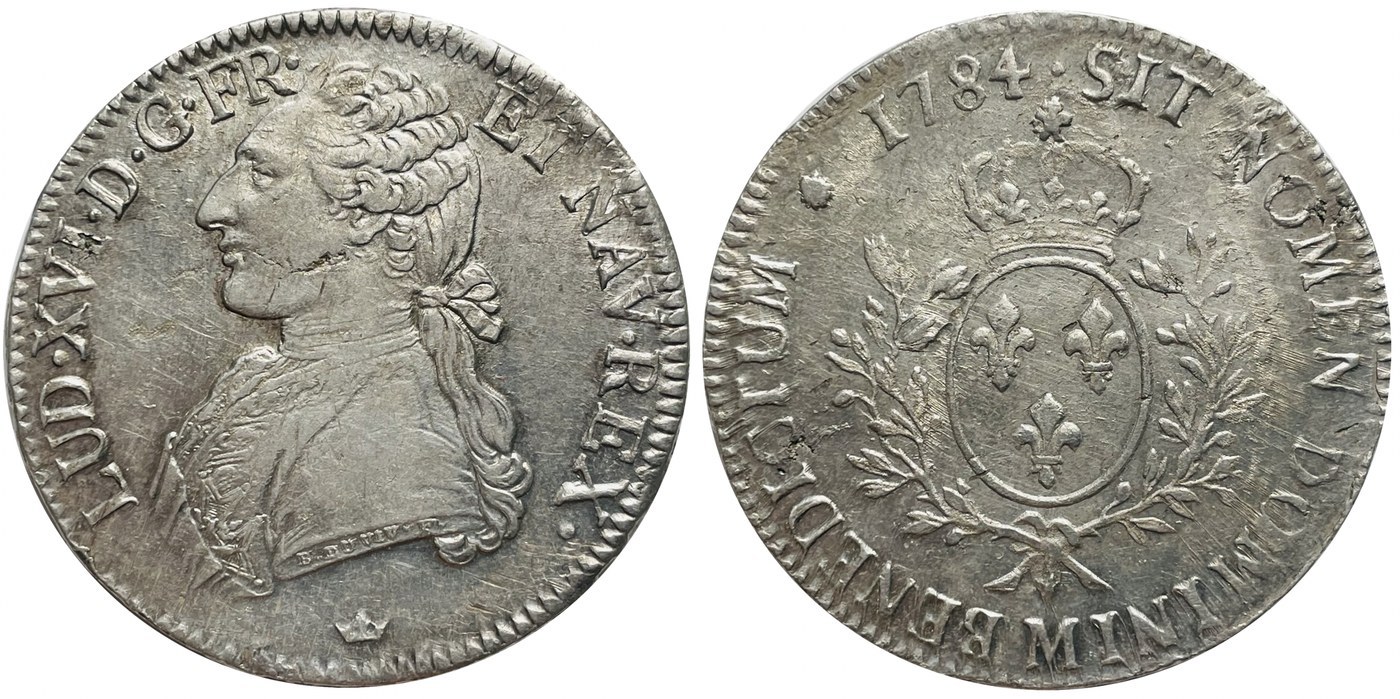
Begin with the portrait and legend. The Louis XVI ecu shows the king in profile facing left, ringed by the Latin legend LUDOVICUS XVI D G FR ET NAV REX ("Louis XVI, by the grace of God, king of France and Navarre"). The left-facing bust and the numeral XVI are your first checkpoints; a right-facing bust or a different regnal number points to Louis XV or another ruler, not this coin.
Turn to the reverse to confirm the type. You should see an oval crowned shield bearing the combined arms of France and Navarre, framed by two laurel branches, with a Latin motto and the date in the legend. This laurel framing defines the ecu aux lauriers. Read the date carefully—this example is 1784—and locate the small mint letter and privy marks tucked into the legends, which tell you which of France's many royal mints struck the piece.
Use physical measurements as a cross-check. A genuine ecu is a substantial silver crown, roughly 40–41 mm in diameter and close to 29 grams in high-grade silver. Weigh and measure the coin: a piece that is markedly light, undersized, base-colored, or magnetic is a warning sign. The edge should carry a decorated or lettered pattern typical of French crown coinage rather than being plain or seamed.
Watch for look-alikes and alterations. Louis XV ecus share the crown-size format but differ in portrait direction and legend; later restrikes, cast copies, and gilt or plugged examples also circulate. Casting reveals itself in soft, mushy detail, surface pitting, or a visible seam on the edge, while tooling and harsh cleaning leave unnatural fields and scratched hairlines.
When authenticity or value is in question, verify before you buy. Compare the coin against trusted reference images of the correct mint and date, check that weight and diameter fall within published tolerances, and for costly examples rely on professional authentication or third-party grading rather than the portrait alone.
Frequently asked questions
How do I tell a Louis XVI ecu from a Louis XV ecu?
Check the portrait direction and legend. Louis XVI faces left and is named LUDOVICUS XVI, while Louis XV's crown-size ecus face the other way and read XV. The regnal numeral is the clearest tell.
Where is the mint mark on the ecu?
Look for a small letter and engravers' privy symbols worked into the reverse (and sometimes obverse) legends. That letter identifies which royal mint struck the coin and can affect its scarcity and value.
Could my ecu be a cast copy or fake?
It's possible. Watch for wrong weight or diameter, base-metal color, casting bubbles or an edge seam, and soft, blurry detail. Compare to reference images and use professional authentication for valuable coins.
What size and weight should a genuine ecu be?
It is a large silver crown, roughly 40–41 mm across and near 29 grams in high-grade silver. A coin far outside those figures, or one that is magnetic, is unlikely to be a genuine ecu.