
How to Identify the East India Company One Mohur
A collector's guide to attributing an 1841 East India Company gold mohur: the Victoria portrait, legends, gold weight, varieties and fakes to watch for.
Read the full East India Company One Mohur encyclopedia entry →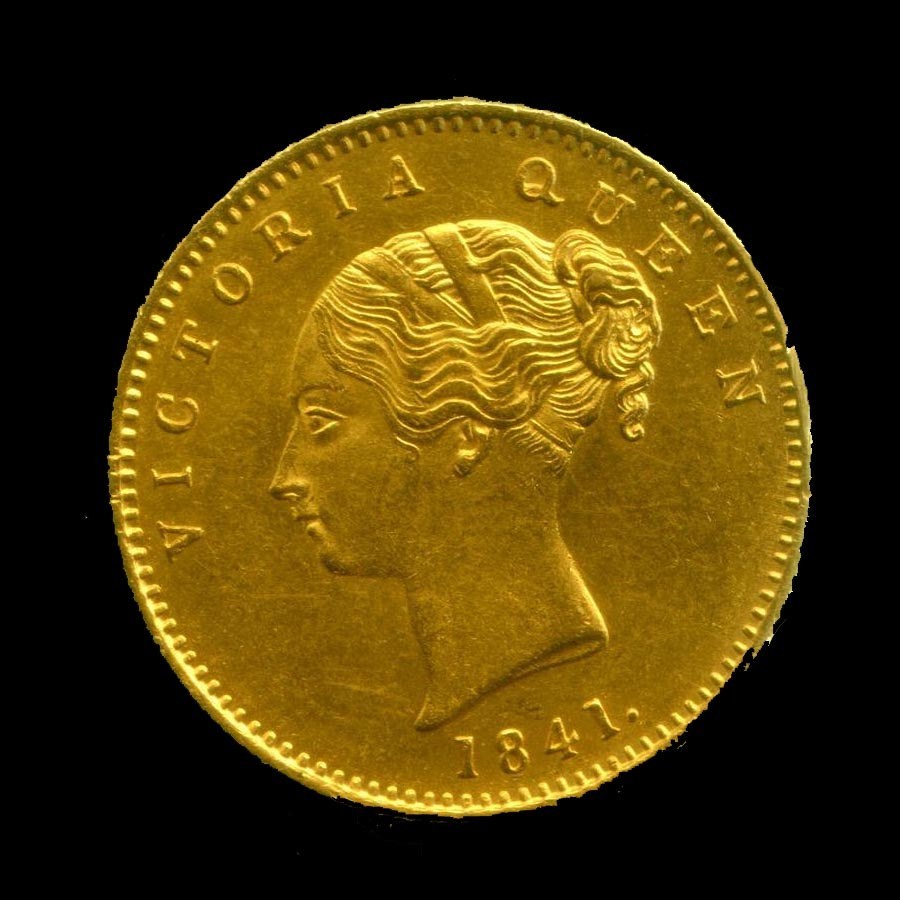
Begin with metal and size. A genuine One Mohur is gold, perfectly round and machine-struck, about 25–26 mm across and near 11.6 grams. The weight and diameter together are diagnostic: the mohur is heavy and dense for its size, and a piece that is light, magnetic, or clearly base metal is not a genuine gold mohur. The milled rim and crisp, evenly spaced lettering distinguish it at once from irregular hand-struck Mughal and princely coins.
Read the obverse. The defining feature is the diademed bust of the young Queen Victoria facing left, ringed by the legend 'VICTORIA QUEEN'. This youthful portrait and the word 'QUEEN' — rather than 'EMPRESS', which only appears on later Crown coinage from 1877 onward — place the coin firmly in the Company period. The 1841 date confirms the issue.
Check the reverse against the known type. Although the reverse is not shown in the image here, the mohur of this series conventionally bears a lion standing before a palm tree with 'EAST INDIA COMPANY', 'ONE MOHUR' and the date. A coin presenting a different reverse design, denomination or ruler is a different type and should not be attributed here without confirming these details.
Be alert to look-alikes and varieties. A silver rupee of the same period carries a very similar Victoria portrait and 'VICTORIA QUEEN' legend, so always verify that the coin is gold and of mohur weight rather than the lighter silver piece. Within the 1841 mohur itself there are several die varieties distinguished by the legend arrangement, portrait details and the form of the figures in the date; noting these features helps place the coin precisely.
Finally, authenticate before valuing. The mohur is a high-value gold type that has attracted many modern copies, cast forgeries and gilt fakes. Weigh and measure the coin, examine the rim and fields for casting seams, bubbles or a soft, grainy surface, and be wary of pieces that have been mounted, cleaned or that ring false on weight. When in doubt, have the coin assessed by a specialist in British India coinage or submitted to a reputable grading service.
Frequently asked questions
How do I tell the gold mohur from the silver rupee of the same design?
Both share the young Victoria portrait and 'VICTORIA QUEEN' legend, so rely on metal and weight. The mohur is gold and dense, near 11.6 grams at about 25–26 mm; the rupee is silver and looks broader for its weight.
What confirms the coin is an 1841 Company issue and not a later Raj coin?
The 'VICTORIA QUEEN' legend, the youthful portrait and the 1841 date all point to the East India Company period. Later Crown coins style Victoria as Empress and use a different, older portrait.
Why are there different versions of the 1841 mohur?
The Royal Mint prepared several die varieties, differing in the arrangement of the legend, small portrait details and the punches used for the date. Identifying these features helps pin down the exact variety.
How can I spot a fake mohur?
Genuine mohurs are struck, not cast, and hit an exact gold weight and diameter. Watch for incorrect weight, casting seams or bubbles, a soft or grainy surface, solder marks from mounting, or base metal beneath gilding. Have valuable examples authenticated.