
How to Identify the East Africa Protectorate 1 Cent
A collector's guide to recognizing the holed one-cent coin of the British East Africa Protectorate by its hole, legends, date, size, and metal.
Read the full East Africa Protectorate 1 Cent encyclopedia entry →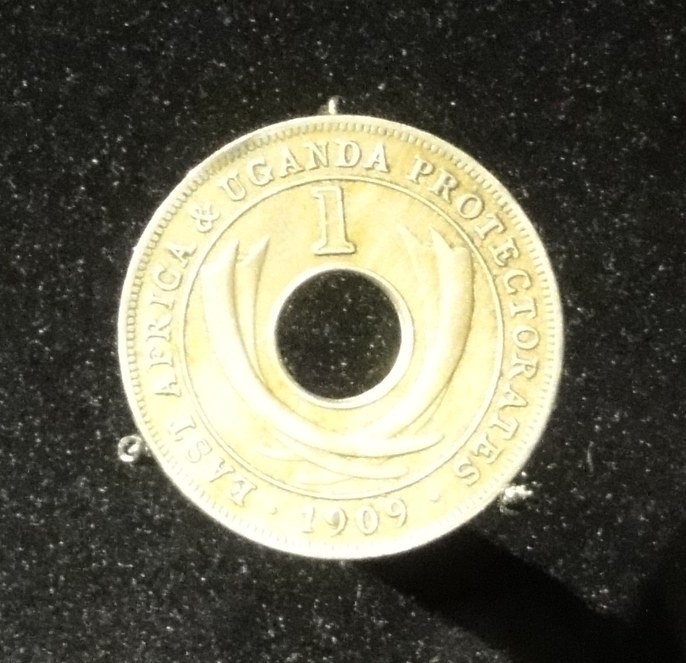
Start with the central hole and the absence of a portrait. A genuine East Africa Protectorate 1 cent is a holed coin with a geometric ornamental design and inscriptions around the hole, and no monarch's bust on either face. If your coin shows a portrait or has no hole, it is a different type.
Read the inscriptions carefully. The legends should reference the East Africa Protectorate and state the one-cent value, with the date, such as 1909, worked into the lettering. This wording is the key to separating it from later coins simply marked EAST AFRICA or KENYA, and from British East Africa Company, Zanzibar, or German East African coins of similar size and era.
Check size, weight, and metal. This is a small, thin, lightweight holed disk in a base-metal alloy with a yellowish to brownish, brass-like color, not a silvery or heavy coin. Compare the diameter and weight against catalog specifications for the fractional-cent series; a piece that is markedly larger, heavier, or a different color may be another denomination or a misattribution.
Watch the look-alikes and the hole itself. Several regional colonies issued small holed coins, so confirm the protectorate name and value rather than relying on the hole alone. Inspect the hole for signs it was drilled after minting; a genuine coin has a neatly struck central hole with the design correctly centered around it, while an added or enlarged hole distorts the surrounding devices.
Authentication is seldom a major concern for such a low-value coin, but corrosion, cleaning, and heavy wear are common and can obscure the date. Use raking light to read the year and legends, avoid cleaning the surfaces, and confirm the date and variety against world-coin references before assigning any value.
Frequently asked questions
How do I tell this from later EAST AFRICA or Kenya coins?
Read the legend. This coin names the East Africa Protectorate, whereas later issues are marked EAST AFRICA or KENYA. The protectorate wording and the early date confirm the earlier type.
The coin has a hole. How do I know it is genuine and not drilled?
On a genuine piece the central hole is neatly struck and the geometric design and inscriptions sit correctly centered around it. A hole added later is usually off-center and cuts through or distorts the surrounding devices.
Where is the date on the coin?
The year, such as 1909, is worked into the inscriptions surrounding the central hole. Use angled light to read it, since wear and corrosion often make the small lettering hard to see.
What other coins might I confuse it with?
Other small holed or base-metal colonial coins from the region, including Zanzibar, German East Africa, and later East Africa issues. Confirm the protectorate name, value, and date rather than relying on size or the hole alone.