
How to Identify the Dutch Silver Ducat
The Dutch silver ducat, historically called the silverducaat or rijksdaalder-related trade coin, features a standing armored knight on the obverse and was widely used across Europe for centuries as reliable trade silver.
Read the full Dutch Silver Ducat encyclopedia entry →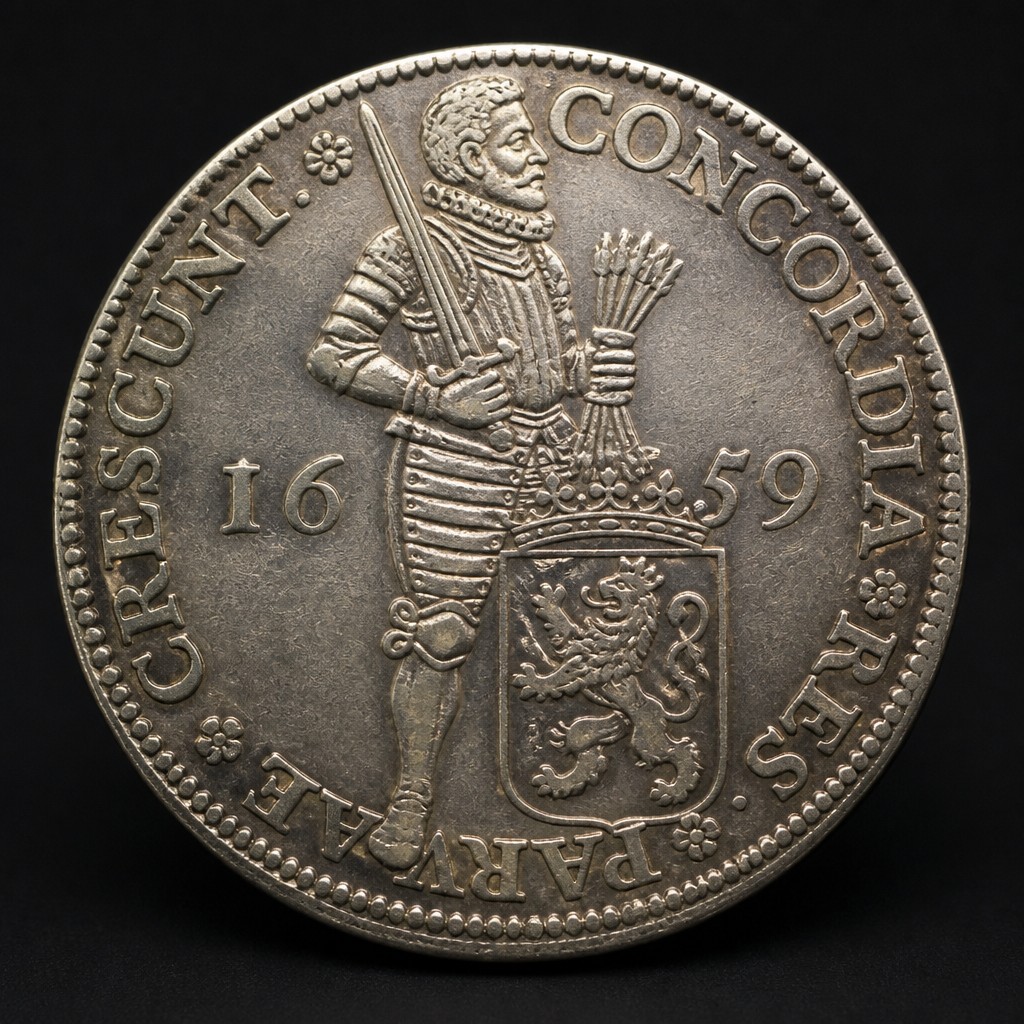
What It Is
The silver ducat (often called the "silverducaat" in Dutch) was a trade coin produced by the historic provinces of the Netherlands beginning in the 16th and 17th centuries and continued in various forms into more modern times, including as a bullion trade coin still struck by the Royal Dutch Mint today with historic-style designs. It was prized internationally for its reliable, consistent silver content, much like the gold ducat was trusted in gold trade.
Obverse Design
The obverse shows a standing knight in full armor, holding a bundle of arrows in one hand and a sword in the other, standing within a beaded or linear border, with a Latin legend around the rim referencing the specific province or the Netherlands as a whole (such as "MO: NO: ARGEN: PRO: CONFOE: BELG:" abbreviations common on historic issues, or modern equivalents on Royal Dutch Mint restrikes).
Reverse Design
The reverse typically displays a shield of arms, often the crowned or plain shield of the issuing province, surrounded by a Latin legend continuing from the obverse, along with the date.
Size, Weight & Metal
The coin is struck in silver, historically around .868 to .875 fineness depending on the era and issuing authority, weighing approximately 28-29 grams with a diameter around 40-41 mm for the standard trade ducat size.
Mint Marks & Where to Find Them
Historic Dutch provincial issues carry small mint or assayer marks near the date or within the legend, differing by province (Holland, Utrecht, Gelderland, and others each had their own dies and subtle design variations). Modern Royal Dutch Mint restrikes typically include a mint mark or privy mark identifying them as contemporary issues rather than historic originals.
Telling It Apart from Similar Coins
Because the standing knight design was used with only minor variations across multiple provinces and centuries, comparing the exact legend wording, shield design, and any mint or assayer marks is necessary to pin down the specific province and period. Collectors should also distinguish between original historic strikes and later official restrikes, which share the same general design but were produced in modern times, often with slightly different finish or edge treatment.
Judging Condition at a Glance
Wear shows first on the knight's raised arm, helmet plume, and the highest points of the armor, as well as on the central elements of the shield on the reverse. Because these coins circulated as trade currency across a wide trading network for centuries, heavily worn examples are common, while sharp, well-struck pieces are more sought after.
Authenticity Red Flags
Check weight and diameter against the expected historic specifications, since underweight or incorrectly sized pieces suggest a fake or a different, unrelated coin type. Blurry or indistinct armor detail, inconsistent lettering style for the claimed date, or a suspiciously bright, uniform surface inconsistent with genuine age and circulation wear are all worth examining closely before assuming an older piece is an original historic strike rather than a modern restrike or copy.
Frequently asked questions
What does the design on a Dutch silver ducat show?
A standing knight in armor holding arrows and a sword on the obverse, with a provincial shield of arms and Latin legend on the reverse.
Is the silver ducat still produced today?
Yes, the Royal Dutch Mint continues to strike silver ducats in a historic style as an officially recognized trade and bullion coin.
What is the silver purity of a Dutch ducat?
Historically around .868 to .875 fine silver, though this varied somewhat by era and issuing province.
How can I tell which province issued an older ducat?
Compare the specific legend wording and shield design on the reverse, since each historic Dutch province used its own dies and minor design variations.
How do I tell a modern restrike from an original historic coin?
Look for mint or privy marks identifying a modern issue, along with finish and edge characteristics that often differ subtly from older, circulated originals.