
How to Identify the Dutch Lion Daalder (Leeuwendaalder)
A 16th-17th century Dutch trade silver coin showing a knight or shield on the obverse and a rampant lion on the reverse, widely used across Europe and the colonial world.
Read the full Dutch Lion Daalder (Leeuwendaalder) encyclopedia entry →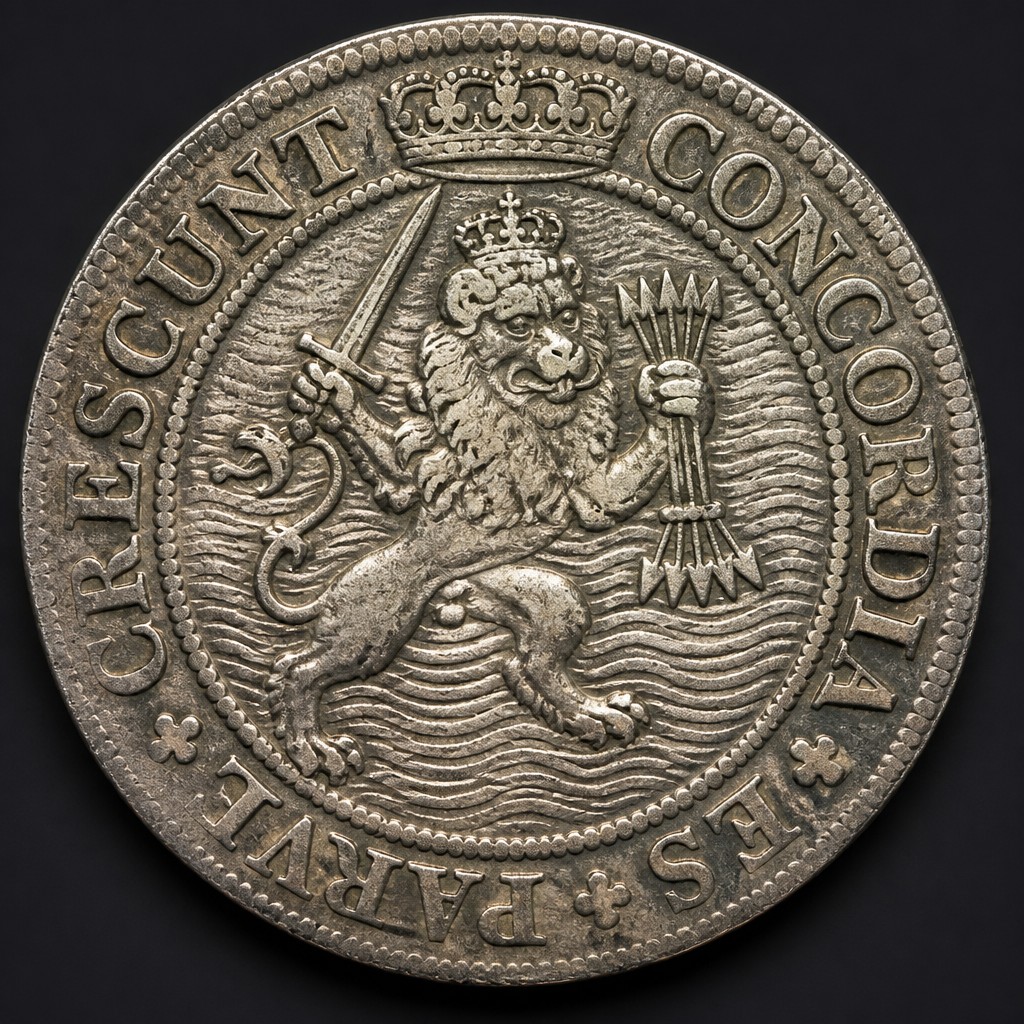
What It Is
The Lion Daalder, or Leeuwendaalder, is a silver trade coin struck by the various provinces of the Dutch Republic from the late 16th through the 17th century. It became one of the most widely circulated trade coins of its time, used extensively in European and colonial commerce, including in early American settlements, because of its reliable silver content and internationally recognized lion design.
Obverse Design and Inscriptions
The obverse shows an armored knight standing behind or beside a shield bearing a rampant lion, with a Latin legend naming the issuing province, such as "MO NO ARG PRO CONFOE BELG" (moneta nova argentea provinciarum confoederatarum Belgii, roughly "new silver coin of the united provinces of the Netherlands"). Provincial versions vary slightly with the issuing province's name worked into the legend.
Reverse Design and Inscriptions
The reverse depicts a large rampant lion, often shown mid-stride with its tongue extended and mane bristling, encircled by the motto "CONFIDENS DNO NON MOVETVR" (trusting in the Lord, one shall not be moved), a phrase drawn from scripture that became emblematic of Dutch trade coinage.
Size, Weight, Metal, and Edge
The Lion Daalder is a substantial silver coin, typically around 40-42 mm in diameter, weighing roughly 27 grams, and struck in a lower fineness silver (commonly around .750) compared to finer contemporary coins, which made it especially attractive for export trade since it offered a good silver value at a lower cost to produce.
Mint Marks and Where to Find Them
Because Lion Daalders were struck by multiple Dutch provinces (such as Holland, West Friesland, Utrecht, Gelderland, and others) rather than a single central mint, look for the provincial name spelled out in the legend and a small mint mark or privy mark near the date or at the base of the shield, which can help identify the specific mint city of origin.
Telling It Apart from Similar Coins
The Lion Daalder is often confused with other "lion" trade coins from neighboring regions, or with the later Dutch rijksdaalder, which shows a different, more heraldic reverse design rather than a large freestanding lion. The armored knight-and-shield obverse combined with the bold striding lion reverse is the clearest combination identifying a genuine Lion Daalder.
Judging Condition at a Glance
Examine the knight's armor detail and the lion's mane and facial features, since these high-relief areas wear down first with circulation. A well-preserved example shows distinct plating lines on the armor and a clearly defined lion face, while heavily worn examples show a smooth, featureless knight and a flattened, indistinct lion outline.
Authenticity Red Flags
Given how widely these coins were imitated even in their own era by various mints seeking to profit from their trade acceptance, look for consistent lettering style, correct weight for genuine silver content, and a natural, evenly toned surface. Overly crude engraving, incorrect legend spelling, or a noticeably lighter weight than expected for genuine period silver can indicate a contemporary counterfeit or later reproduction rather than an authentic provincial strike.
Frequently asked questions
What does the lion on the reverse represent?
It symbolizes the Dutch provinces and appears with the motto 'CONFIDENS DNO NON MOVETVR,' meaning trusting in the Lord one shall not be moved, a common theme on Dutch trade coinage.
Why did different Lion Daalders look slightly different?
Multiple Dutch provinces, including Holland, Utrecht, and Gelderland, each struck their own version with the provincial name worked into the obverse legend.
How can I distinguish a Lion Daalder from a Dutch rijksdaalder?
The Lion Daalder shows an armored knight and shield obverse with a bold striding lion reverse, while the rijksdaalder uses a more heraldic, shield-based reverse design.
What silver fineness should I expect?
Around .750 fine silver, lower than many contemporary European coins, which made it popular and profitable for trade circulation.