
How to Identify the Dutch Guilder (Gulden)
The Dutch guilder circulated in the Netherlands for over a century before the euro, issued in both silver and later cupronickel versions bearing the reigning monarch's portrait.
Read the full Dutch Guilder (Gulden) encyclopedia entry →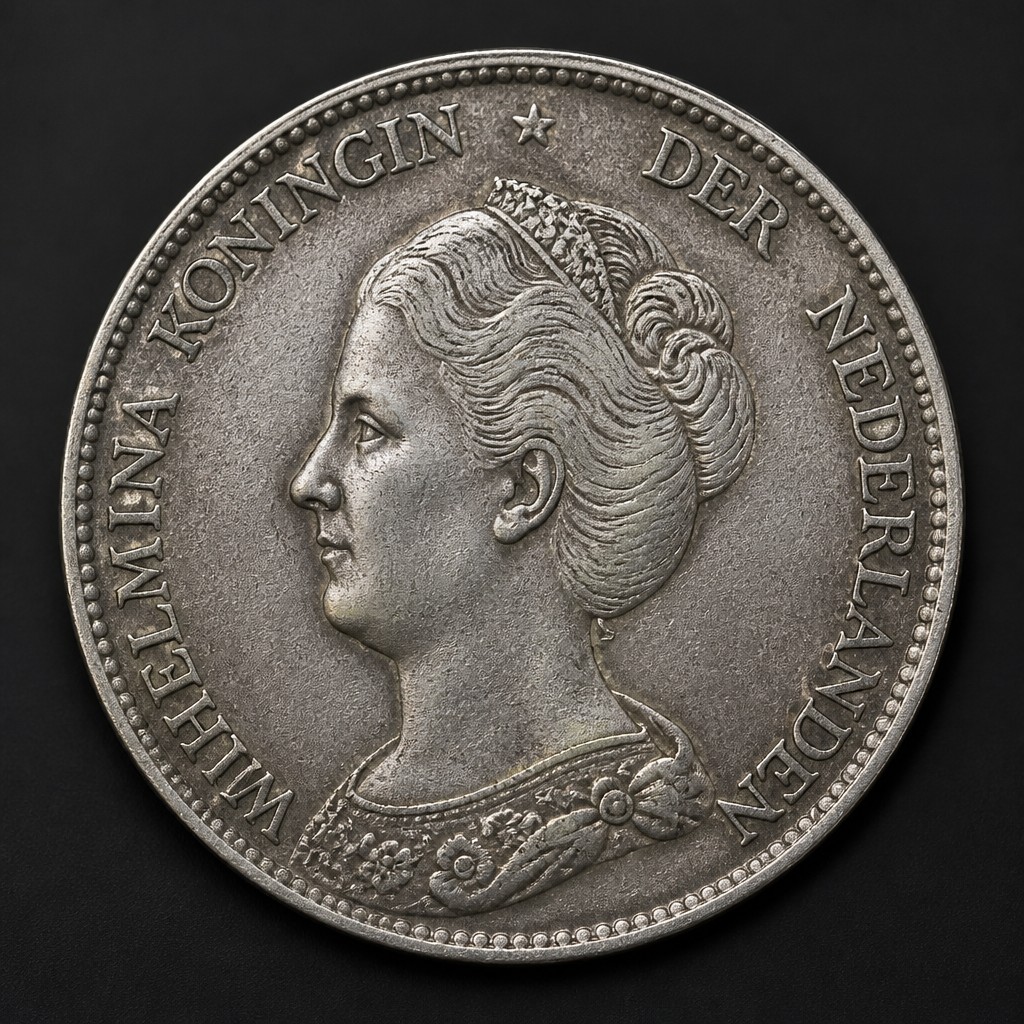
What Is the Dutch Guilder
The guilder (gulden, abbreviated NLG) was the standard currency of the Netherlands from the 19th century until the euro replaced it in 2002. Coins were struck in silver for most of that history before switching to a base-metal alloy in the late 1960s. The denomination circulated alongside smaller fractional coins like the 25 cent and 10 cent pieces, and a larger 2½ gulden coin, forming a full decimal system that replaced older Dutch currency units.
Obverse Design and Inscriptions
The obverse shows a profile portrait of the reigning Dutch monarch — Wilhelmina, Juliana, or Beatrix on 20th-century pieces — with a legend such as "... KONINGIN DER NEDERLANDEN" (Queen of the Netherlands) circling the rim and the date below the portrait. Because each queen's portrait was updated periodically to reflect her age, subtle differences in hairstyle and facial features can help narrow down the approximate decade of issue even before checking the date.
Reverse Design and Inscriptions
The reverse features the crowned Dutch coat of arms: a lion rampant holding a sword in one paw and a bundle of arrows in the other, flanked by the denomination "1 GULDEN."
Size, Weight, Metal, and Edge
Older guilders were struck in silver, with fineness varying across different periods of the 20th century. From 1967 onward the coin was struck in a cupronickel alloy of similar size and weight (roughly 25mm, about 6.5 grams) but without the warm toning silver develops over time. Most issues have a reeded edge.
Mint Marks and Where to Find Them
A small privy mark near the base of the portrait or along the rim identifies the Utrecht mint and the sitting mint master, a tradition carried over from centuries of Dutch coinage practice.
Telling It Apart From Similar Coins
Check the printed denomination "1 GULDEN" against the coin's diameter to avoid confusing it with the larger 2½ gulden piece or with similarly sized coins from neighboring countries like Belgium or Germany, which carry different national arms and legends. The lion-and-arms reverse is specific to the Netherlands, so any coin showing an eagle, a different crown style, or non-Dutch text is not a guilder regardless of similar size.
Judging Condition at a Glance
Look at the high points of the portrait — hair strands and cheek — and the lion's mane and sword for flattening. A well-preserved coin shows sharp digits in the date and strong original luster; cupronickel issues wear similarly but don't develop the same silver toning. Bag marks, small nicks picked up from contact with other coins in mint bags, are common on both metals and don't necessarily indicate heavy circulation on their own.
Authenticity Red Flags
Genuine silver guilders should meet expected weight and produce a clear ring when tapped. Cast counterfeits often show soft or mushy lettering, an incorrect diameter, or a seam line around the edge. A magnet test can help rule out steel-core fakes, since neither silver nor cupronickel is magnetic.
Frequently asked questions
How can I tell if my guilder is silver or cupronickel?
Check the date: coins from 1967 onward are cupronickel, while earlier '1 GULDEN' coins are silver and often show light champagne-colored toning.
What does the crowned lion on the reverse represent?
It's the Dutch national coat of arms, showing a lion holding a sword and a bundle of arrows symbolizing the original provinces.
Where is the mint mark located?
Look near the base of the portrait or along the rim for a small privy mark identifying the Utrecht mint and mint master.
Are all Dutch guilder coins the same size?
No, denominations like 25 cents, 1 gulden, and 2½ gulden each have distinct diameters, so compare size along with the printed denomination.
Is a worn guilder still worth collecting?
Worn coins retain historical interest, but examples with clearer portrait detail and original luster are generally more desirable to collectors.