
How to Identify the Dutch East Indies Duit
A collector's checklist for attributing a VOC copper duit by its monogram, provincial arms, chamber mark, size, and metal.
Read the full Dutch East Indies Duit encyclopedia entry →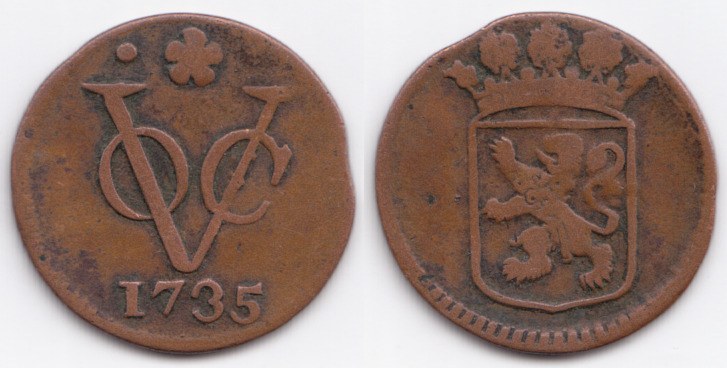
Start with the monogram. A genuine VOC duit shows the three letters V, O and C fused into a single interlaced device on the obverse, normally with the year set below or beside it. That monogram is the key diagnostic: it is what separates a company issue for the East Indies from an ordinary provincial duit of the Dutch Republic, which carries a plain arms design and no VOC device. On the piece shown the date reads 1735.
Read the reverse arms next. The crowned heraldic shield identifies the provincial chamber that struck the coin, for example Holland, West-Friesland, Zeeland, Utrecht, or Gelderland. Note the shield's charges and layout, and look for a small mint or chamber mark above the obverse monogram; together these pin the coin to a specific chamber and help you place it within the series.
Confirm the physical standard. This is a small copper piece, typically a couple of grams in weight and roughly 20-23 mm in diameter, with a brown to near-black patina from age. It should not respond to a magnet. Expect an irregular, hand-produced flan: uneven thickness, off-center strikes, and legends that drift toward the rim are normal for the type and are not by themselves faults.
Watch for look-alikes. The closest confusions are contemporary Dutch provincial duiten without the VOC monogram, later Netherlands East Indies coppers issued after the company was dissolved, and locally made imitations that circulated in the archipelago. The presence and exact form of the VOC monogram, together with the provincial arms, is the deciding evidence. Coins with only a shield and no monogram are home-country provincial duiten, not company issues.
Be careful on authentication and condition. Because these coins are cheap and widely collected, crude cast copies and salted, artificially aged pieces do turn up. Genuine duiten are struck, so look under magnification for the crisp, sharp edges of a die strike rather than the soft detail, mold seams, and trapped-air pits of a casting. Distinguish honest wear from corrosion: active green verdigris, deep pitting, and holing all cut value, whereas a smooth, stable brown surface with legible monogram and arms is what to look for.
Frequently asked questions
What single feature confirms it is a VOC coin?
The interlaced VOC monogram on the obverse. A duit with only a provincial shield and no VOC device is a home-country Dutch provincial coin, not a company issue for the East Indies.
How do I tell which province struck my duit?
Read the crowned coat of arms on the reverse and any small chamber mark above the obverse monogram. The arms identify the provincial chamber, such as Holland, Zeeland, Utrecht, West-Friesland, or Gelderland.
Is an off-center or crudely struck duit a fake?
Not usually. These are hand-produced copper coins, so uneven flans, off-center strikes, and legends running to the edge are normal. Judge authenticity by struck detail versus casting signs, not by rough centering.
Does green corrosion matter?
Yes. Active green verdigris and deep pitting damage a copper coin and lower its value, and can spread if untreated. A stable, even brown patina with clear monogram and arms is far preferable to a bright, harshly cleaned surface.