
How to Identify the Dutch Ducat
A gold trade coin of the Dutch Republic and later the Netherlands, identified by a standing knight in armor on the obverse and an incuse square legend on the reverse.
Read the full Dutch Ducat encyclopedia entry →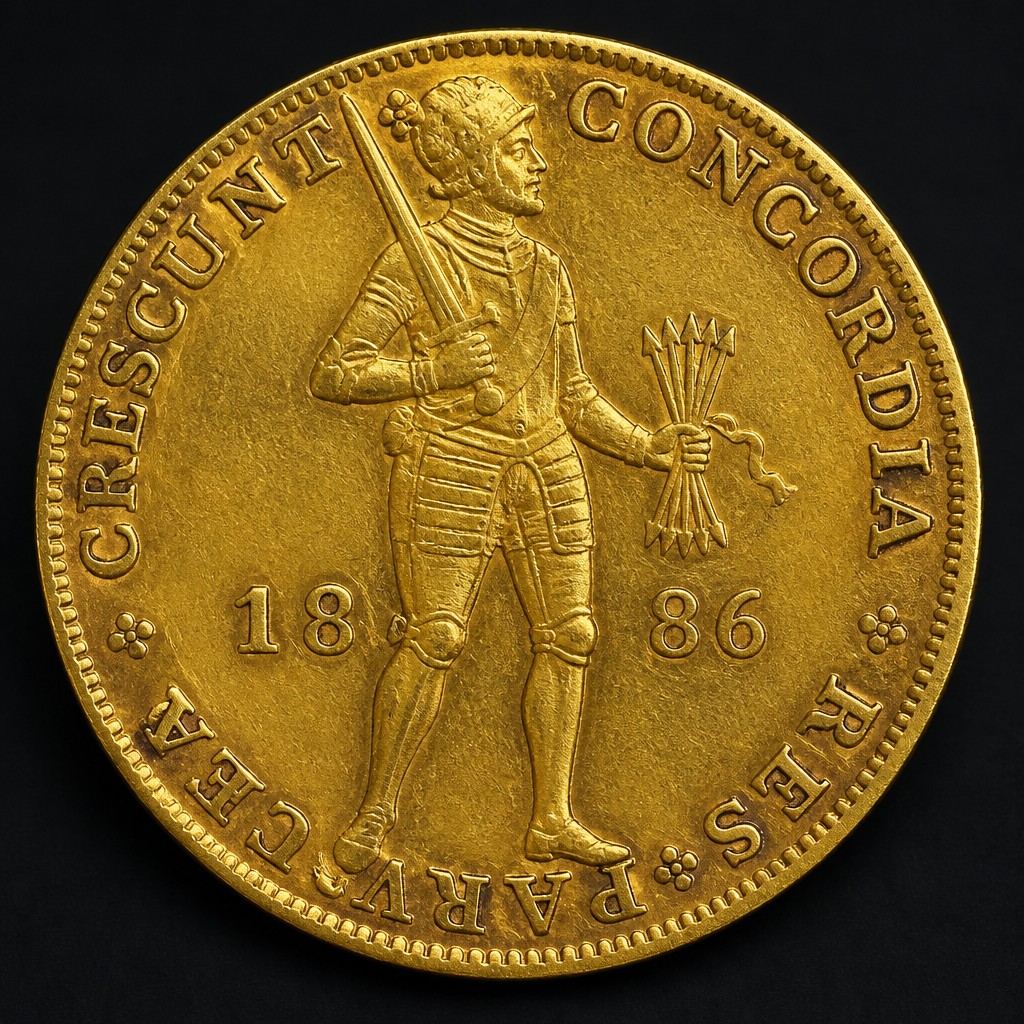
What It Is
The Dutch Ducat was struck from the 17th century onward by the provinces of the Dutch Republic and later by the Kingdom of the Netherlands, becoming one of the most widely used gold trade coins in Europe and beyond due to its consistent gold content and broad international acceptance.
Obverse Design
The obverse shows a standing knight in full armor, facing right, holding a bundle of arrows in one hand (representing the united provinces) and a sword in the other. The knight typically stands within a beaded or linear border, with a Latin legend naming the issuing province or the reigning monarch arcing around the edge.
Reverse Design
The reverse carries a Latin inscription in five lines, reading (in abbreviated form) "MO ORD / PROVINC / FOEDER / BELG AD / LEG IMP," meaning roughly "Coin of the United Provinces of the Netherlands, according to the law of the Empire." This lettered reverse is enclosed within a recessed or incuse square, a very recognizable feature.
Size, Weight, and Metal
Struck in gold of about .983 fine, the Dutch Ducat is small, roughly 20-21mm in diameter and weighing close to 3.5 grams, matching international ducat weight standards used across Europe. The edge is plain.
Mint Marks
Various provincial mints (such as Holland, Utrecht, and Gelderland) struck ducats, and a small mint mark or privy mark can appear near the knight's feet or within the border, distinguishing the specific mint of origin.
Telling It Apart From Similar Coins
The incuse (recessed) square containing the five-line legend on the reverse is the single most distinctive feature separating the Dutch Ducat from other European ducats, which typically show a Christ figure, saint, or crowned shield instead. Compare the knight's pose and armor style, since some imitative issues from German states used similar knight designs but lack the exact incuse square treatment.
Judging Condition at a Glance
Because gold resists wear-related discoloration, focus on the sharpness of the knight's armor detail and the legibility of the five-line reverse inscription. High-grade coins show crisp incuse lettering with clean edges; heavily circulated ducats often have a smoothed knight figure and a shallow, less distinct incuse square.
Authenticity Red Flags
Watch for incorrect weight, a reverse legend that is misspelled or has wrong line breaks, and a square that is raised rather than properly incuse. Because the Dutch Ducat was so widely trusted internationally, it was also widely imitated in the Middle East and Central Europe; imitation examples may have similar imagery but subtly different lettering conventions.
Frequently asked questions
What makes the Dutch Ducat's reverse so distinctive?
A five-line Latin inscription is stamped into a recessed, incuse square, unlike most other European gold coins of the era.
What is the knight on the obverse holding?
A bundle of arrows symbolizing the united Dutch provinces in one hand and a sword in the other.
How pure is the gold in a Dutch Ducat?
Typically around .983 fine gold, consistent with international ducat trade standards.
Which mints produced Dutch Ducats?
Several provincial mints including Holland, Utrecht, and Gelderland struck them, often marked with a small privy mark near the design.