
How to Identify the Draped Bust Eagle
The same 1795-1804 $10 gold coin known elsewhere as the Turban Head Eagle, named for the drapery across Liberty's bust shared with contemporary Draped Bust silver coinage.
Read the full Draped Bust Eagle encyclopedia entry →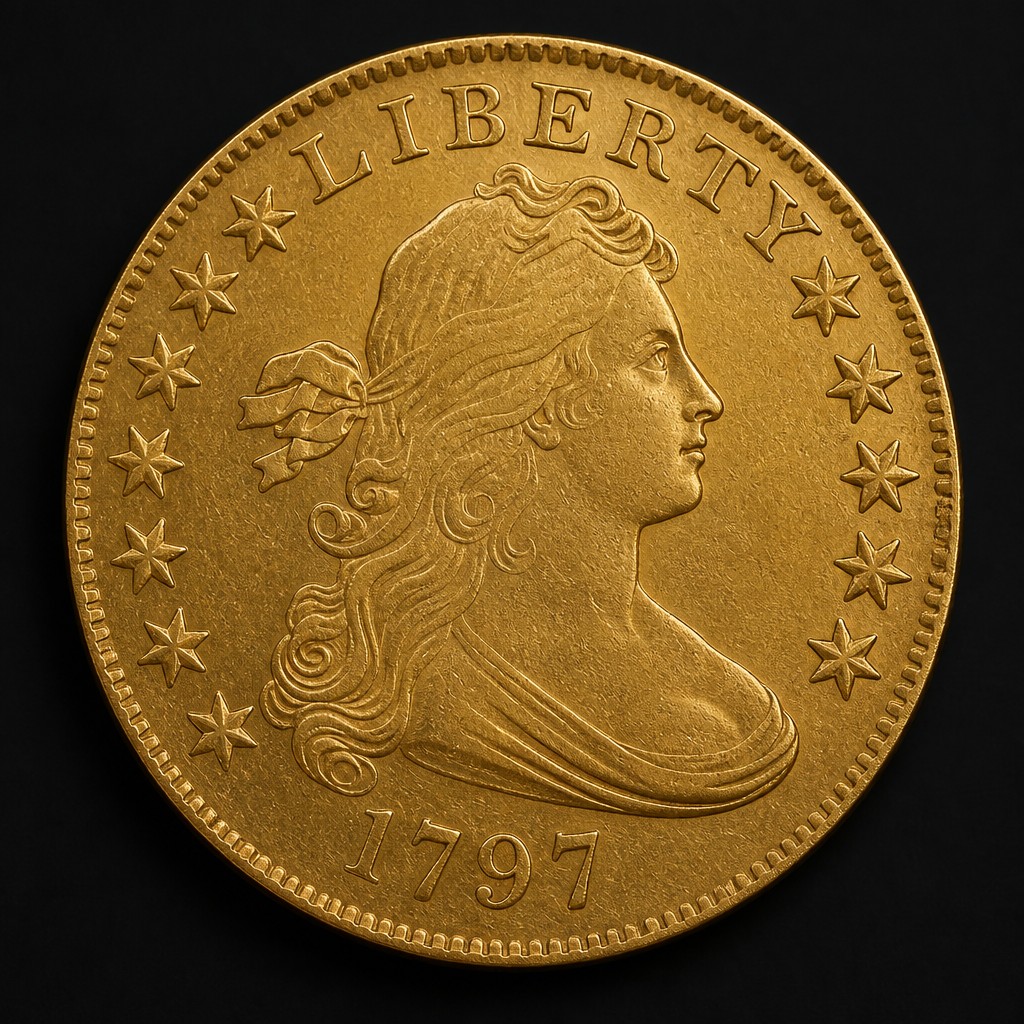
What It Is
The Draped Bust Eagle is the same $10 gold coin struck from 1795 to 1804 that collectors also call the Turban Head Eagle. The "Draped Bust" name refers to the fabric folds draped across Liberty's shoulder below the neckline, a design language shared with the Draped Bust silver dollar, half dollar, quarter, dime, and half dime issued in the same era. Because the eagle also pairs this drapery with a soft cap, both names are used interchangeably for this coin.
Obverse Design
Liberty faces right with visible drapery folded across her bust and shoulder, hair spilling from beneath a soft cap, LIBERTY inscribed above, stars flanking the portrait, and the date below.
Reverse Design
Two varieties exist. The Small Eagle reverse (1795-1797) shows a perched eagle holding a wreath or branch, with no shield or motto. The Heraldic Eagle reverse (1797-1804) shows a shield-bearing eagle with arrows, an olive branch, and a ribbon reading E PLURIBUS UNUM in its beak. UNITED STATES OF AMERICA surrounds both.
Size, Weight, Metal & Edge
33mm diameter, 17.5 grams, .9167 fine gold, reeded edge. No numeral denomination is present.
Mint Marks
None. All examples were struck at the Philadelphia Mint.
Telling It Apart From Similar Coins
The key identification skill for this coin is distinguishing the two reverse varieties: flip the coin over and check whether the eagle carries a shield and a motto ribbon (Heraldic Eagle, 1797-1804) or is shown simply perched with a branch and no shield (Small Eagle, 1795-1797). Compare the drapery detail against other Draped Bust denominations of the period to confirm the design family, and note that coins dated 1804 carry a separate and important rarity story worth researching further before assuming a common date.
Judging Condition at a Glance
Check the drapery folds and hair curls on the obverse, and the shield lines and wing feathers on the reverse, for the earliest signs of wear.
Authenticity Red Flags
As with the Turban Head nickname for this same coin, watch for altered dates turning a common year into a scarcer one, and confirm that design details show the sharp, consistent character of a genuine period strike rather than the soft edges typical of cast counterfeits. Coins dated 1804 in particular warrant expert review given the well-documented rarity and later restrikes associated with that specific date.
Frequently asked questions
Is the Draped Bust Eagle a different coin from the Turban Head Eagle?
No, they are the same coin. Both names refer to the $10 gold piece struck from 1795 to 1804, with 'Draped Bust' emphasizing the drapery detail and 'Turban Head' emphasizing the cap.
How do I know which reverse variety I have?
Check for a shield on the eagle's breast and a ribbon in its beak. If present, it's the Heraldic Eagle variety (1797-1804); if the eagle is simply perched with a branch, it's the Small Eagle variety (1795-1797).
What should I do if I find a coin dated 1804?
Treat it with extra caution and seek expert review, since the 1804 date has a well-known and complex rarity history involving both original strikes and later restrikes.
Does this coin share design elements with other coins of its era?
Yes, the draped bust portrait style was used across most U.S. silver denominations from 1795 to 1807, giving the whole family a consistent look.