
How to Identify the Double Rupi
A collector's checklist for Nader Shah's Afsharid double rupi: reading its all-calligraphic faces, confirming the AH 1151 date, and spotting look-alikes.
Read the full Double Rupi encyclopedia entry →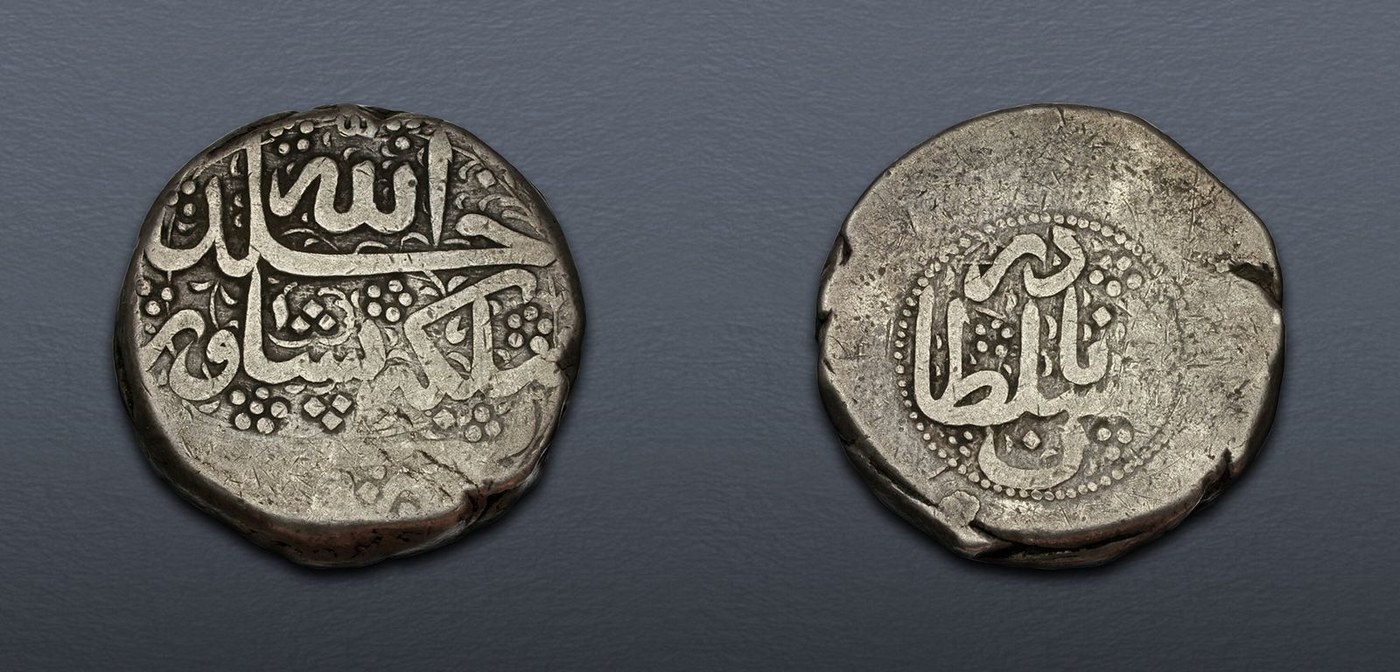
Begin with size and metal, the fastest clues. The Double Rupi is a large, heavy silver coin — visibly broader and weightier than an ordinary rupi because it is a two-unit piece. A silvery-gray tone, a thick flan, and a hand-struck (not machine-milled) surface all point toward this Afsharid series. A small, light silver coin is more likely a single rupi or a fractional piece.
Read the two faces, both of which are entirely inscriptional. Expect Persian (Arabic-script) calligraphy arranged with ornamental scrollwork and floral devices on the obverse, and the inscriptions continuing on the reverse with further ornament. There should be no portrait or figural image. The legends give the ruler's titles and a couplet on one side and typically the mint and date on the other; the presence of flowing calligraphy plus decorative scrollwork, rather than lettering in plain lines, is characteristic.
Confirm the date and denomination. Look within the legend for the Hijri date AH 1151 and for the wording identifying the piece with Nader Shah's Afsharid authority. Because these coins are hand-struck, part of the legend or date may run off the edge; check for a well-centered strike where the ruler's name, mint and date are legible, and record the exact mint word to pin down the variety against a specialized Afsharid reference.
Separate it from look-alikes. The closest relatives are the single rupi (same designs at roughly half the weight) and contemporary Mughal rupees of the same Indian mints. Distinguish the double rupi from a single rupi by size and weight, and from a Mughal rupee by its Persian Afsharid legends naming Nader Shah rather than a Mughal emperor's titulature. A comparable-looking coin that is lighter, or that names a different ruler, is a different type.
Apply authentication caution. Well-known historical silver like Nader Shah's coinage has been reproduced and, occasionally, cast. Watch for soft or mushy calligraphy, casting seams or bubbles, an incorrect weight for the double-rupi standard, and lettering that does not match documented dies. Genuine strikes show crisp, angular script and honest wear. For a valuable or uncertain example, seek third-party attribution and grading and compare directly with published double rupi specimens before buying or selling.
Frequently asked questions
What is the quickest way to recognize a Double Rupi?
Its combination of large size, silver metal, and two all-calligraphic faces with no portrait. If the coin is a heavy silver piece covered in flowing Persian script and ornamental scrollwork, and heavier than a normal rupi, you are likely looking at a double rupi.
How do I tell a double rupi from a single rupi?
Chiefly by size and weight. The two share the same all-inscriptional designs, but the double rupi is roughly twice as heavy and broader. Weighing the coin and comparing it against known rupi standards is the most reliable check.
Where is the date on the coin?
The Hijri date, AH 1151 on this type, appears within the legend in Arabic-Persian script rather than in Western numerals. On hand-struck coins it can be partly off the flan, so a well-centered strike is needed to read it in full.
How can I spot a fake?
Look for soft or blurry calligraphy, casting seams or bubbles, an off weight for a double rupi, and script that does not match documented dies. Genuine coins show crisp angular lettering and natural wear. For higher-value pieces, use professional attribution and grading.