
How to Identify the Dirham of al-Mahdi
A collector's guide to attributing an Abbasid silver dirham of al-Mahdi: the Kufic legends, thin silver flan, marginal mint-and-date formula and authentication cautions.
Read the full Dirham of al-Mahdi encyclopedia entry →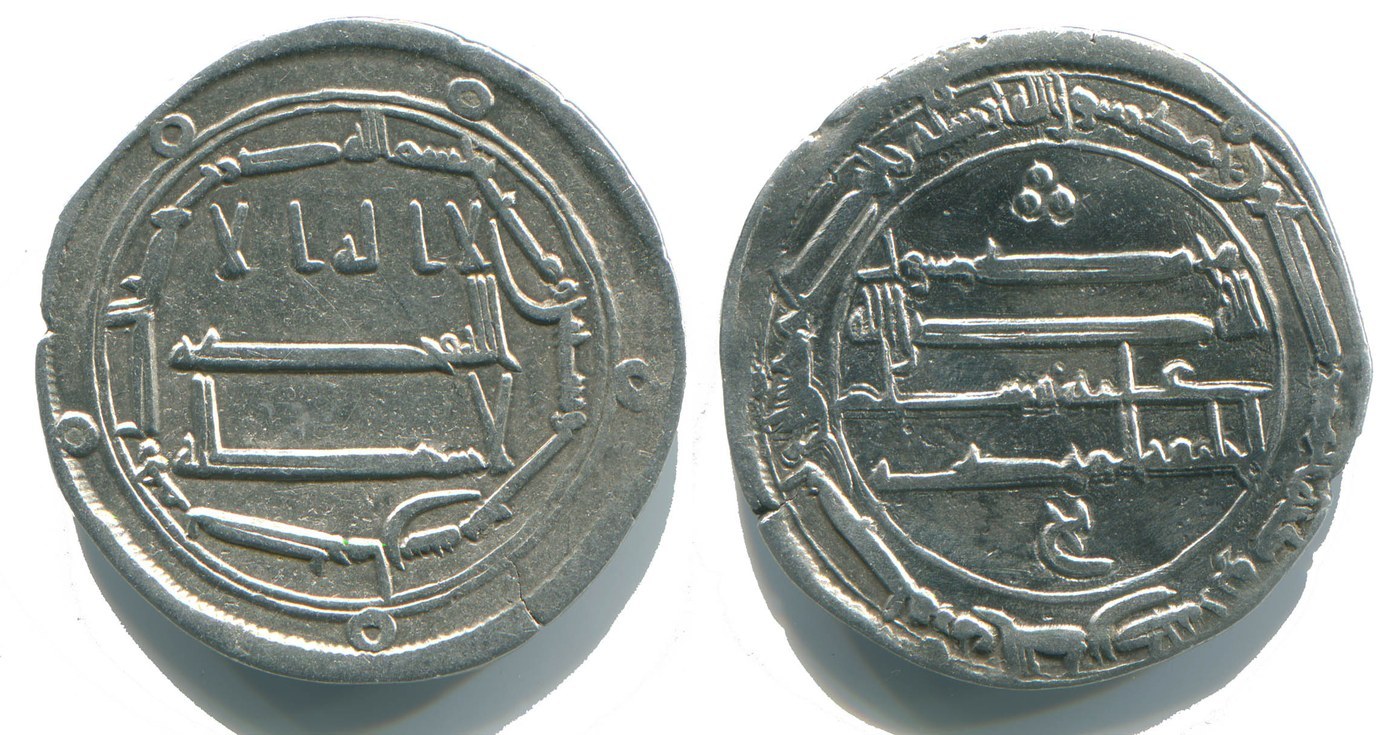
Start by confirming the broad type. A dirham of al-Mahdi is a thin, broad silver coin with absolutely no image — no ruler's head, animal or symbol. Both sides are filled with neat horizontal lines of angular Kufic Arabic inside plain circular borders, with a separate marginal legend running around the rim. If you are holding a figural coin, or one with Latin or later cursive Arabic (Naskh) script, it is not this early Abbasid type.
Read the two faces in the right order. The obverse (the side with the shorter central legend) carries the core profession of faith, and its margin gives the crucial mint-and-date formula: 'in the name of God, this dirham was struck at [mint] in the year [Hijri date].' The reverse holds a longer multi-line religious legend and, on many coins including this one, additional marginal text. The AH date and the mint name are your primary diagnostics — al-Mahdi's dirhams look much like those of the caliphs before and after him, so attribution depends on reading these words rather than on the design.
Check the physical characteristics. Expect silver, a thin and slightly wavy flan usually around 25–26 mm in diameter, a light weight in the low single grams, and hand-struck detail that is often stronger in the center than at the edges. Gray or iridescent toning is normal and expected; a suspiciously bright, heavy, or perfectly round blank should raise questions. Off-center strikes that push part of the marginal legend off the flan are common and reduce how much of the mint-and-date formula survives.
Distinguish it from look-alikes. Umayyad dirhams (pre-AH 132) share the same aniconic layout but carry earlier dates and different marginal wording; later Abbasid, Samanid and other post-reform dirhams also use Kufic but name different rulers, mints and years. Because the general format persisted for centuries, never attribute the coin from its 'look' alone — verify the caliph and the AH date through the legends, ideally against a standard reference for Abbasid silver.
Apply authentication cautions. Genuine dirhams are struck, not cast, so watch for casting seams, bubbles, or mushy lettering that indicate a copy. Modern forgeries and tourist replicas of Islamic silver exist; weigh and measure the coin, examine the sharpness and internal consistency of the Kufic script, and be wary of pieces with unnaturally uniform surfaces or invented legends. When in doubt, have the Arabic read by someone familiar with Kufic epigraphy or submit the coin to a specialist in Islamic numismatics.
Frequently asked questions
How do I read the date on a coin like this?
The Hijri year is written out in Arabic words within the obverse marginal legend, not in numerals. On this coin it reads as the year AH 166. You match the spelled-out Arabic number against a reference table of Hijri dates to confirm it.
Where is the mint name found?
In the obverse margin, in the phrase 'duriba bi-...' meaning 'struck at ...'. The word that follows names the mint city. Reading that band is essential, since two dirhams of the same caliph can differ greatly in interest depending on mint.
How can I be sure it is al-Mahdi and not another caliph?
The design is shared across many reigns, so you cannot judge by appearance alone. Confirm the AH date and the names and formulas in the legends; only the inscriptions distinguish al-Mahdi's dirhams from those of neighboring Abbasid rulers.
What are the warning signs of a fake?
Look for casting bubbles or seams, soft or garbled Kufic lettering, incorrect weight or diameter, and unnaturally shiny or perfectly round flans. Genuine dirhams are hand-struck silver with crisp script and expected toning; anything cast or with nonsensical legends should be treated with suspicion.