
How to Identify the Diocletian Follis
A guide to identifying Diocletian's follis (introduced c. 294 AD), the large silver-washed bronze coin of the Tetrarchy, including its shared Genius reverse type and mint-mark system.
Read the full Diocletian Follis encyclopedia entry →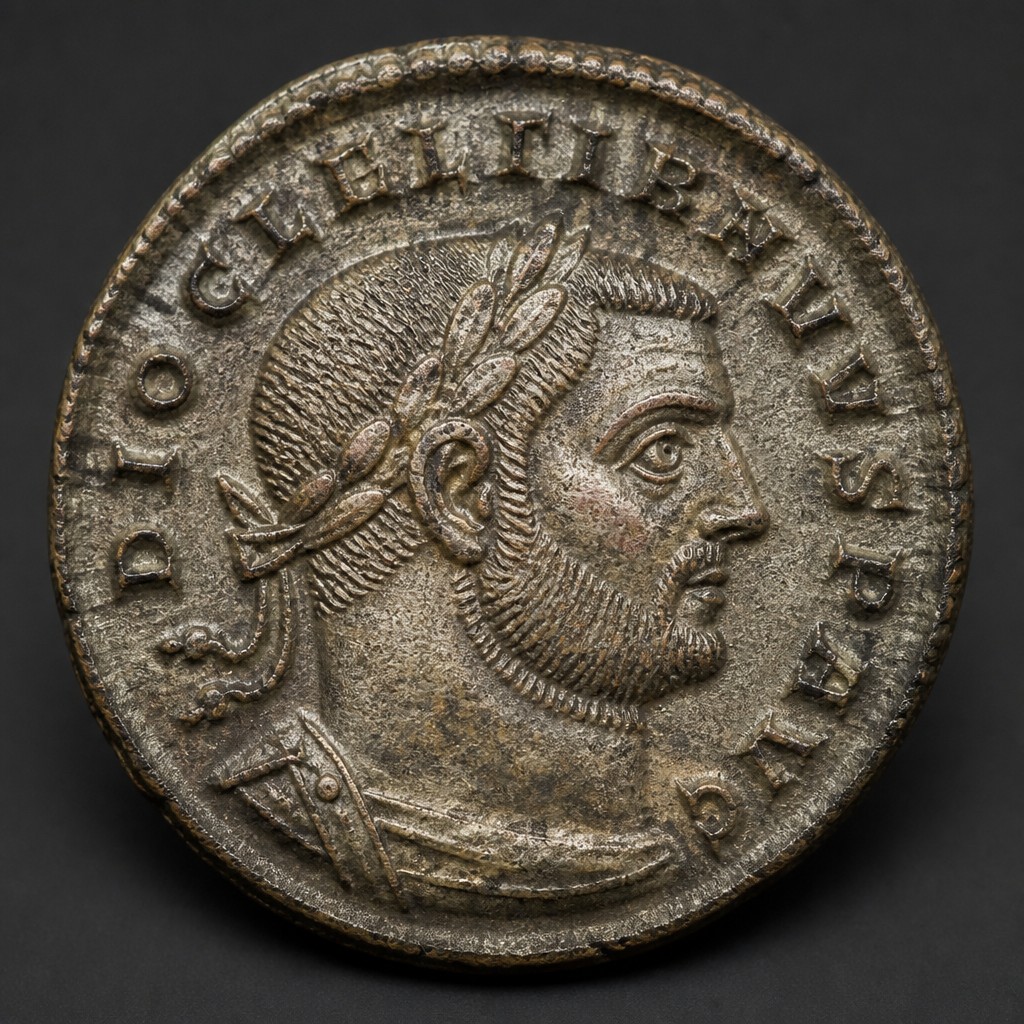
What Is the Diocletian Follis?
Diocletian ruled from 284 to 305 AD and is best known for ending the third-century crisis through sweeping administrative and monetary reforms, including the creation of the Tetrarchy - rule by four co-emperors - and a currency reform around 294 AD that introduced the follis, a large bronze coin with a thin surface wash of silver, replacing the heavily debased antoninianus.
Obverse Design and Inscriptions
The obverse shows a laureate head right, with the legend IMP DIOCLETIANVS AVG or the fuller IMP C C VAL DIOCLETIANVS PF AVG.
Reverse Design and Inscriptions
The overwhelmingly dominant type is GENIO POPVLI ROMANI, showing the Genius, or guardian spirit, of the Roman people standing nude but for a chlamys over one shoulder, holding a patera and cornucopia.
Size, Weight, and Metal
This was a substantial coin at introduction, roughly 27-28mm across and around 9-10 grams, with weight gradually reduced in subsequent years. It was struck in bronze with a thin surface silvering, often mostly worn away on surviving examples.
Mint Marks and Where to Find Them
This period has the first fully mature, standardized mint-mark system. Look in the exergue for city abbreviations such as ALE (Alexandria), ANT (Antioch), TR or TS (Trier), LON (London), SIS (Siscia), HERACL (Heraclea), and CYZ (Cyzicus), typically followed by an officina numeral or letter.
Telling It Apart from Similar Coins
Co-emperors Maximian, Constantius I, and Galerius issued nearly identical Genius reverse types during the same years; the obverse legend naming the specific emperor is the only reliable way to distinguish them, since the reverse design is shared across the whole Tetrarchy.
Judging Condition at a Glance
Because the coin originally had a bright silver-washed surface, judge condition partly by how much of that wash survives, in addition to the usual wear on the portrait's hair and the Genius figure's raised arm.
Authenticity Red Flags
These are common, low-value coins, so modern forgery is less prevalent, but watch for recut or re-engraved mint marks meant to suggest a rarer mint attribution, and for coins with an artificially applied bright silvering meant to disguise a worn or corroded surface underneath.
Frequently asked questions
What is the most common reverse type on a Diocletian follis?
GENIO POPVLI ROMANI, showing the Genius of the Roman people standing with a patera and cornucopia - this same type was used across all four Tetrarchic rulers.
How do I tell Diocletian's follis apart from Maximian's or Galerius's?
Since the reverse design is shared across the Tetrarchy, the obverse legend naming the specific emperor is the only reliable way to distinguish between them.
Where do I find the mint mark on this coin?
In the exergue, the space below the reverse design, typically a city abbreviation like ALE, ANT, TR, LON, or SIS followed by an officina letter or numeral.
Why does this coin look bronze rather than silver?
It was struck in bronze with only a thin surface wash of silver, which has worn away on most surviving examples, leaving the base bronze color visible.