
How to Identify the Denier of Charles the Bald
A collector's guide to attributing a Carolingian silver denier of Charles the Bald — reading the cross or monogram, the profile and royal legend, and spotting look-alikes.
Read the full Denier of Charles the Bald encyclopedia entry →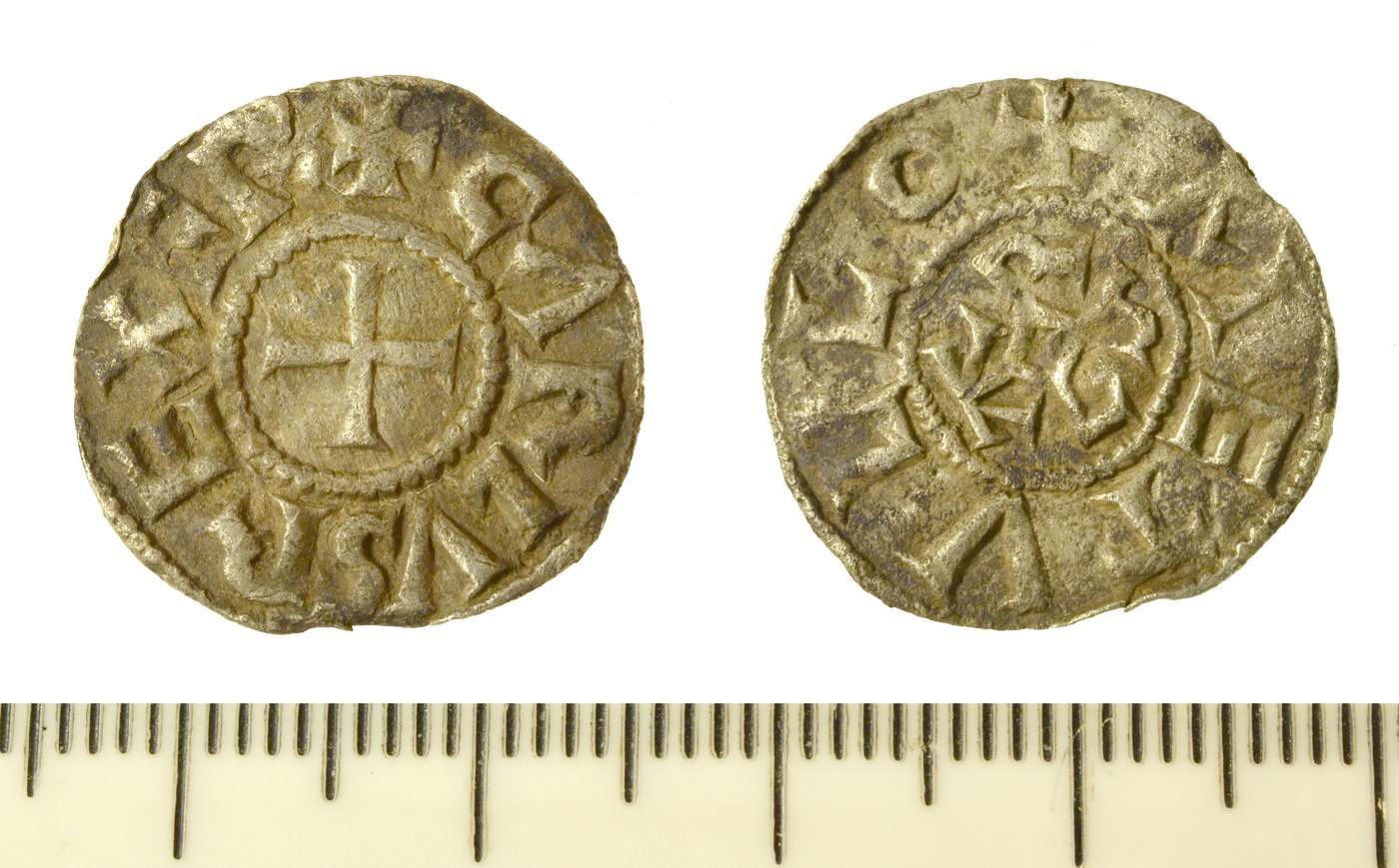
Start with the physical coin. A denier of Charles the Bald is small and thin — generally under about 20 mm across and only around 1.5–2 g — and was struck by hand, so expect a slightly irregular, sometimes off-centre flan rather than a perfectly round modern coin. The metal is silver, usually toned grey, and the fabric is noticeably lighter and thinner than a high-medieval or modern coin of similar diameter.
Read the two faces separately. Look for the cross or monogram side first: Carolingian deniers characteristically use a cross, the KAROLVS monogram, or a small temple/church motif inside a beaded border, ringed by a Latin legend. Then examine the profile side, which shows a stylised ruler's bust with a royal title in the legend — forms such as CARLVS or KAROLVS REX, and on reform issues the phrase GRATIA D-I REX ("by the grace of God, king"). The engraving is deliberately schematic; do not expect a lifelike portrait.
Work the legend for a mint name. Many of Charles the Bald's deniers, particularly those after his 864 reform, name the issuing town in the surrounding legend. Even a partial reading of that legend, combined with the design, is often enough to place the coin. Because lettering is frequently blundered or only partly struck, rotate the coin and study it under good light; note every legible letter before attempting attribution.
Beware of look-alikes. Deniers were struck by many Carolingian rulers named Charles or Charlemagne (Karolus), and later medieval kings, so the KAROLVS monogram alone does not guarantee this reign — the accompanying legend and style must agree. Immobilised and imitative types, struck long after Charles's death but copying his designs, are also common, as are coins of neighbouring rulers with similar cross-and-legend layouts. Treat the combination of design, legend and fabric as a whole rather than relying on any single feature.
Finally, weigh authentication carefully. Cast copies, tooled coins and modern fakes exist for desirable Carolingian pieces, and hand-struck flans make weight and diameter alone unreliable. Compare the coin against reference images of known specimens, weigh and measure it, prefer pieces with provenance, and for anything scarce or valuable seek the opinion of a specialist in Carolingian or medieval coinage before assuming an attribution or price.
Frequently asked questions
The coin says KAROLVS — is it definitely Charles the Bald?
Not on that alone. Several Carolingian rulers used the name Karolus, including Charlemagne, and later kings and imitative issues copied the monogram. Confirm with the full legend, any mint name, and the coin's style before attributing it specifically to Charles the Bald.
How do I read such worn, crude lettering?
Rotate the coin under raking light and record every legible letter, even fragments, before guessing. The legends are Latin and often blundered or clipped by an off-centre strike, so partial readings compared against reference legends are usually how attributions are made.
What size and weight should a genuine denier be?
Roughly under 20 mm in diameter and about 1.5–2 g, on a thin hand-struck silver flan. Weight and size alone do not prove authenticity, but a coin far outside this range, or one that looks cast rather than struck, warrants caution.
Should I have it authenticated?
For any scarce, well-preserved or expensive example, yes. Carolingian coins are copied by both ancient imitators and modern forgers, so provenance and a specialist's opinion are worth seeking before relying on an attribution or paying a premium.