
How to Identify the Denarius of Trajan
A collector's guide to recognizing a silver denarius of Trajan by its portrait, Latin legends, size, and reverse type.
Read the full Denarius of Trajan encyclopedia entry →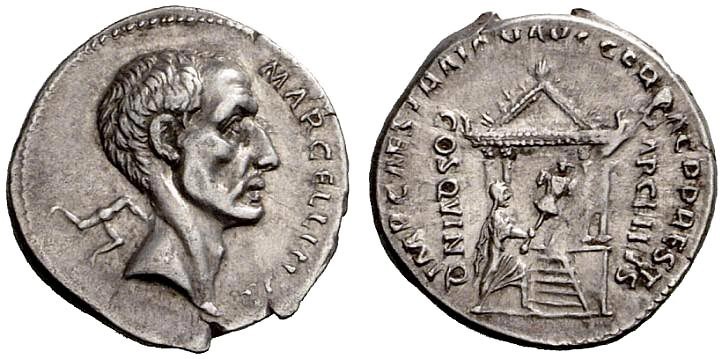
Begin with the physical coin. A denarius of Trajan is a small hand-struck silver piece, generally about 17–20 mm in diameter and around 3 to 3.5 grams. The flan is often slightly irregular, and the strike may be a little off-center, which is normal for ancient coinage. A perfectly round, machine-smooth coin should raise suspicion.
Read the obverse portrait and legend. Trajan is shown as a laureate bust facing right, with an abbreviated Latin inscription running around the edge. Look for his name and titles in forms such as IMP TRAIANO AVG GER DAC and PM TR P COS, sometimes ending in PP. These title abbreviations both confirm the emperor and help narrow the date, since Trajan added honors like GER (Germanicus) and DAC (Dacicus) at known points in his reign.
Turn to the reverse to pin down the exact type. On this coin Libertas stands to the left holding a patera and a rod; other Trajan denarii show Victory, Fortuna, Pax, Roma, military trophies, or the Dacian captive. Identify the figure by its pose and the objects it holds, then match the reverse legend. Cataloguers use the combination of obverse titles and reverse type to assign a coin to a RIC (Roman Imperial Coinage) number rather than relying on any mint mark, which these coins do not carry.
Be cautious about authenticity. Trajan denarii are popular and therefore faked, including cast copies, tooled coins, and modern struck forgeries. Warning signs include a soapy or too-uniform surface, seams around the edge from casting, letters that look mushy or wrong for the period, and weight far outside the normal range. Silver-washed base-metal fakes will show copper where the surface is worn. When value matters, buy from reputable dealers, prefer coins attributed to a catalog reference, and consider third-party authentication for higher-priced examples.
Frequently asked questions
How can I tell a Trajan denarius from other emperors' denarii?
Read the obverse legend. Trajan's coins name him with titles like IMP TRAIANO AVG GER DAC. The portrait style and those specific title abbreviations distinguish his denarii from those of other Roman emperors.
Does this coin have a mint mark?
No. Trajan's denarii were struck mainly at Rome and carry no modern-style mint mark. Attribution is done through the portrait, legend, and reverse type using references such as RIC.
What should make me suspect a fake?
Casting seams on the edge, an unnaturally smooth or soapy surface, mushy or incorrect lettering, copper showing through worn silver, and a weight well outside about 3 to 3.5 grams are all red flags.
How do I identify the reverse figure?
Note the pose and the objects held. Here Libertas stands left with a patera and a rod. Comparing the figure and its attributes against catalog images lets you match the specific reverse type.