
How to Identify the Denarius of Julia Domna
A collector's guide to recognizing a silver denarius of the empress Julia Domna by its portrait, name legend, reverse figure, size, and authenticity signs.
Read the full Denarius of Julia Domna encyclopedia entry →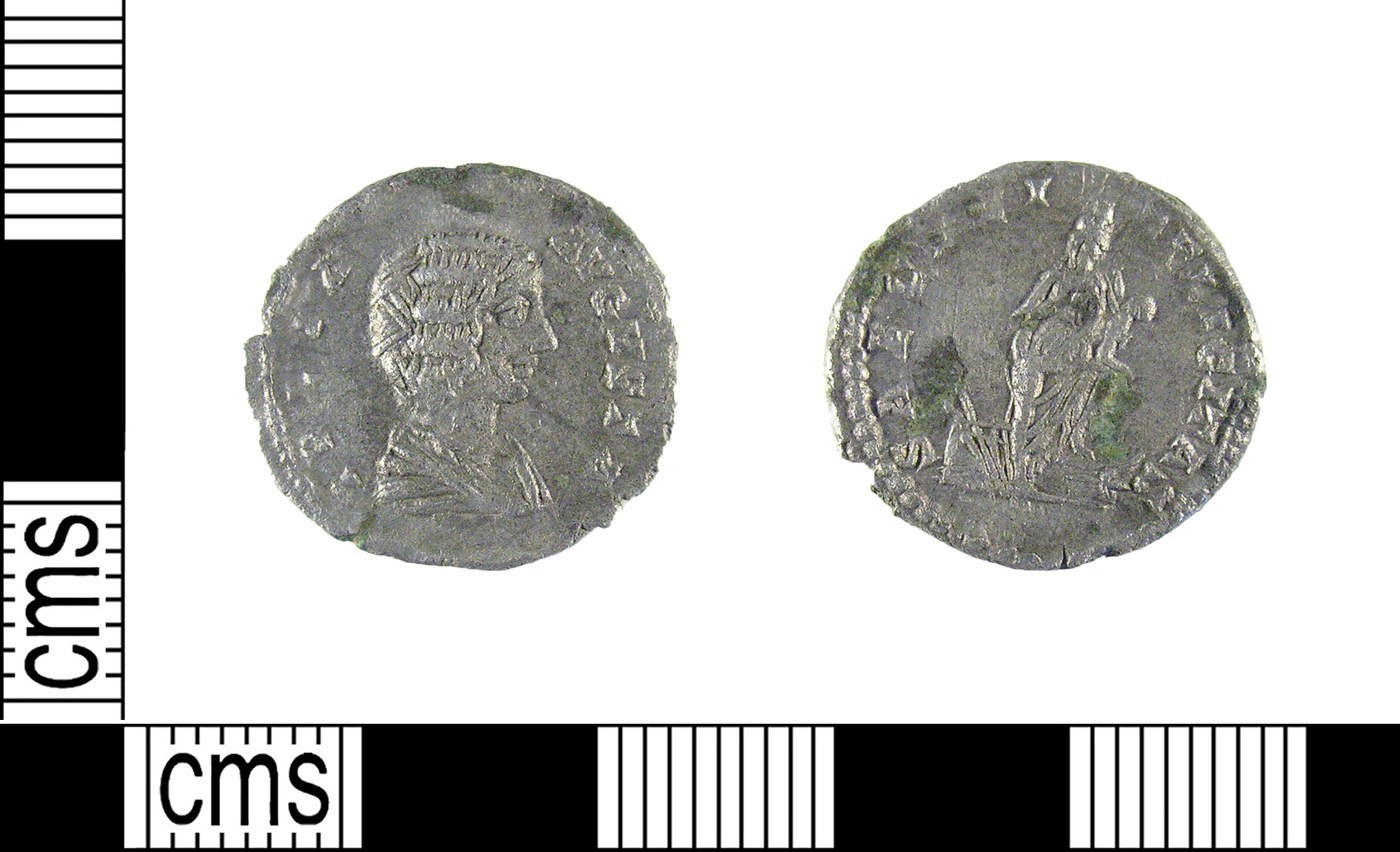
Begin with the obverse legend, because the name is what fixes the identification. Genuine coins read some form of IVLIA DOMNA AVG or IVLIA AVGVSTA around a female bust facing right. Even when parts of the legend are worn, the surviving letters IVLIA or DOMNA are the anchor. If the coin instead names an emperor or a different empress, it is not a Julia Domna type despite any resemblance.
Read the portrait style. Julia Domna is shown with a full face and a characteristic Severan coiffure: deep horizontal waves or ridges sweeping back to a bun at the nape. This hairstyle, paired with the drapery at the shoulder, is a strong secondary confirmation and helps separate her from later Severan women like Julia Maesa, Julia Soaemias, or Julia Mamaea, whose legends and hair differ.
Examine the reverse figure and its legend. This example shows a draped standing figure; identify it from the surrounding word — PIETAS, PVDICITIA, IVNO, VENVS, or VESTA are common — and the attribute it holds (patera, scepter, child, or veil). Matching the standing type and legend to a published Severan reference pins down the exact variety and can reveal whether it is a common or scarcer issue.
Check size, weight, and metal. A real denarius is a small hand-struck coin, about 18-20 mm and roughly 2.5-3.5 grams, with a slightly irregular flan and often an off-center strike. The metal should read as toned gray silver. Be suspicious of pieces that are oversized, unusually heavy or light, perfectly round with sharp modern edges, magnetic, or brassy in color.
Apply authentication caution. Popular imperial types are widely faked, including cast copies with soft, mushy detail and telltale seams, and modern struck fakes and "tourist" replicas. Compare lettering and portrait against verified specimens, look for repeated surface bubbles or file marks, and treat any coin with edge seams or a grainy cast texture skeptically. For a coin of real value, buy from an established ancient-coin dealer or one certified by a recognized third-party service.
Frequently asked questions
What single feature confirms this is Julia Domna?
The obverse legend naming her — IVLIA DOMNA AVG or IVLIA AVGVSTA — around a right-facing female bust with the tiered Severan hairstyle. The name in the inscription is the decisive identifier.
How do I tell Julia Domna from other Severan empresses?
Read the name in the legend and compare the hairstyle. Julia Maesa, Julia Soaemias, and Julia Mamaea have their own name legends and different coiffures, so the inscription plus portrait style separates them.
What size and weight should a genuine denarius be?
Expect a small hand-struck silver coin roughly 18-20 mm across and about 2.5-3.5 grams, with an irregular flan and often an off-center strike. Oversized, magnetic, or brassy pieces are warning signs.
How can I spot a fake?
Watch for cast copies with soft detail and edge seams, surface bubbles, or a grainy texture, and for suspiciously perfect modern strikes. Compare against verified examples and, for valuable coins, buy certified or from a reputable ancient-coin dealer.