
How to Identify the Denarius of Didius Julianus
A collector's guide to recognizing a genuine silver denarius of the short-reigned emperor Didius Julianus by legend, portrait, size, and style.
Read the full Denarius of Didius Julianus encyclopedia entry →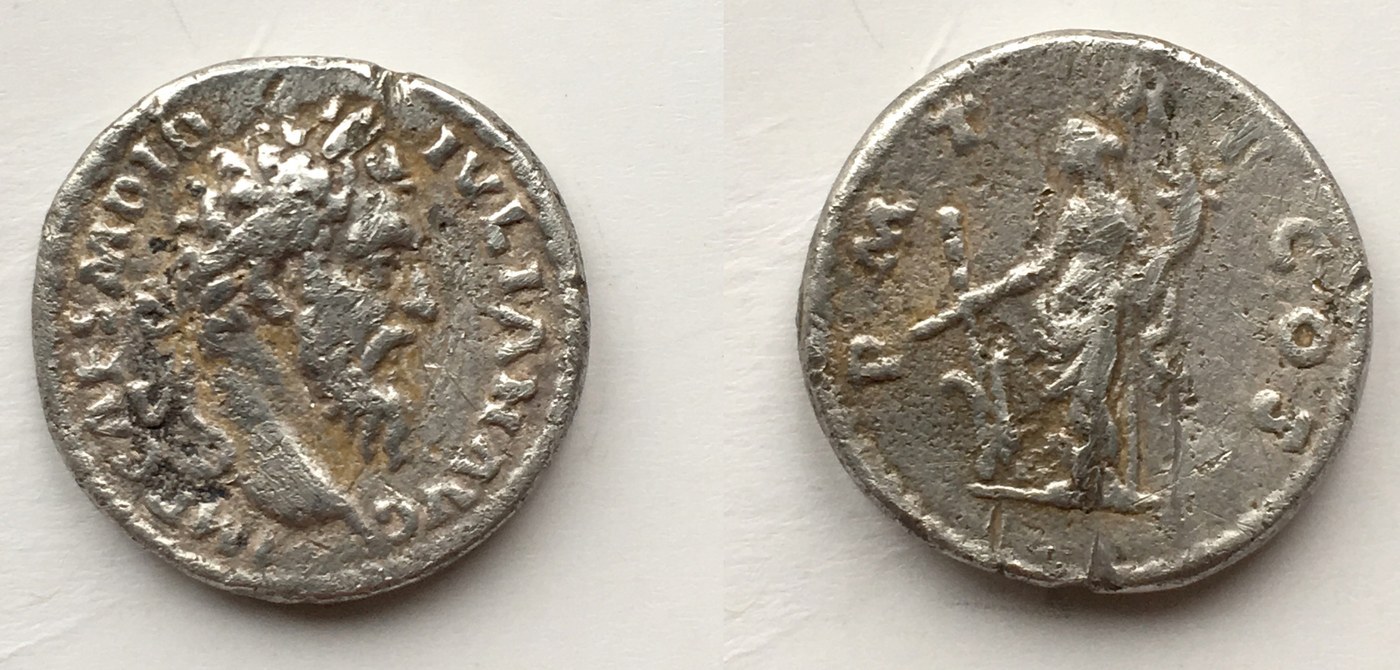
Begin with the obverse legend, because the emperor's name is the single most important diagnostic. A denarius of Didius Julianus carries a laureate, right-facing male bust encircled by a Latin inscription that includes DID IVLIAN or IVLIANVS, usually in a form such as IMP CAES M DID IVLIAN AVG or IMP CAES M DID SEVER IVLIAN AVG. If you cannot read that name element, you cannot confirm the attribution, since many late second-century denarii share the same general portrait style.
Next, examine the reverse. Expect a standing figure, typically a personified deity or imperial virtue such as Concordia, Fortuna, or a figure representing the emperor's rule, each with its own legend and attributes. Match the reverse legend and the figure's attributes (a cornucopia, patera, rudder, or standard, for example) against published references for Julianus rather than relying on the image alone.
Check the physical specifications. A denarius of this period is a small silver coin, roughly 17 to 19 millimeters across and only a few grams in weight, with a slightly pale, debased-silver appearance. A coin that is markedly larger, heavier, or a brassy base metal is not a denarius of this era. There are no modern-style mint marks; instead, attribution rests on the legends and reverse type tied to the mint of Rome.
Be alert to look-alikes and fakes. Denarii of contemporaries and rivals from 193 AD, such as Pertinax, Clodius Albinus, Pescennius Niger, and Septimius Severus, share the same fabric and reverse repertoire, so the obverse name is what separates them. Given the type's rarity and value, forgeries, cast copies, and tooled or re-engraved coins are common. Treat any cheap example with suspicion, and rely on reputable dealers, published references, and certification from a recognized grading service before accepting a coin as genuine.
Frequently asked questions
What legend should I look for to confirm the emperor?
Look for the name element DID IVLIAN or IVLIANVS in the obverse legend, in forms like IMP CAES M DID IVLIAN AVG. That name around the laureate portrait is what confirms it is Didius Julianus rather than another emperor of 193 AD.
How big and heavy should the coin be?
It should be a small silver coin about 17 to 19 millimeters in diameter and only a few grams in weight, matching the denarius standard of the 190s. A much larger or heavier piece, or one in base metal, is not a genuine denarius of this type.
Which other emperors' coins can be confused with it?
Denarii of Pertinax, Clodius Albinus, Pescennius Niger, and Septimius Severus from the same period share the same size, silver fabric, and reverse designs. The obverse name legend is the reliable way to tell them apart.
How can I avoid buying a fake?
Because genuine examples are rare and costly, favor coins with documented provenance and certification from a recognized grading service, buy from established dealers, and be wary of unusually cheap coins or ones with suspiciously sharp, re-engraved detail.