
How to Identify the Denarius of Caracalla
A collector's guide to recognizing a silver denarius of Caracalla by its laureate portrait, ANTONINVS legend, small silver fabric, and reverse types.
Read the full Denarius of Caracalla encyclopedia entry →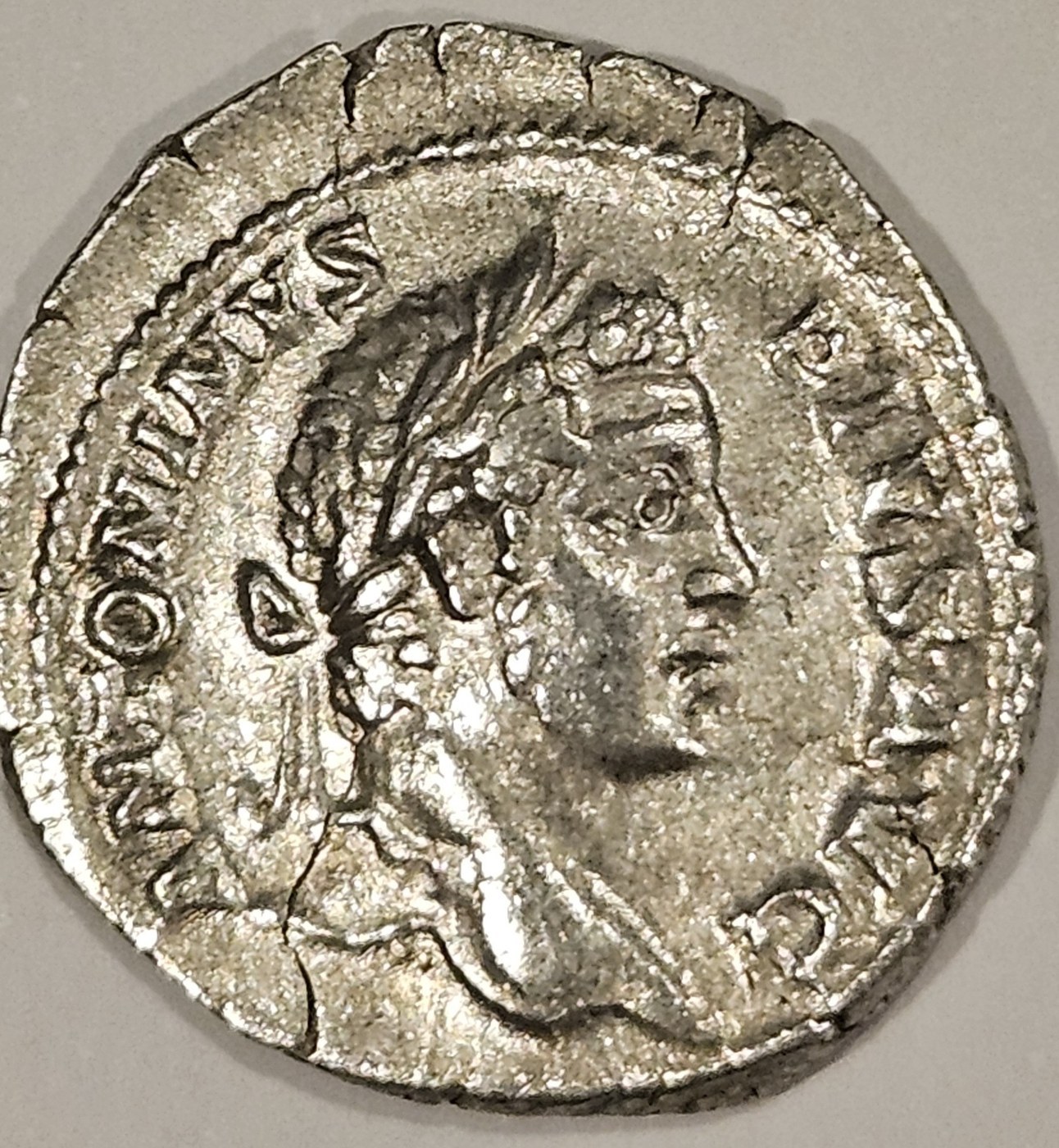
Start with the portrait and the obverse legend, the two most reliable diagnostics. A denarius of Caracalla shows a right-facing male bust wearing a laurel wreath, ringed by a Latin legend that includes the name ANTONINVS along with abbreviated imperial titles such as PIVS AVG. Younger portraits show a smooth-faced boy from his years as junior emperor; later ones show a mature, short-bearded man with a hard, frowning expression. Read the legend around the head first, because the name and titles are what firmly separate his coins from those of his father Septimius Severus, his brother Geta, or later emperors who also used the name Antoninus.
Assess the fabric. This should be a small silver coin, roughly 17–19 mm in diameter and only a few grams in weight, hand-struck rather than machine-made. Expect a slightly irregular flan, some variation in centering, and relief that may be soft in places. A perfectly round, uniform, heavy disc with sharp machined rims is a warning sign that the piece is a modern replica or fantasy rather than an ancient strike.
Turn to the reverse. Caracalla's denarii carry a wide range of reverse designs, most often a standing deity or personification, identified by the legend running around the border as on this example. Common types include Sol, Jupiter, Mars, Victory, and virtues such as Providentia, Securitas, or Fides. You do not need to recognize every figure by sight; instead transcribe the reverse legend and match it to a standard reference such as the Roman Imperial Coinage catalog to pin down the exact type and its place within his reign.
Beware of look-alikes and shared names. Other Severan silver, especially denarii of Septimius Severus, Julia Domna, Geta, and Elagabalus (who also styled himself Antoninus), can look broadly similar in size and style. The combination of a laureate male portrait facing right and the specific ANTONINVS-with-titles legend of Caracalla is the deciding factor, so never attribute by portrait style alone. Also note that later coins with a radiate crown rather than a laurel wreath are usually antoniniani, not denarii.
Be careful about authenticity and cleaning. Roman denarii are widely collected and therefore faked, including cast copies and tooled coins. Watch for a grainy or bubbly surface, a visible casting seam on the edge, unnaturally soft detail, or a weight and diameter that fall outside the expected range. Do not clean a coin you are unsure about, as harsh cleaning strips original surfaces and slashes value; when a firm attribution or price matters, seek confirmation from an established ancient-coin dealer or a grading service rather than relying on appearance alone.
Frequently asked questions
What single feature most reliably identifies a denarius of Caracalla?
The obverse legend. A laureate right-facing male portrait combined with the name ANTONINVS and his abbreviated imperial titles marks the coin as Caracalla's. Because several Severan rulers used the name Antoninus, read the full legend rather than judging by the portrait alone.
How do I tell a denarius from Caracalla's antoninianus?
Look at the crown. A denarius shows the emperor in a flat laurel wreath, while the larger antoninianus he introduced in 215 shows him wearing a spiked radiate crown. The radiate coin is also somewhat bigger and heavier.
How can I spot a fake or cast copy?
Genuine denarii are hand-struck silver of roughly 17–19 mm and a few grams. Be suspicious of a grainy or bubbly surface, an edge seam, unnaturally soft detail, or a weight and size outside the normal range, all of which suggest a cast or replica.
Should I clean the coin before identifying it?
No. Cleaning ancient silver can strip its surface and sharply reduce value. Leave any patina intact, photograph both faces clearly, and transcribe the legends so the type can be matched to references instead.