
How to Identify the Denarius of C. Papius Mutilus
A collector's guide to recognizing this Social War-era silver denarius by its C PAPIUS MUTILUS legend, portrait, reverse, and telltale ancient fabric.
Read the full Denarius of C. Papius Mutilus encyclopedia entry →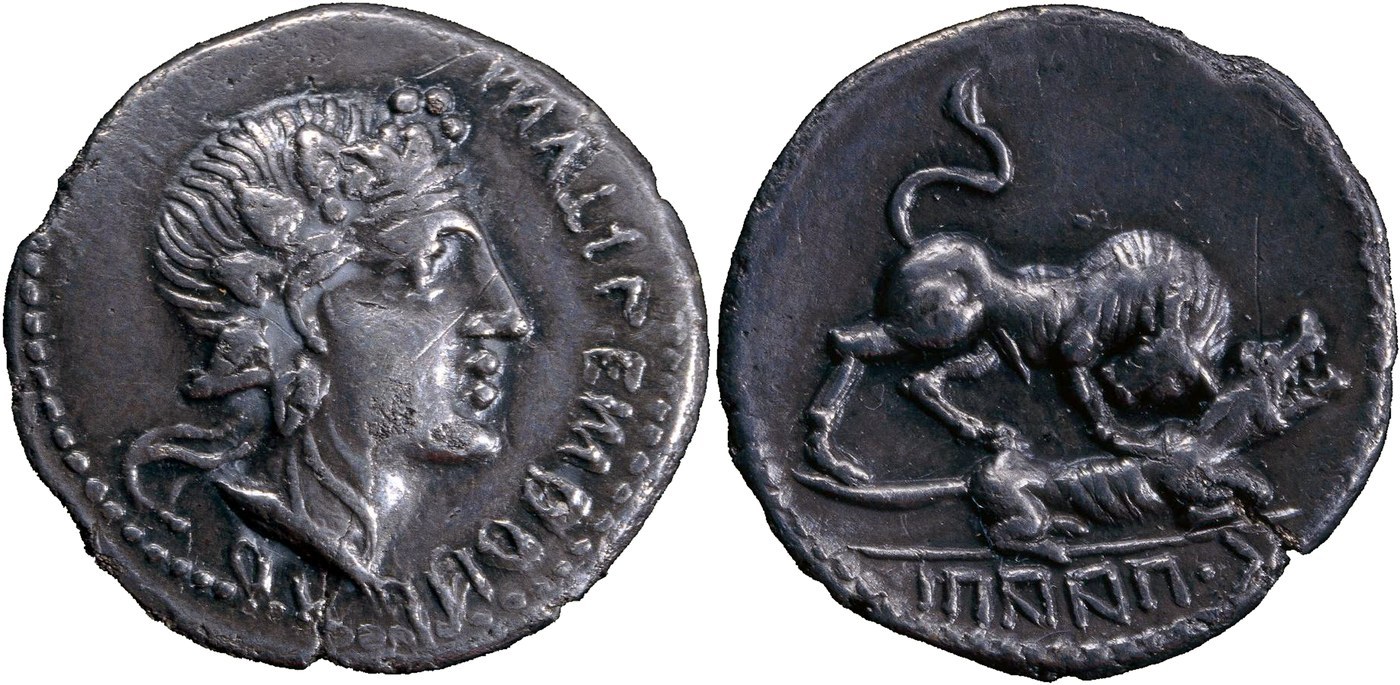
Begin with the legend, because it is the single most important diagnostic. Look for the name C PAPIUS MUTILUS in the field, which ties the coin to the Samnite leader of the Social War rather than to any of the numerous Roman moneyers whose denarii otherwise look similar. Read the letters carefully; wear, off-center striking, or worn dies can leave only part of the name legible, and a confident attribution depends on matching the inscription to a published reference.
Examine the two faces. The obverse shows a portrait bust set beside the legend, and the reverse of this type presents a figure on horseback or in a chariot, a martial image fitting the wartime origin of the issue. Note that the insurgent coinage was deliberately modeled on the Roman denarius, so the overall style, portrait convention, and layout will feel like a standard Republican denarius; do not rely on general appearance alone to identify it.
Check the physical fabric. This should be a hand-struck silver coin of denarius module, roughly 17–20 mm and near 3.5–4 grams, with a somewhat irregular flan, honest circulation wear, and the gray toning of genuine ancient silver. Perfectly round blanks, seams, casting bubbles, a soapy or too-uniform surface, or a suspiciously light or heavy weight are warning signs of a cast copy or modern forgery.
Be cautious about look-alikes and fakes. The most common confusion is with ordinary Roman Republican denarii of the same period, which share the format but carry different moneyer names; the legend resolves this. Because authentic Social War denarii are rare and valuable, they are a frequent target for counterfeiters, so treat any unattributed example skeptically. Given the stakes, confirm the identification against a standard catalog of Roman Republican and Italic coinage and, before buying or valuing, seek an opinion from a specialist or a reputable ancient-coin authentication service.
Frequently asked questions
What is the fastest way to identify this coin?
Read the legend. The name C PAPIUS MUTILUS is the key identifier; it links the coin to the Samnite Social War leader and separates it from the many similar-looking Roman moneyer denarii of the same era.
How can I tell it apart from a regular Roman denarius?
The size, weight, and style are intentionally the same, so appearance alone will not do it. Look instead at the inscription: a Social War issue carries the name of an Italic commander such as Papius Mutilus rather than a Roman moneyer.
What size and weight should it be?
It should match the Roman denarius standard, roughly 17–20 mm in diameter and about 3.5–4 grams of silver, hand-struck on a slightly irregular flan with genuine ancient wear and toning.
Should I worry about fakes?
Yes. These rare, high-value types are often forged or misattributed. Watch for cast seams, bubbles, uniform surfaces, or wrong weight, and confirm any genuine candidate with a specialist and a standard reference before trusting the attribution.