
How to Identify the Denarius of Antoninus Pius
A collector's guide to recognizing the silver denarius of Antoninus Pius by its portrait, legend abbreviations, size, and reverse design.
Read the full Denarius of Antoninus Pius encyclopedia entry →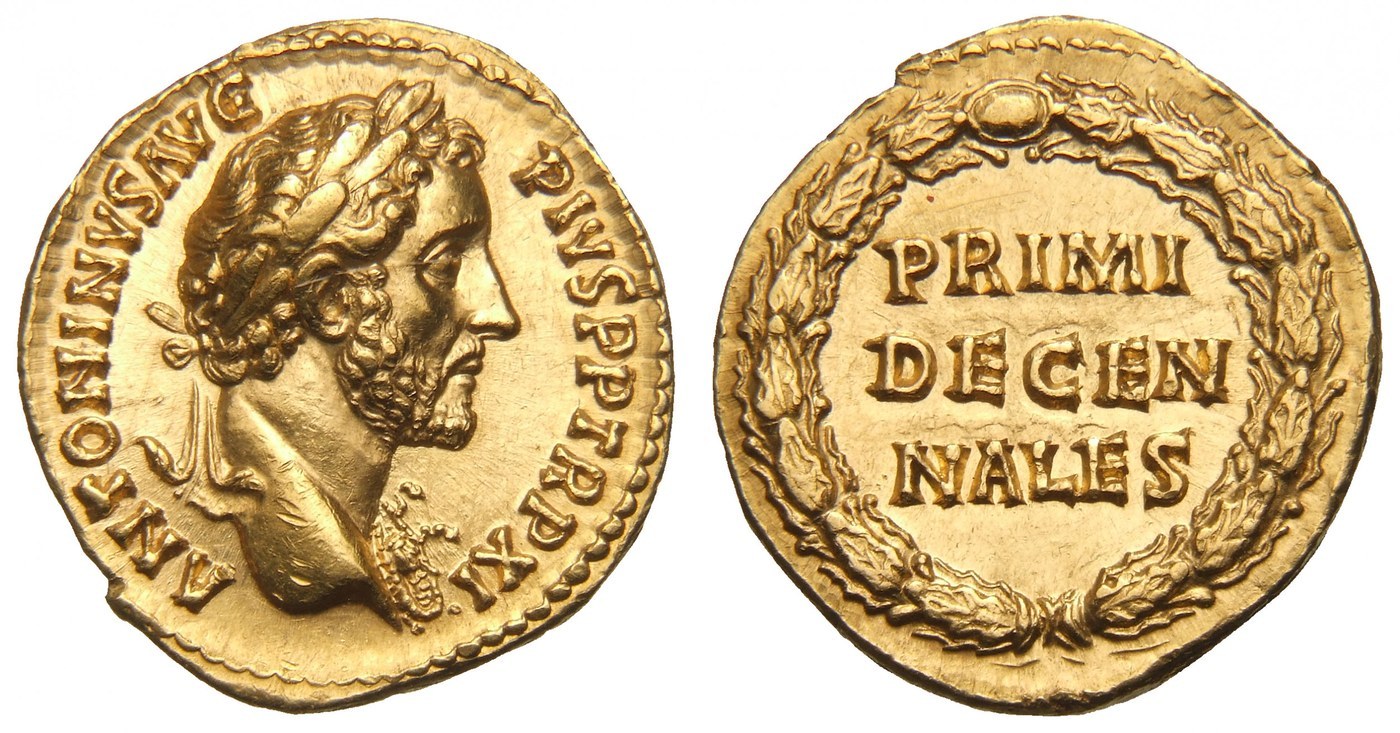
Begin with the metal and size. A denarius of Antoninus Pius is a small silver coin, usually about 17–19 mm across and near 3 grams, struck on an irregular, hand-made flan. If your coin is large bronze or gold, or perfectly round with machined edges, it is not this hand-struck silver denarius. The grayish silver color, small module, and slightly uneven blank are the first filters.
Read the obverse legend around the laureate portrait. The head faces right and is bare of drapery in many issues. The surrounding Latin names typically include ANTONINVS and the titles AVG PIVS, often with P P and a TR P or COS numeral. Those abbreviations both confirm the emperor and, through the tribunician and consular numbers, help place the coin within the 138–161 AD span. Portrait style is a mature, idealized adult male; that consistency across the reign is itself diagnostic.
Study the reverse as a legend-plus-figure combination. Expect a standing or seated personification or deity, holding attributes such as a scepter, patera, cornucopia, or similar, ringed by a Latin inscription. There is no modern date. To attribute the exact type, match both the reverse legend and the figure to a reference such as RIC. Note that the same portrait can appear with dozens of different reverses, so the reverse is what pins down the catalog number.
Watch for look-alikes and cautions. Posthumous DIVVS ANTONINVS issues struck after 161 AD share the same emperor but carry a memorial legend and an altar, pyre, or eagle reverse, and should be catalogued separately. Denarii of Marcus Aurelius, Lucius Verus, or Faustina from the same household can resemble these in fabric, so always confirm the name in the legend. Because these coins are valuable and ancient, be alert to modern casts and tooled or "improved" surfaces; genuine struck coins show sharp die detail and metal flow rather than the soft, bubbly texture of a cast, and buying from reputable sellers with return policies is the safest authentication.
Frequently asked questions
How do I know the coin shows Antoninus Pius and not another emperor?
Read the obverse legend around the portrait. It should contain ANTONINVS with the titles AVG PIVS, often with P P and a TR P or COS number. Related family members such as Marcus Aurelius or Faustina carry different names, so the legend is the deciding factor.
There is no date on the coin. How is it dated?
Roman coins have no calendar date. Instead, the tribunician power (TR P) and consular (COS) numbers in the legend correspond to specific years of the reign, which lets specialists place the coin within 138–161 AD.
What size and weight should a genuine denarius be?
Expect roughly 17–19 mm in diameter and about 3 grams of silver, struck on a slightly irregular flan. A coin that is far heavier, larger, or made of base metal is a different denomination or a reproduction.
How can I spot a fake or cast copy?
Genuine denarii are struck, showing crisp die detail, fine lettering, and metal flow. Cast fakes tend to look soft, have a grainy or bubbly surface, and may show a seam on the edge. When in doubt, buy from established dealers who guarantee authenticity.