How to Identify the Decimal New Penny
How to identify Britain's 1971 decimal 1p coin by its NEW PENNY wording, portcullis reverse, bronze composition, and later switch to copper-plated steel.
Read the full Decimal New Penny encyclopedia entry →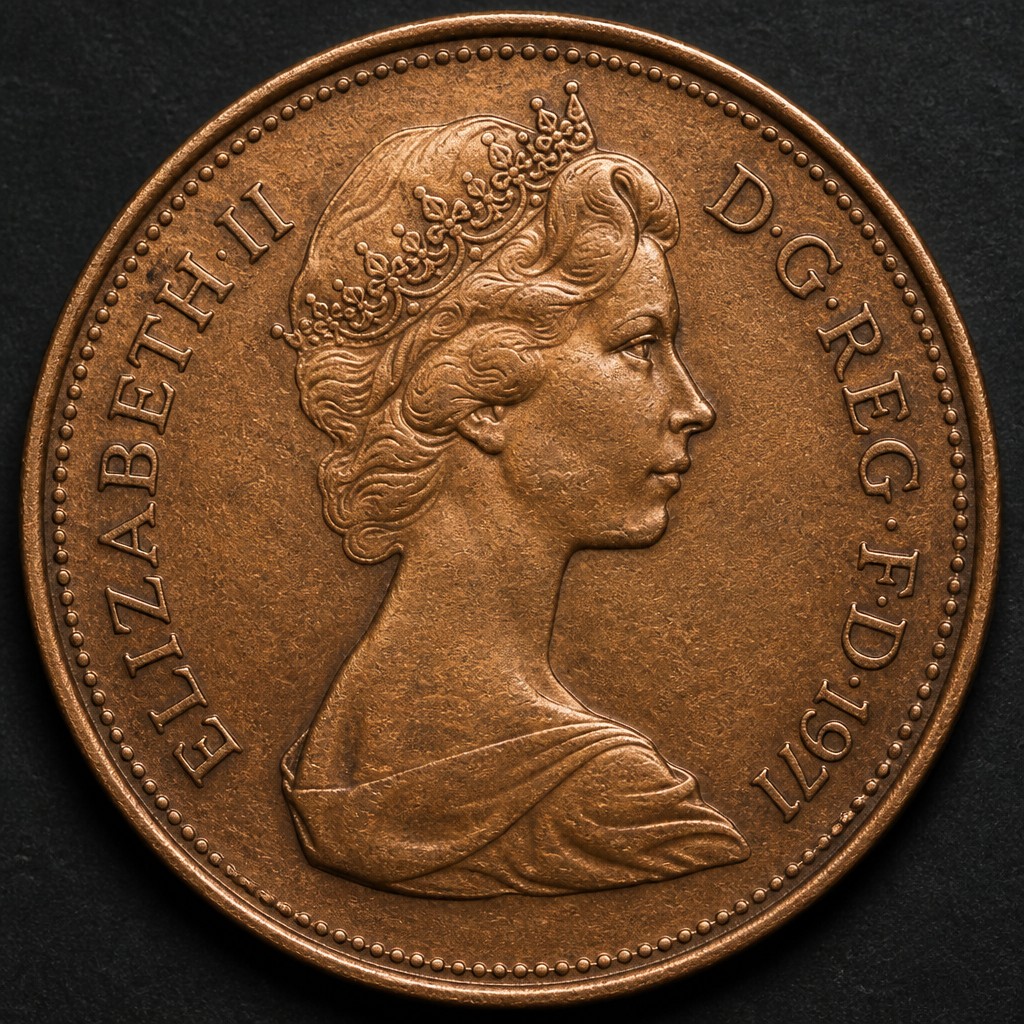
What It Is
The decimal new penny was issued from Decimal Day, 15 February 1971, when the United Kingdom replaced its old pounds-shillings-pence system with decimal currency. The word "NEW" distinguished it from the old pre-decimal penny and appeared on the coin until 1981.
Obverse Design & Inscriptions
The obverse carries a portrait of Queen Elizabeth II, using the Arnold Machin effigy at introduction, with her name and the date.
Reverse Design & Inscriptions
The reverse, designed by Christopher Ironside, shows a crowned portcullis with hanging chains, a heraldic badge associated with the Crown and Westminster. The denomination reads "NEW PENNY" from 1971 to 1981, then changes to "ONE PENNY" from 1982 onward as the "new" terminology was dropped once decimal currency had been in use for over a decade.
Size, Weight, Metal, and Edge
From 1971 to 1992 the coin was struck in bronze (97% copper, 2.5% zinc, 0.5% tin), measuring 20.3mm across and weighing 3.56 grams, with a plain edge. From 1992 onward, rising copper costs led to a switch to copper-plated steel at the same size and weight.
Mint Marks & Where to Find Them
All were struck at the Royal Mint with no separate branch mint mark.
Telling It Apart From Similar Coins
The wording "NEW PENNY" versus "ONE PENNY" is the fastest way to date a coin to before or after 1982. To separate the two metal types, use a magnet: bronze coins (pre-1992) are not magnetic, while copper-plated steel coins (1992 onward) are, since the steel core responds to a magnet even though the surface color looks the same.
Judging Condition & Grade
Circulated bronze coins develop an even brown tone, while uncirculated examples stay bright orange-red. Plated steel coins can show small areas of plating wear or rust-colored spots at the rim or high points if the surface has been damaged, which is a quick way to spot the later composition even without a magnet.
Authenticity Red Flags
Because this is a common, low-value coin, sophisticated forgeries are rare. The main things to watch for are novelty pieces that have been gold-plated or otherwise altered for souvenir purposes rather than genuine currency issues.
Frequently asked questions
What does NEW PENNY mean on an old British penny?
It marked the coin as part of the new decimal currency system introduced in 1971, distinguishing it from the pre-decimal penny; the wording changed to ONE PENNY from 1982.
How can I tell if my penny is bronze or copper-plated steel?
Try a magnet: bronze pennies from before 1992 are not magnetic, while copper-plated steel pennies from 1992 onward will stick to a magnet.
What is depicted on the reverse of the decimal penny?
A crowned portcullis with chains hanging from it, a heraldic badge linked to the Crown and Westminster.
Why do some plated pennies show rust spots?
Copper-plated steel coins made from 1992 onward have a steel core beneath a thin copper coating; if the plating is scratched or worn through, the exposed steel can rust.
Decimal New Penny identified by the community
Recent Decimal New Penny coins identified with Coin Identifier.