
How to Identify the Danish Krone
The Danish krone has been Denmark's currency since 1875, typically bearing the reigning monarch's cypher or portrait alongside national symbols like the crown.
Read the full Danish Krone encyclopedia entry →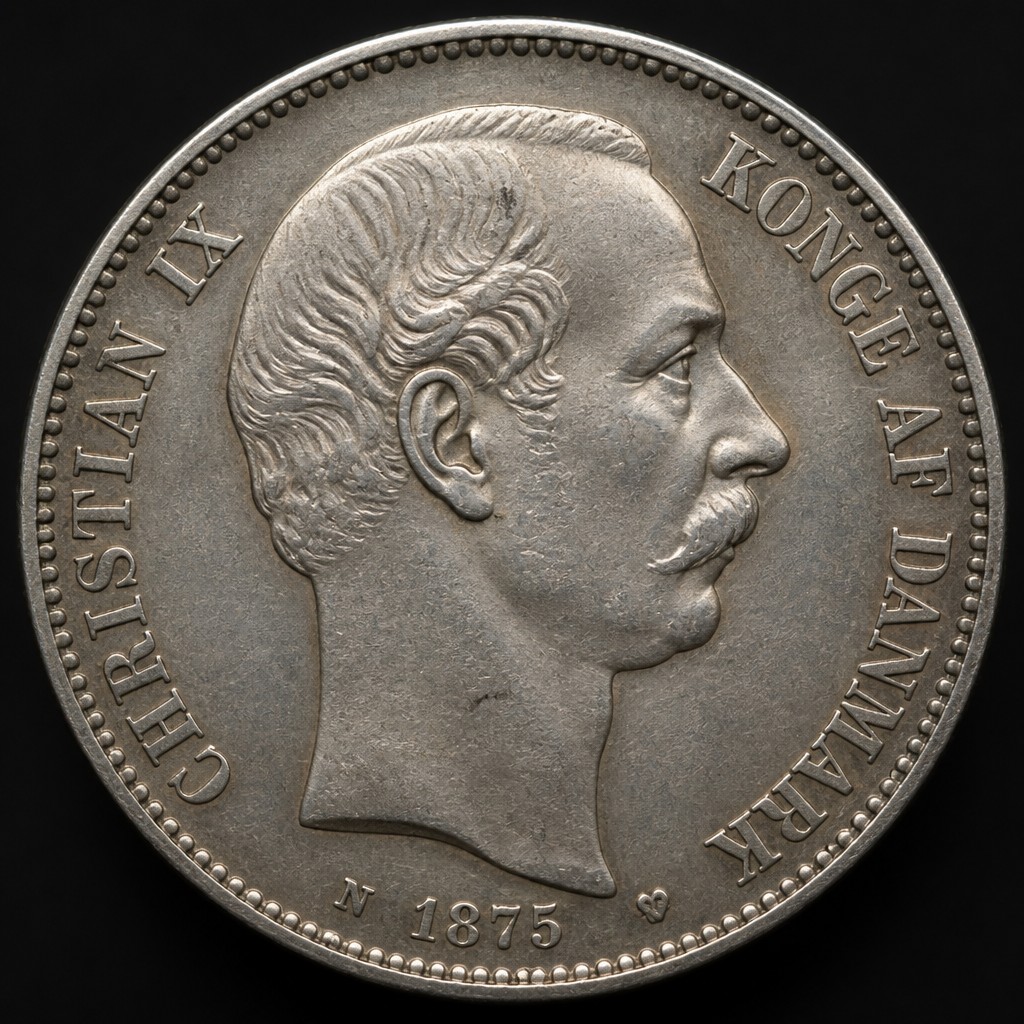
What Is the Danish Krone
The krone has been the official currency of Denmark since 1875, when it replaced the earlier rigsdaler. Coins have been issued continuously under successive Danish monarchs from Christian IX through the current Queen Margrethe II, with denominations and metals changing over time. The introduction of the krone was part of the broader Scandinavian Monetary Union, which for a time linked Denmark's, Sweden's, and Norway's currencies under a shared gold standard.
Obverse Design and Inscriptions
Most commonly the obverse shows a royal cypher or monogram — the reigning monarch's initial intertwined with a crown, such as "MII" for Margrethe II — rather than a full portrait, though some historical issues do show a monarch's profile bust. The legend often includes the monarch's name and title.
Reverse Design and Inscriptions
The reverse shows the denomination numeral, such as "1 KRONE," often flanked by decorative elements including a crown or other national symbols.
Size, Weight, Metal, and Edge
Composition has shifted over time from silver in early issues to copper-nickel and other base-metal alloys in modern circulation coins. Size and weight vary by denomination, so smaller coins like 25 øre are noticeably lighter than larger ones like 5 or 10 krone.
Mint Marks and Where to Find Them
The Royal Danish Mint mark, or the initials of the mint master or engraver, typically appear as small letters near the rim on either side, often close to the date.
Telling It Apart From Similar Coins
The royal monogram style is a strong identifier of the specific monarch's reign, so comparing the cypher's letters — such as CIX for Christian IX, FIX for Frederik IX, or MII for Margrethe II — narrows down the approximate date range even without reading a full date. This monogram-based approach also helps distinguish Danish coins from Norwegian or Swedish krone coins that used similar denominational names but different royal houses and heraldic symbols.
Judging Condition at a Glance
Look at the fine lines of the royal cypher and crown for wear, plus the clarity of the denomination numeral. Circulated base-metal coins often show noticeable rim and surface wear compared to protected uncirculated examples. Coins with a center hole, used on some Danish denominations, should also be checked for a clean, evenly punched opening rather than one worn irregular from long handling.
Authenticity Red Flags
Confirm that the metal color and weight match the expected denomination and era, and check that the cypher style is consistent with the claimed monarch and date. Unusual coloring, incorrect weight, or crude lettering suggest a counterfeit or altered piece.
Frequently asked questions
What does the royal cypher on Danish coins represent?
It's a stylized monogram combining the reigning monarch's initial with a numeral and a crown, identifying who ruled when the coin was struck.
Has the Danish krone always been the same metal?
No, early krone coins used silver for larger denominations, while modern circulating coins use copper-nickel and other base-metal alloys.
How can I date a Danish coin without reading small text?
The style of the royal cypher can narrow down the reign, since each monarch used a distinct monogram design.
What do decorative motifs on some Danish coins mean?
These are traditional Danish design elements sometimes incorporated into reverse designs, without a specific political meaning beyond national decorative tradition.
Where is the mint mark found?
Typically as small letters near the rim on either the obverse or reverse, close to the date.