
How to Identify the Danish 2 Rigsdaler
A large silver crown from the Kingdom of Denmark issued under the Rigsdaler standard, featuring the king's portrait or monogram and the Danish royal arms.
Read the full Danish 2 Rigsdaler encyclopedia entry →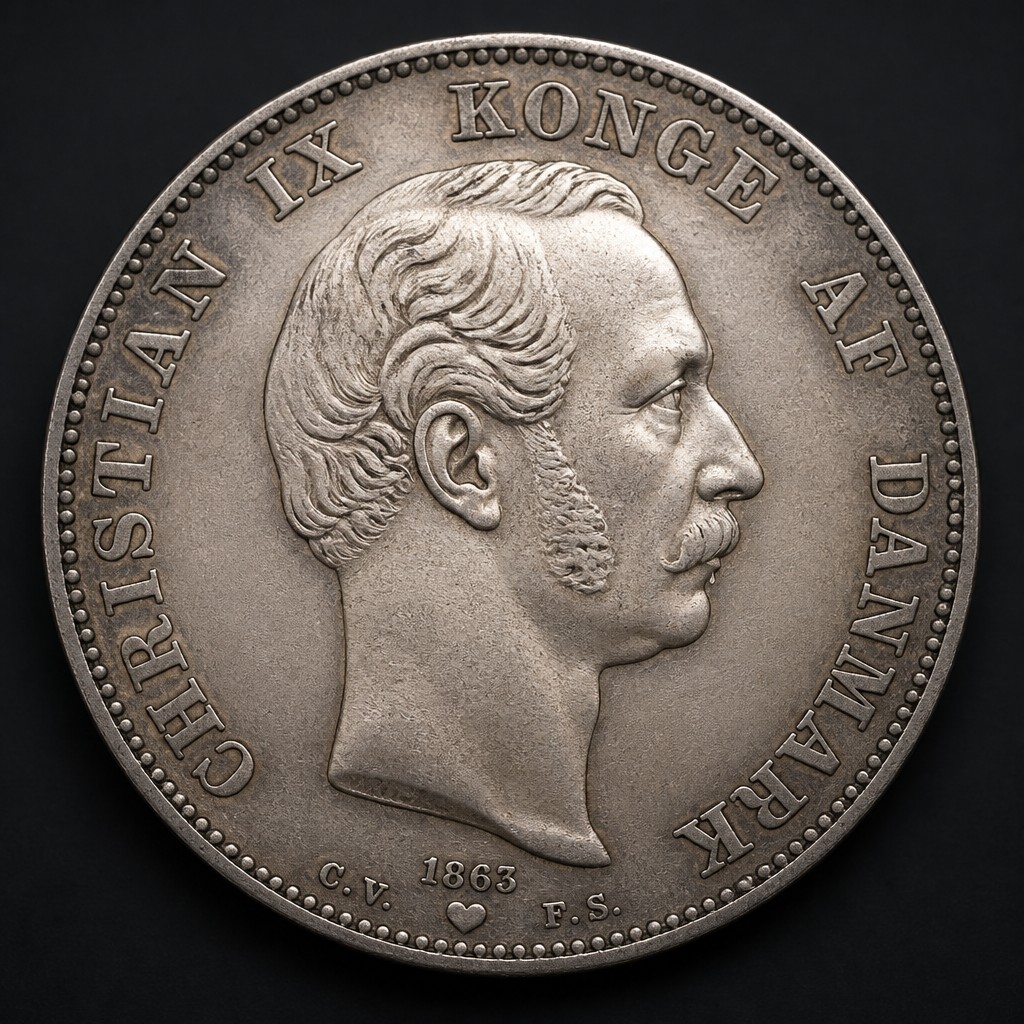
What This Coin Is
The Danish 2 Rigsdaler is a large silver crown coin struck by the Kingdom of Denmark before the country adopted the krone decimal system in 1873. Coins of this denomination were issued under kings such as Frederik VI, Christian VIII, and Frederik VII, and served as substantial trade and commemorative pieces, with special jubilee or memorial issues also appearing periodically within the same size and weight standard.
Obverse Design & Inscriptions
Many 2 Rigsdaler types show the king's portrait in profile with his name and title in Latin around the rim, while other issues instead show an elaborate crowned royal monogram (interlaced initials) rather than a bust. The date typically appears within the design or in the surrounding legend.
Reverse Design & Inscriptions
The reverse commonly features the Danish crowned coat of arms, sometimes supported by wild men or lions, with the denomination spelled out as "2 RIGSDALER" or "2 RD." Commemorative issues may instead show a special design marking a jubilee or historic event, with an explanatory legend around the border.
Size, Weight, Metal, and Edge
These are heavy silver crowns, generally around 38-40 mm in diameter, in .875 fine silver, making them notably substantial in the hand. The edge is usually lettered with a motto or reeded, and the specific edge treatment can help confirm the coin's date range.
Mint Marks and Where to Find Them
Danish coins of this era were struck at the Copenhagen mint, and a small assayer's initial or mint official's mark may appear near the date or at the base of the design rather than a full mint name. These initials changed periodically and can help narrow down the exact striking period.
Telling It Apart From Similar Coins
Other Scandinavian crowns from Sweden or Norway share a similar size and silver content, so the Danish royal arms design and the "Rigsdaler" denomination wording are the clearest identifiers. Monogram-type Danish coins can be distinguished from portrait types simply by the absence of a facial bust on the obverse.
Judging Condition at a Glance
Check the fine details of the crown, the monogram's interlaced lines, or the king's hair for smoothing, since these raised areas wear first. A well-preserved coin retains sharp lettering and a lustrous surface, while a worn example shows a flattened, indistinct central design and a dull, gray tone across the fields.
Authenticity Red Flags
Be cautious of coins that feel unusually light for their size, show blurred or shallow lettering, or have a seam line around the edge, all common traits of cast counterfeits. Confirm the legend and portrait or monogram style match the claimed king and date, since inconsistencies suggest an altered or fantasy piece.
Frequently asked questions
What does 'Rigsdaler' mean?
Rigsdaler was Denmark's main silver currency unit before the krone decimal system replaced it in 1873.
Why do some Danish coins show a monogram instead of a portrait?
Certain Danish issues favored an ornate crowned royal monogram design rather than a facial bust as the obverse motif.
What is the silver fineness of this coin?
Most Danish 2 Rigsdaler coins were struck in .875 fine silver.
How do I know which Danish king issued my coin?
Read the Latin name and title in the legend around the portrait or check historical dates against known reigns like Frederik VI, Christian VIII, or Frederik VII.