
How to Identify the Crown
A large British coin valued at five shillings, identified by the monarch's portrait, a widely varying reverse (from St George and the Dragon to commemorative designs), and its notably broad size.
Read the full Crown encyclopedia entry →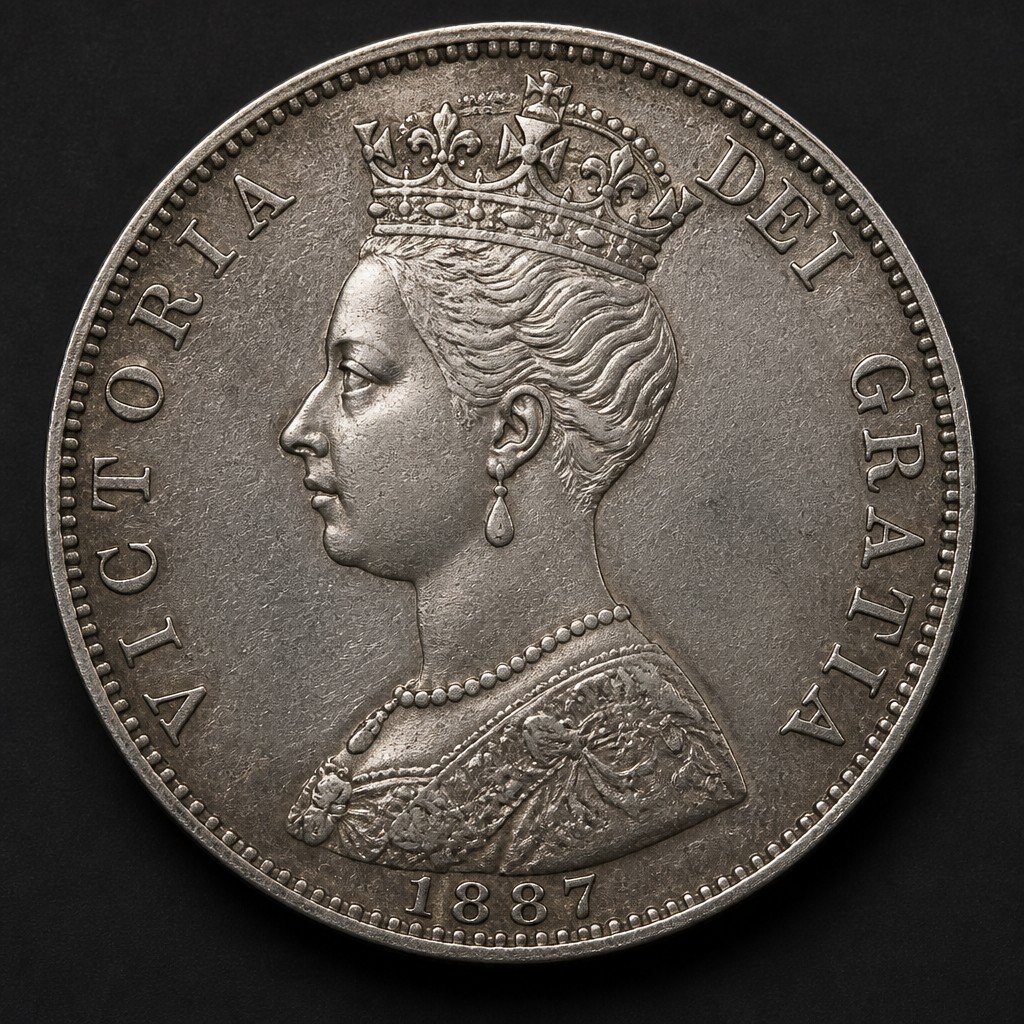
What It Is
The crown is a British coin traditionally valued at five shillings, with a minting history stretching from the reign of Henry VIII through to the present day, though since decimalization in 1971 it has survived mainly as a commemorative rather than circulating coin, now denominated at five pounds. Across its long history the crown has marked major royal occasions such as jubilees, coronations, and weddings, making many issues more common as commemorative keepsakes than as coins that ever saw everyday circulation.
Obverse Design
The obverse carries a portrait of the reigning monarch at the time of issue, following the broader conventions used across British coinage, with hairstyle and title inscriptions helping to identify the specific monarch and portrait type.
Reverse Design
The crown's reverse has varied enormously across its long history: notable examples include the Pistrucci-derived Saint George and the Dragon design used on the famous 1935 Silver Jubilee crown (sometimes nicknamed the "Rocking Horse" crown for its dynamic composition), the ornate "Gothic" crown of Victoria's reign, the pattern "Una and the Lion" crown of 1839, and numerous commemorative designs on post-1965 issues marking royal and national anniversaries.
Size, Weight, and Metal
Traditional silver crowns were struck in sterling silver (.925 fine) until 1920, then in a reduced .500 fine silver alloy from 1920 to 1946, and in cupro-nickel from 1947 onward; a sterling silver crown weighs about 28.28 grams with a diameter of roughly 38-39mm, making it one of the largest coins in the British series.
Mint Marks and Where to Find Them
Crowns were struck at the Royal Mint, and unlike sovereigns of the same eras, most do not carry a branch mint letter system, so identification relies primarily on the date, monarch's portrait, and reverse design rather than a separate mint symbol.
Telling It Apart from Similar Coins
The crown is notably larger and heavier than the half crown, which was a distinct, smaller denomination also once in common circulation, so size comparison quickly separates the two. Large foreign silver dollar-sized coins can superficially resemble a British crown, so checking the English legend, the monarch's portrait, and either a "FIVE SHILLINGS" denomination or a recognizably British reverse design confirms it as a genuine crown.
Judging Condition at a Glance
Because crowns have large, flat surfaces, wear shows clearly and early on the monarch's portrait and on raised reverse elements such as a horse's flank or a shield's fine lines, making condition assessment relatively straightforward compared to smaller, more compact coins.
Authenticity Red Flags
Watch for cast copies of rare or valuable crown dates, identifiable by casting seams along the edge, softened design details, or incorrect weight, and compare the edge design (plain, milled, or lettered depending on era) against what is documented for the specific date and monarch.
Frequently asked questions
Is the crown still used as everyday money?
No, since decimalization in 1971 the crown has mainly been issued as a commemorative coin, now denominated at five pounds, rather than circulating as ordinary currency.
Why do crown reverse designs vary so much?
Because the crown has been minted across many centuries and monarchs, its reverse has been redesigned repeatedly, ranging from classical St George and the Dragon imagery to ornate Victorian patterns and modern commemorative themes.
How can I tell a crown from a half crown?
The crown is noticeably larger and heavier, at roughly 38-39mm and 28.28 grams for a sterling silver example, compared to the smaller half crown denomination.
What metal is my crown made of?
It depends on the date: sterling silver (.925 fine) before 1920, reduced .500 fine silver from 1920 to 1946, and cupro-nickel from 1947 onward.
What should I check if I think I have a rare crown?
Examine the edge for casting seams, verify the weight against the expected standard for its metal era, and compare fine design details to a documented genuine example of that specific date.