
How to Identify the Crown of the Double Rose
A collector's guide to attributing Henry VIII's hammered gold crown by its rose, shield, consort initials, and mint marks.
Read the full Crown of the Double Rose encyclopedia entry →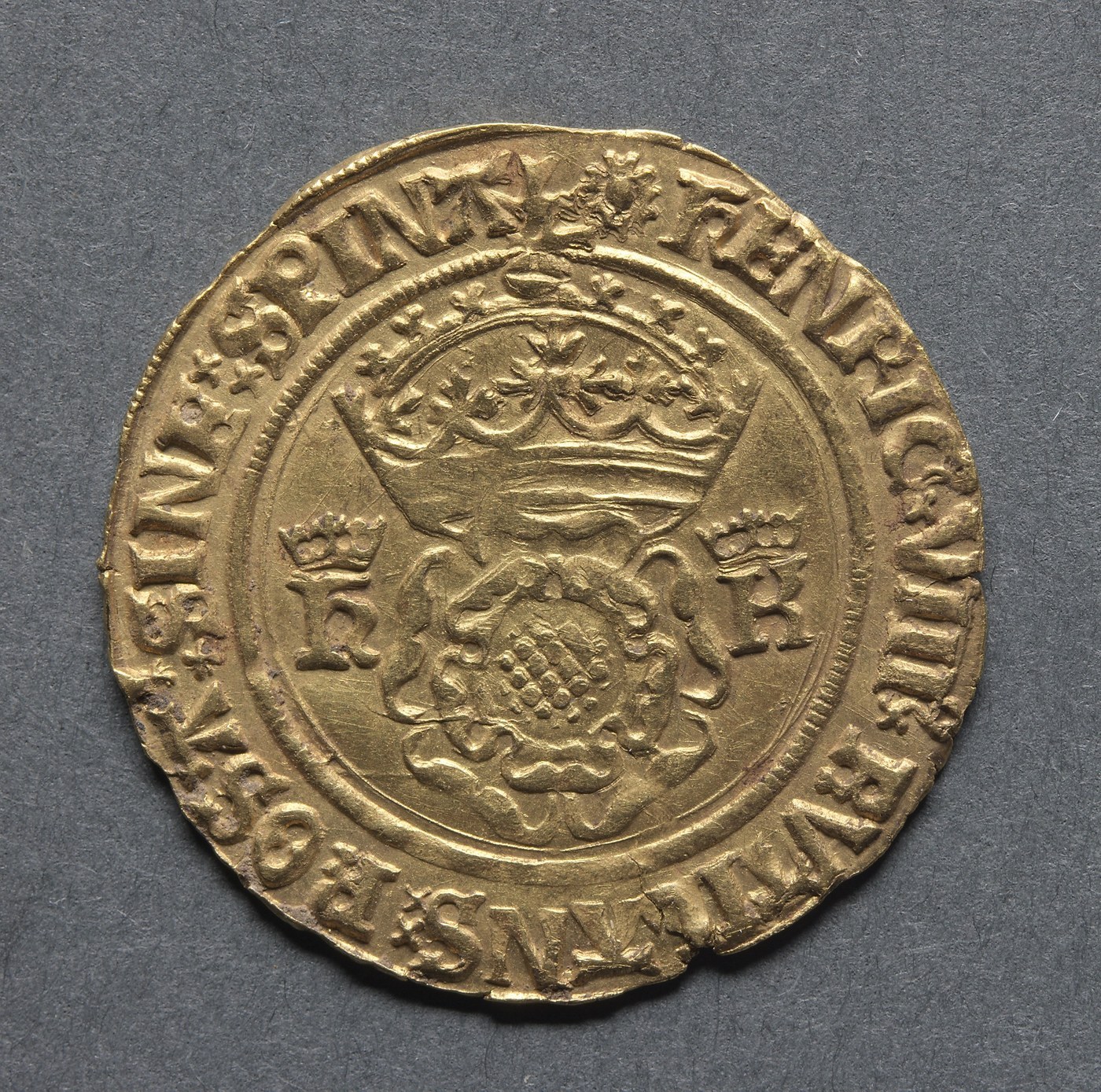
Start with the two central devices. One side of a Crown of the Double Rose shows a crowned double Tudor rose inside an ornate inner circle; the other shows a crowned heraldic shield of the royal arms, with the lions of England quartered on the shield and a cross-surmounted crown above. If your coin shows this crowned, lion-bearing shield within an ornate circular border, you are looking at the armorial side, as in the photographed example. Confirm the paired device on the reverse before attributing the type.
Check the flanking initials next to the rose. These crowned paired letters name the king and his queen consort and are the single most useful attribution detail, because they changed across Henry VIII's marriages. Reading them correctly narrows the coin to a specific span of the reign and separates a common issue from a scarcer one.
Examine fabric and size. This is a small, hand-hammered gold coin, so expect a slightly irregular flan, hand-cut lettering, and the soft, occasionally doubled relief typical of hammered striking rather than the sharp, uniform edges of milled coins. Weigh and measure the piece and compare against published specifications for the denomination; underweight coins may be clipped, and clipping heavily reduces both authenticity confidence and value.
Locate the mint mark. A small symbol in the legend (the initial mark) indicates the issuing period and helps distinguish genuine period strikes and pin down the date range. Cross-reference the mark, legend spelling, and rose-and-shield style against a standard reference for Tudor hammered gold.
Be cautious with authentication. Tudor gold is widely faked, and cast copies, tooled surfaces, and modern replicas exist. Look for casting seams, bubbles, unnaturally smooth fields, or lettering that lacks hand-cut variation. Given the value at stake, have any candidate examined by a specialist in early English hammered coinage or submitted to a reputable grading service before purchase.
Frequently asked questions
Which side is the obverse?
Conventions vary, but the crowned double-rose side with the royal-and-consort initials is usually treated as the main design side, while the crowned royal shield appears on the other. Both must be present to confirm the type.
How can I tell it from a later crown of the same denomination?
The crowned double Tudor rose with paired consort initials ties the coin specifically to Henry VIII. Later crowns use different designs, legends, and monarch names, so read the legend and central device carefully.
How do I know it isn't a fake or a cast copy?
Genuine pieces are hand-struck, showing slightly uneven flans and hand-cut lettering. Watch for casting seams, air bubbles, mushy detail, or incorrect weight. For a coin of this value, professional authentication is strongly advised.