
How to Identify the Crown of George IV
A collector's guide to the George IV silver crown: its left-facing laureate head, Pistrucci St George reverse, large size, lettered edge and date.
Read the full Crown of George IV encyclopedia entry →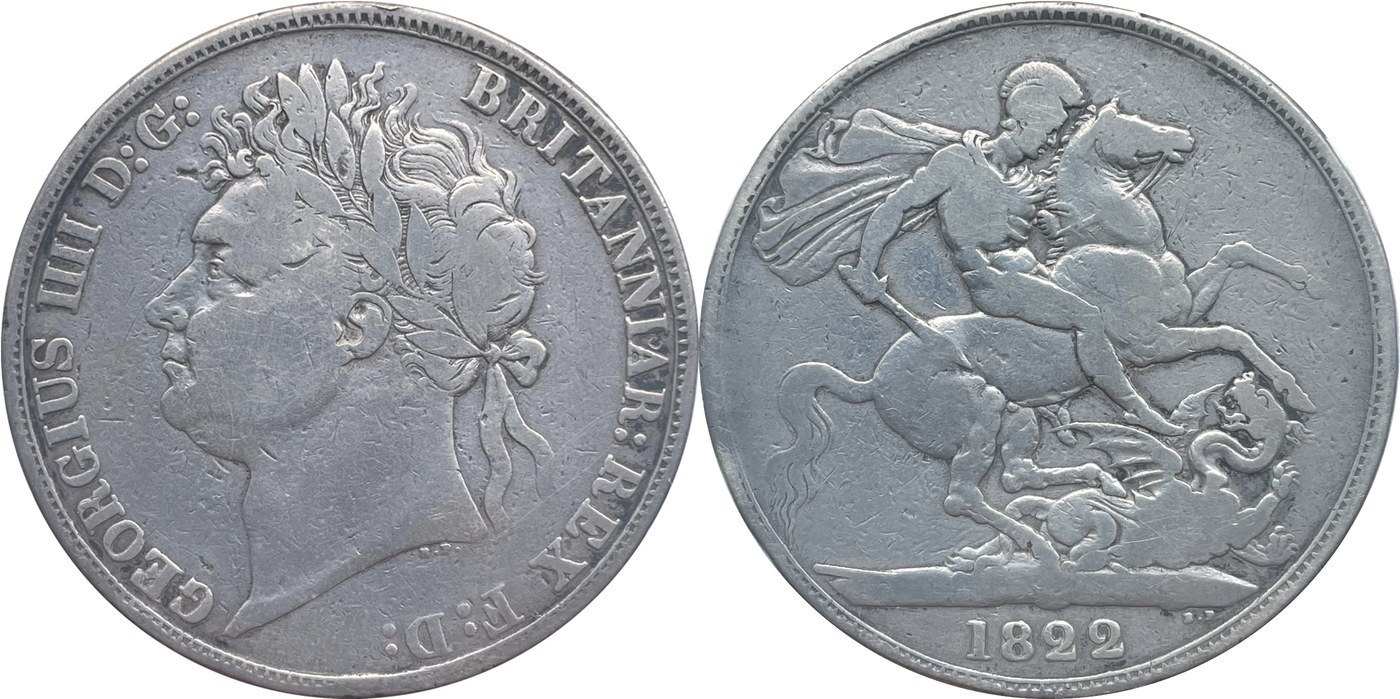
Start with the obverse portrait. The George IV crown of this type shows the king's laureate head facing left, wearing a laurel wreath, with a Latin legend that opens GEORGIUS IIII D:G and gives his royal titles. The left-facing laureate head is the primary diagnostic and separates this early crown from the later bare-head portrait George IV used on his coinage; read as much of the legend as survives to confirm the ruler.
Turn to the reverse and confirm the St George design. You should see St George mounted on horseback, wearing a helmet and flowing cloak, driving a spear or broken lance at a dragon beneath the horse, with the date in the exergue below. On this example the date reads 1822. This is Pistrucci's design; the coin carries no written denomination, so it is the design, module and edge that mark it as a crown rather than a smaller silver piece.
Check size, metal and edge. A genuine crown is large, about 38–39 mm across, struck in sterling silver to sharp, even relief on a perfectly round flan. Crucially the edge is lettered, not plain or simply reeded: it gives the regnal year in Latin (for 1822, SECUNDO or TERTIO). Weigh and measure the coin and compare against published crown specifications, and always read the edge, since it both dates the striking and is a common point of difference between varieties.
Separate it from look-alikes. Crowns of George III and later monarchs also use a St George and dragon reverse, so do not rely on the reverse alone; the obverse portrait and legend decide the reign. Within George IV's own coinage, be sure you have the laureate head rather than the later bare head. Gilt, plated, or lower-denomination coins and modern fantasy pieces can superficially resemble a crown, which is why size, weight and edge checks matter.
Authenticate with care. Because crowns are popular and valuable, cast and struck copies exist. Watch for casting seams or bubbles, soft or mushy lettering, fields that look too smooth or grainy, an edge that is plain or wrongly inscribed, and any weight or diameter that departs from published figures. A crown that has been mounted, cleaned harshly or had its edge tampered with loses both authenticity confidence and value, so for a high-grade or costly example seek a specialist opinion or a reputable grading service.
Frequently asked questions
Which side is the obverse?
The side with the laureate head of George IV facing left and the Latin legend GEORGIUS IIII D:G with his titles is the obverse. The mounted St George spearing the dragon, with the date in the exergue, is the reverse.
How do I tell it apart from a George III St George crown?
The reverse St George design is similar across reigns, so check the obverse. The portrait and the GEORGIUS IIII legend identify George IV; a different name or numeral, or a different bust, points to another monarch.
Why should I read the edge?
The crown has a lettered edge giving the regnal year in Latin, such as SECUNDO or TERTIO on 1822 coins. Reading it confirms the date and variety and is a check against fakes, which often get the edge wrong or leave it plain.
What are the warning signs of a fake?
Casting seams or bubbles, soft or uneven lettering, overly smooth or grainy fields, a plain or incorrect edge, and any weight or diameter that does not match published crown specifications all call for expert examination before you trust the coin.