
How to Identify the Counterstamped 2 Reales
A step-by-step look at reading both the Spanish 2 reales host coin and the crowned WR counterstamp punched into it, plus authentication cautions.
Read the full Counterstamped 2 Reales encyclopedia entry →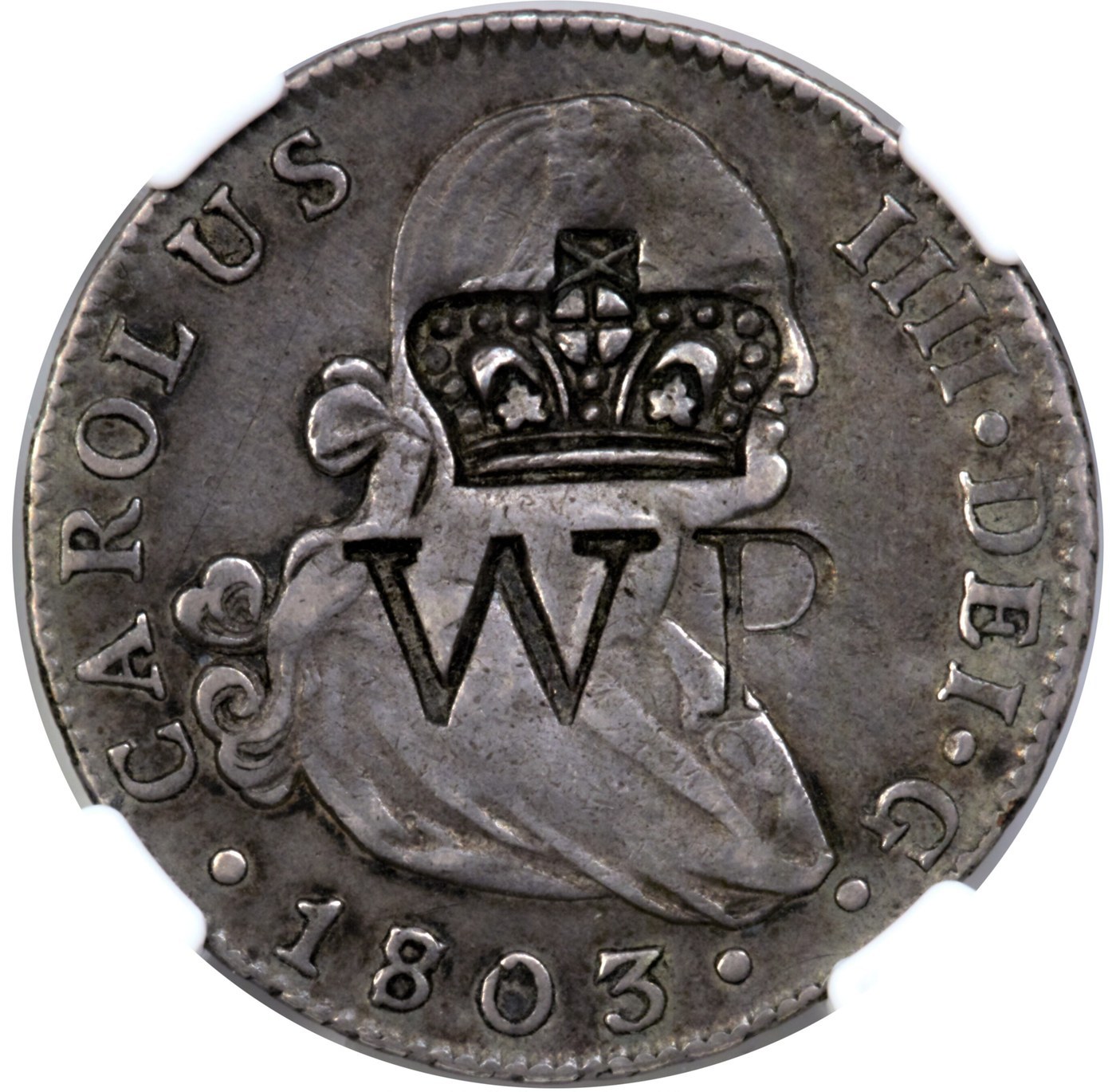
Identify this coin in two layers, because it is really two objects: a Spanish silver 2 reales and a later counterstamp. First confirm the host. Look for a silver piece about 26–27 mm across with a Spanish heraldic shield on the reverse, a '2 R' denomination indication, and a readable date, here 1803. Mint marks and assayer initials in the legend tell you where and by whom the base coin was struck, so record them separately from the punch mark.
Next read the counterstamp itself. This example shows the letters 'WR' beneath a crown, sunk into the coin's surface. Note the exact letter forms, the style of the crown, the depth and shape of the punch, and where on the coin it sits. A single-punch counterstamp usually shows a clean, consistent impression; the metal directly beneath it will be flattened or pushed aside, which is a key sign the mark was struck into an already-finished coin rather than being part of the original die.
Use size and metal as a cross-check. Weigh the coin and confirm it reads as silver, not a plated base-metal copy. A genuine 2 reales should fall in the expected weight and diameter range for the denomination; a coin that is too light, too thin, or has the wrong ring can indicate a cast reproduction that a counterstamp was added to in order to lend false credibility.
Watch for look-alikes and fakes. Because counterstamps add value, they are a favorite target for forgery: modern punches applied to genuine but common host coins, or entirely fabricated pieces. Be suspicious of a counterstamp whose wear does not match the host coin, whose metal flow looks wrong, or whose letters are too crisp for the surrounding surface. Compare the crowned 'WR' against published countermark catalogs before accepting any attribution.
When in doubt, document and defer. Photograph the counterstamp straight-on under raking light, record the host coin's full details, and take exact weight and diameter. For any piece where the counterstamp materially affects value, a specialist in countermarked coins or a third-party authentication service is the safest route, since attribution of the mark is both the hardest and the most important part of identification.
Frequently asked questions
How do I tell a real counterstamp from a modern fake?
A genuine punch disturbs the metal beneath it and shows wear consistent with the host coin. Suspect a fake if the mark is unusually crisp, sits on wrong-colored or underweight metal, or shows metal flow that doesn't match the coin's surface.
Should I clean the coin to read the counterstamp better?
No. Cleaning damages original surfaces and lowers value on both the host coin and the mark. Use angled lighting and magnification to read a worn counterstamp instead.
Which matters more for identification, the coin or the mark?
Both, but record them separately. The 2 reales gives you date, mint, and denomination; the counterstamp gives you the secondary issuer. Attributing the crowned 'WR' mark against published references is usually the harder and more valuable step.
Can the counterstamp be dated exactly?
Rarely on its own. The 1803 host date only sets the earliest possible year. Dating the mark itself depends on identifying the issuing authority and the historical context in which such counterstamps were applied.