
How to Identify the Counterfeit Guinea
A collector's guide to spotting a base-metal fake guinea by its metal, weight, gilding, edge, and detail — and telling forgeries from gaming counters and genuine gold.
Read the full Counterfeit Guinea encyclopedia entry →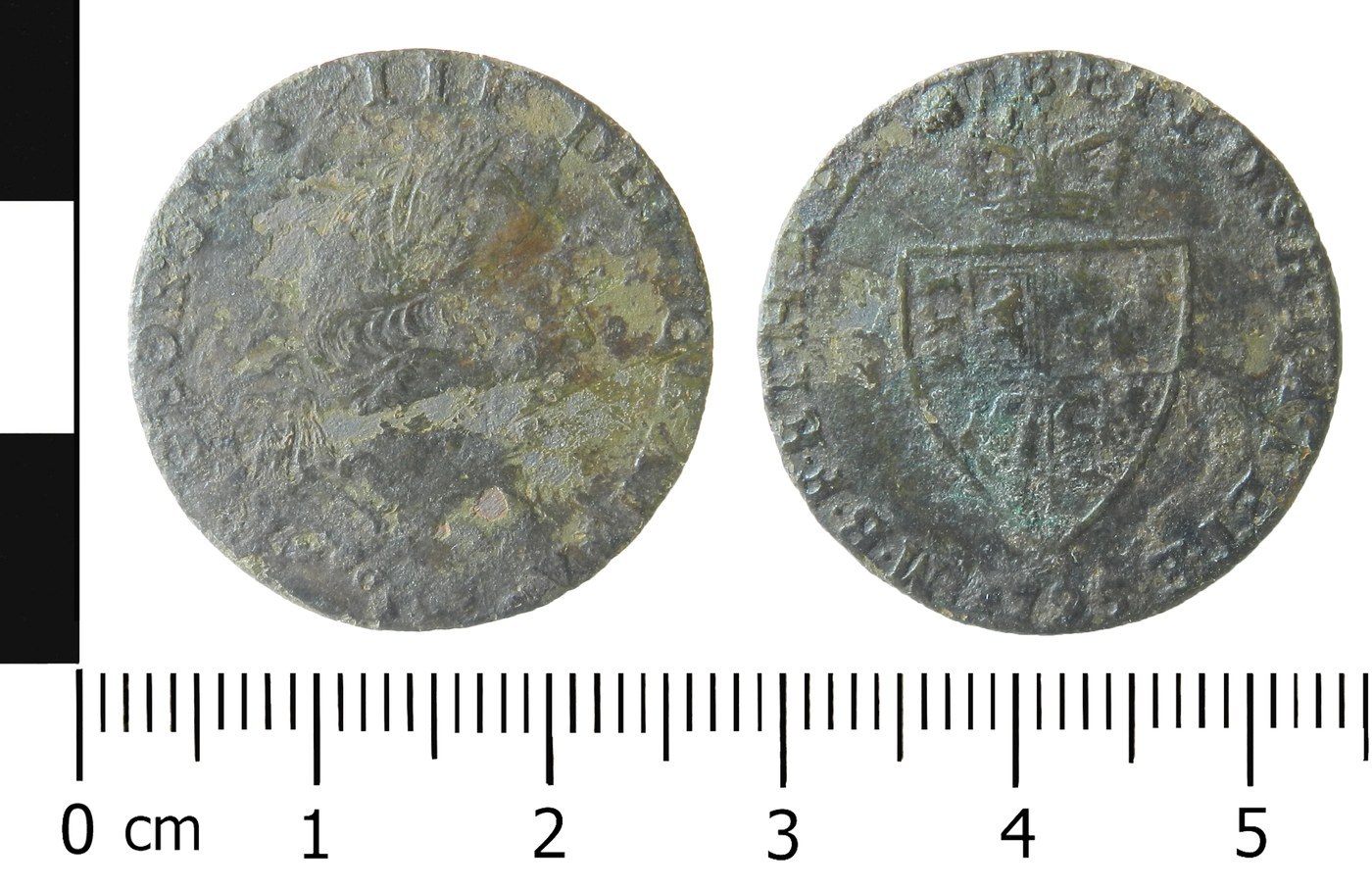
Start with the metal, because that is what separates a counterfeit from a genuine guinea. A real George III guinea is struck in gold; this piece is copper or brass. Look closely at the high points, the rims, and any worn areas, where original gilding tends to rub off first and reveal reddish copper or yellow-brown brass beneath a gold-coloured surface. A coin that shows two different colours between its surface and its worn spots is a strong sign of a gilded base-metal fake.
Weigh and measure the coin. Base metals are lighter than gold, so a counterfeit of guinea size will usually feel noticeably light in the hand and fall short of the weight of a genuine gold guinea. Comparing diameter and weight against published figures for the real coin is one of the most reliable quick tests; the design can be copied convincingly, but the density of gold is hard to fake in a base-metal blank.
Examine the obverse bust and the reverse shield for quality. Genuine guineas were struck from finely engraved dies, so soft, mushy, or slightly blurred detail, uneven lettering, or a portrait and shield that do not quite match the real style all point to a forgery. Cast counterfeits in particular tend to show slightly rounded detail, small surface bubbles or pitting, and a grainy texture rather than the crisp fields of a struck gold coin.
Check the edge. A cast fake often shows a seam or file marks where casting sprues were removed, and the edge lettering or graining may be weak, absent, or wrong compared with a genuine guinea. Any join line running around the rim, or an edge that looks filed or smoothed, is a warning sign that the piece was not struck as a proper coin.
Finally, separate deliberate forgeries from gaming counters and novelties, and confirm before assuming gold. Some brass pieces in guinea style carry legends that differ from real coin inscriptions or were clearly made as counters, not to deceive. If you cannot be certain whether a piece is genuine gold or a base-metal imitation, have it weighed, measured, and inspected by a dealer or specialist; never rely on colour alone, since gilding is designed precisely to mislead the eye.
Frequently asked questions
What is the quickest way to spot a counterfeit guinea?
Check colour at worn areas and weigh the coin. Reddish copper or brass showing through a gold-coloured surface, plus a lighter-than-gold weight, mark it as a base-metal fake rather than a genuine gold guinea.
Does the design help tell it apart from a genuine guinea?
Only a little. Counterfeits copy the bust-and-shield design, so identification rests mainly on metal, weight, and manufacturing quality. Soft detail, casting bubbles, and edge seams support a fake, but the design alone can look correct.
Why does it look gold if it is copper or brass?
It was gilded or lacquered to imitate gold so it could pass in circulation. That surface wears and chips over time, which is why the base metal shows through on rims and high points.
Should I get it authenticated?
Yes, if there is any chance it might be real gold. A dealer or specialist can weigh, measure, and examine it to confirm whether it is a genuine guinea, a contemporary forgery, or a gaming counter, and value it accordingly.