
How to Identify the Copper-Nickel Indian Head Cent
A guide to the 1859-1864 copper-nickel Indian Head cent, often called the 'white cent,' covering its pale alloy, changing reverse design, and how it differs from later bronze Indian cents.
Read the full Copper-Nickel Indian Head Cent encyclopedia entry →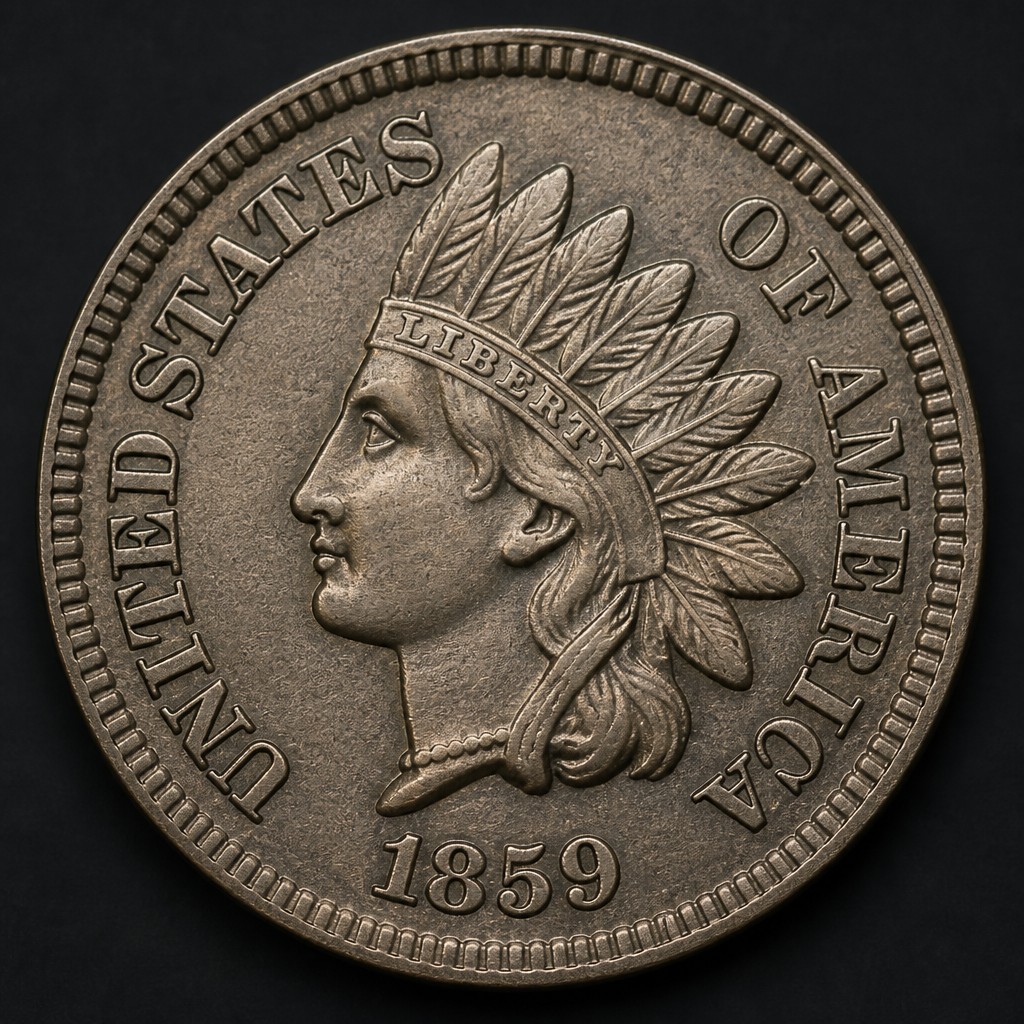
What It Is
Often called the "Copper-Nickel cent" or "white cent" because of its noticeably pale color, this was the first Indian Head cent type, struck from 1859 to 1864, before the alloy was changed to bronze partway through 1864 to conserve nickel for other uses during the Civil War. It was designed by James B. Longacre, the Mint's chief engraver at the time.
Obverse Design
Liberty is portrayed as an Indian princess wearing a feathered headdress, with a band across the headdress inscribed "LIBERTY." In 1859 the field surrounding the portrait includes thirteen stars representing the original states; from 1860 onward the stars were replaced by a plain, open field, with "UNITED STATES OF AMERICA" arranged around the border and the date placed below the portrait.
Reverse Design
The reverse design actually changed within this short-lived type: 1859 cents show a laurel wreath encircling "ONE CENT" with no shield present above it; from 1860 through 1864, while still struck in copper-nickel, the wreath was changed to oak leaves with a small shield added at the very top, a reverse style that then continued unchanged even after the 1864 switch to bronze.
Size, Weight, and Metal
Struck in a copper-nickel alloy of 88% copper and 12% nickel, giving the coin a distinctly pale, whitish-gray color quite different from the warmer copper tone of later bronze cents. It weighs about 4.67 grams (72 grains), notably heavier and thicker than the bronze Indian cents that followed after 1864, with a diameter of 19 mm and a plain edge.
Mint Marks
None; all copper-nickel Indian cents were struck exclusively at the Philadelphia Mint.
Telling It Apart From Similar Coins
The pale, whitish color combined with the greater thickness and weight are the fastest ways to separate a copper-nickel Indian cent from the coppery, noticeably thinner bronze Indian cents made from mid-1864 through 1909. Within the copper-nickel type itself, the 1859 reverse, with its laurel wreath and no shield, is visually distinct from the 1860-1864 reverse, which shows an oak wreath with a shield at the top.
Judging Condition
Grade by the sharpness of the individual feathers in the headdress, the legibility of "LIBERTY" on the headband, and the crispness of the wreath and shield on the reverse. The copper-nickel alloy tends to wear differently than pure bronze, often developing a grayer, flatter appearance with wear rather than the warm brown patina typically seen on worn bronze cents.
Authenticity Red Flags
Watch for cents that have been chemically cleaned or artificially colored in an attempt to look older, more uniform, or more attractive, since copper-nickel surfaces can be altered relatively easily to disguise wear, spotting, or corrosion. Confirm that a coin's weight and pale color genuinely match the copper-nickel standard, since a bronze cent from a nearby date could potentially be misrepresented as this earlier, heavier, and more sought-after type.
Frequently asked questions
Why is it called the 'white cent'?
Its copper-nickel alloy gives it a paler, whitish-gray color compared to the coppery bronze Indian cents that followed.
How does the 1859 reverse differ from later years?
1859 shows a laurel wreath with no shield, while 1860-1864 shows an oak wreath with a small shield at the top.
How much does it weigh?
About 4.67 grams (72 grains), heavier than the bronze Indian cents made from mid-1864 onward.
Were any of these coins struck outside Philadelphia?
No, all copper-nickel Indian cents came from the Philadelphia Mint.