
How to Identify the Cook Islands Colored Silver Coins
Cook Islands Colored Silver Coins are legal-tender collector coins issued in the Cook Islands' name, known for vividly applied color artwork layered over silver strikes on varied themes.
Read the full Cook Islands Colored Silver Coins encyclopedia entry →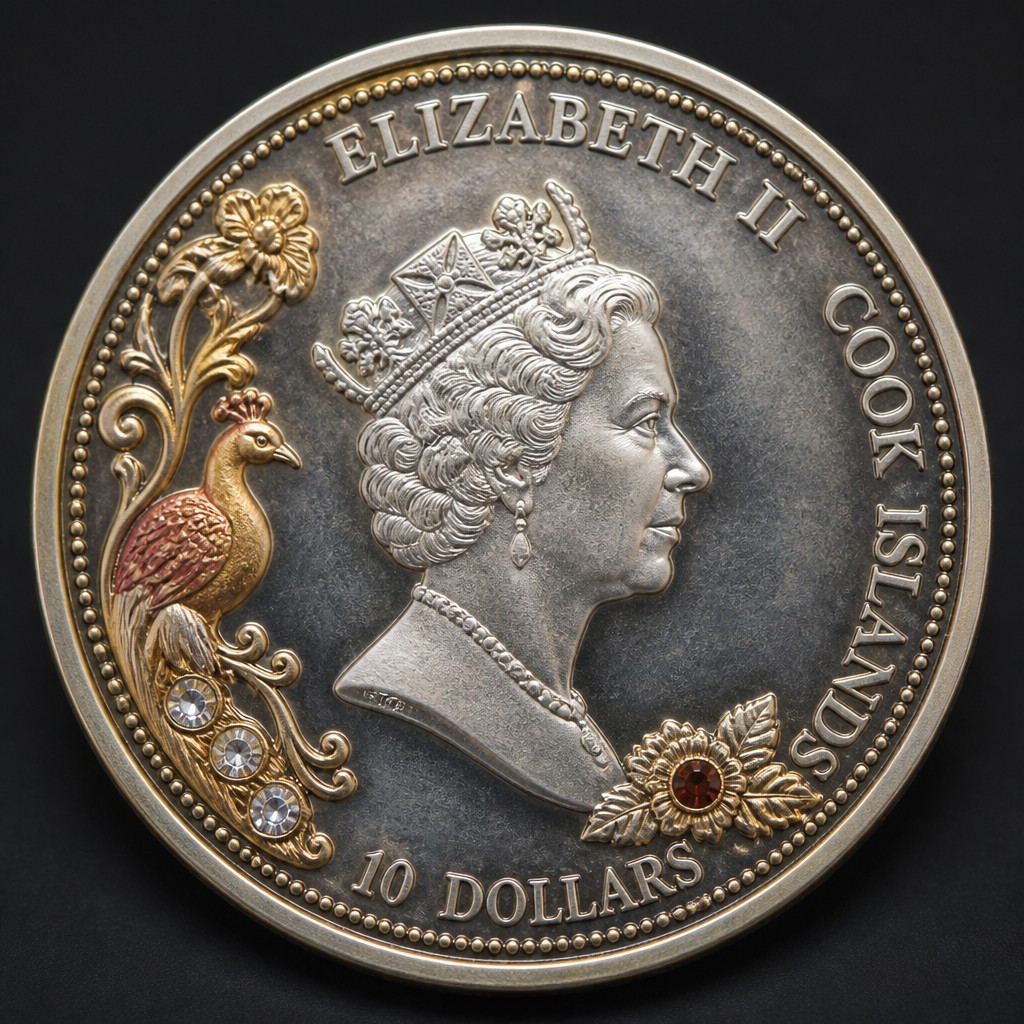
What It Is
Cook Islands Colored Silver Coins are a broad category of legal tender collector coins issued under the authority of the Cook Islands, a self-governing nation in free association with New Zealand. These coins are contracted to various world mints and are known for elaborate colorized designs covering religious, nature, cultural, and pop-culture themes rather than a single fixed series, making the Cook Islands one of the more prolific issuers of themed collector silver in the world market.
Obverse Design & Inscriptions
The obverse typically shows the Cook Islands' monarch-linked coinage portrait (reflecting its constitutional ties, historically Queen Elizabeth II and more recently King Charles III), along with the country name "COOK ISLANDS," the face value in Cook Islands dollars, and the year of issue.
Reverse Design & Inscriptions
The reverse carries the coin's specific themed artwork, which can range widely from religious scenes and stained-glass style windows to wildlife, ships, or licensed characters, with applied color used to add vivid detail beyond what a plain strike could show. Inscriptions usually identify the coin's theme, metal fineness, and weight.
Size, Weight, Metal, and Edge
These coins vary in size depending on the specific release, but common formats include one-ounce .999 fine silver coins around 38-40mm in diameter, along with larger or smaller special editions. Edges are typically plain or reeded depending on the issuing mint and coin size.
Mint Marks and Where to Find Them
Because Cook Islands coins are produced under license by different contract mints (including European and New Zealand-based mints), a specific mint's small logo or privy mark may appear near the rim or within the design, helping identify which facility struck a given release. This detail can be a useful way to distinguish between visually similar Cook Islands releases produced by different mints in different years.
Telling It Apart From Similar Coins
Because many small island nations (Niue, Tuvalu, Palau) issue similar colorized silver collector coins, the clearest identifier is the country name "COOK ISLANDS" stamped on the obverse. Comparing the specific themed series name printed on the coin or its packaging also helps pinpoint the exact release among the many Cook Islands themes produced over the years, since a single year can see multiple unrelated Cook Islands series released simultaneously.
Judging Condition at a Glance
Since these are collector-grade coins typically sold in protective capsules, condition assessment focuses on the vividness and completeness of the applied color, absence of scratches or fading, and a sharp, well-defined strike underneath the colored areas.
Authenticity Red Flags
Watch for color application that looks smeared, faded unevenly, or misaligned with the underlying design, as well as incorrect weight or diameter for the stated silver content. Because official Cook Islands issues are typically sold with certificates of authenticity and official packaging, a coin without documentation from an unfamiliar seller warrants extra scrutiny, particularly for niche religious or cultural series that are less widely documented than the more mainstream licensed character coins.
Frequently asked questions
Why do Cook Islands coins have such varied designs?
The Cook Islands licenses its coinage authority to multiple contract mints producing thematic series, resulting in a wide variety of designs rather than one consistent annual coin.
What confirms a coin is a genuine Cook Islands issue?
Look for the country name 'COOK ISLANDS' along with the face value in Cook Islands dollars on the obverse, matched with official mint packaging or certificates.
Is the color on these coins painted or printed?
Most colorization is applied through specialized printing or pad-printing techniques after striking, rather than hand-painted, giving a consistent factory finish.
What metal are these coins usually made from?
Most are struck in .999 fine silver, though special editions in gold or other metals also exist within various Cook Islands series.