
How to Identify the Contemporary Forgery of Louis XVI Ecu
A collector's guide to spotting a period counterfeit Louis XVI ecu by its copied portrait, standing-figure reverse, lettering, metal and surface faults.
Read the full Contemporary Forgery of Louis XVI Ecu encyclopedia entry →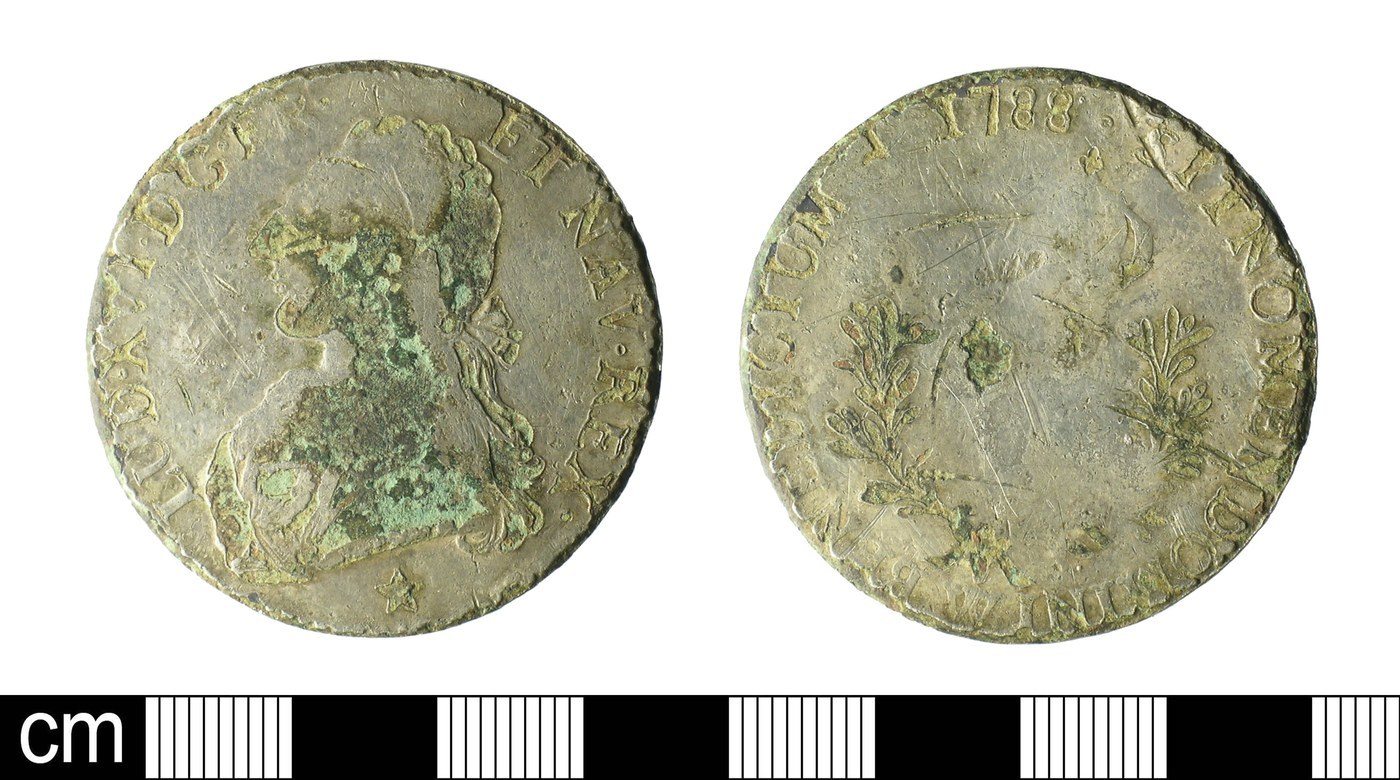
Begin by treating the coin as a suspected imitation and working through what a genuine Louis XVI ecu should look like. The obverse should carry a well-modelled royal portrait with a crisp, correctly spelled legend. On a contemporary forgery the bust tends to be flat, soft or subtly out of proportion, and the surrounding inscription is frequently uneven, crowded or misspelled. Read the legend letter by letter and compare it against a reference image of a real ecu of the period.
Turn to the reverse, which copies a standing figure with a date of about 1792. Look closely at the modelling of the figure, the drapery, and the text and date around it. Forgeries typically render the figure with mushy or shallow detail and place the lettering unevenly. A genuine mint strike shows sharper relief and consistent, upright lettering; a cast or crude struck fake looks softer and less controlled.
Examine metal, weight and surface. The piece presents as silver, but weigh and measure it and compare against the known standard for a Louis XVI ecu—a wrong weight for the diameter is a strong warning sign. Cast counterfeits often show a grainy or porous surface, tiny bubbles, and faint seams running around the edge; silver-washed base-metal fakes may reveal a different color where the surface is worn or scratched. A dull ring instead of a clear tone can also point to a base core.
Check the edge and the fine details that are hardest to fake. Genuine ecus of this era carry edge lettering or a decorated edge; a plain, mushy or seamed edge suggests a cast copy. Under magnification, genuine struck detail is crisp at the design's high points, while forgeries lose definition or show doubling from a crude strike. Beware look-alikes as well: modern museum-style replicas and later collector copies imitate the same type, so distinguish a period counterfeit from a modern reproduction by wear, fabric and any "COPY" markings.
Finally, rely on comparison and expert help rather than a single feature. No one clue proves a forgery; it is the combination of soft portrait, faulty lettering, wrong weight, and telltale cast or crude-strike surfaces that identifies it. For any piece you intend to buy, sell or catalogue, have it reviewed by someone experienced with French coinage and contemporary counterfeits, and never accept it as a genuine ecu on appearance alone.
Frequently asked questions
What is the quickest sign that an ecu is a contemporary forgery?
Weight and lettering are the fastest checks. A coin that is too light or heavy for its diameter, or that shows uneven, misspelled or mushy legends, strongly suggests a counterfeit rather than a struck Louis XVI ecu.
How do I tell a period forgery from a modern replica?
Period counterfeits show genuine age, circulation wear and era-appropriate crude methods. Modern replicas are usually cleaner, may carry a "COPY" mark, and lack honest wear. Fabric, surface and wear help separate the two.
Can surface and edge tell me how it was made?
Yes. A grainy or porous surface with faint edge seams points to casting, while weak, shallow or doubled detail points to a crude strike. Genuine ecus have crisp relief and a lettered or decorated edge.
Should I clean or test the coin myself?
Avoid harsh cleaning, which damages surfaces and evidence. Non-destructive checks like weighing, measuring and magnified inspection are safer, and a specialist can confirm the piece and any metal content without harming it.