
How to Identify the Constitutional Ecu
A collector's guide to recognizing the 1792 French silver ecu by its Louis XVI portrait, standing armed Liberty reverse, large silver format and marks.
Read the full Constitutional Ecu encyclopedia entry →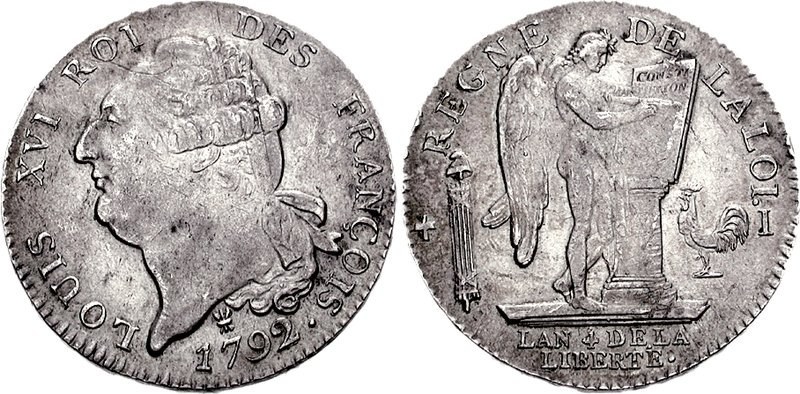
Start with the two central images, which together define the type. The obverse shows the profile portrait of Louis XVI; the reverse of this coin shows a standing allegorical Liberty figure holding a sword and a shield. Confirming both sides matters, because France produced many coins called "ecu" across two centuries, and only the pairing of a Louis XVI portrait with this armed standing figure and a Revolutionary-era date points to the constitutional issue.
Read the legends and the date. Look for the king's name in the obverse inscription and for the year 1792 in the reverse legend or field. Coins of the constitutional monarchy carry legends that blend royal titles with Revolutionary language, so the wording itself is a useful confirmation. Take the time to trace the full inscription rather than judging from the portrait alone.
Check size, metal and weight. This is a full silver ecu: a large-diameter, heavy piece with the bright, slightly warm tone of good silver, not the flat gray of base metal. It should feel substantial for its size and ring true. Weighing and measuring the coin against published specifications for the ecu is one of the most reliable cross-checks, and the edge should be decorated or lettered in the manner of large French silver rather than plain.
Locate the mint and privy marks. French coins of this era carry small letters and symbols — near the base of the design or within the legends — that identify the striking workshop and the officials responsible. These are essential for attributing a coin to a specific mint and variety, and they can separate a common piece from a scarcer one.
Be cautious about authenticity. Historic silver ecus are frequently faked or altered, and cast copies, tooled surfaces, and changed dates all appear on the market. Compare weight, diameter, edge treatment, and the fine detail of the portrait and the reverse figure against trusted references, and for any high-grade or scarce example favor coins verified by a reputable third party before paying a premium.
Frequently asked questions
How do I tell this apart from other French ecus?
Match both sides plus the date. The obverse must show Louis XVI and the reverse a standing armed Liberty figure, with a Revolutionary-era date such as 1792. Earlier royal ecus and later Republican coins use different portraits, reverses, and legends.
How can I confirm the coin is silver and the right size?
It should be a large, heavy piece with a bright silver tone and a lettered or decorated edge. Weigh and measure it against published ecu specifications; genuine silver is non-magnetic and heavier than base-metal imitations of the same diameter.
Where are the mint marks on the coin?
Look for small letters and symbols near the base of the design or within the legends. On French coinage of this period they identify the striking workshop and officials and are key to attributing the exact mint and variety.
What authenticity problems should I watch for?
Cast fakes, tooled or repaired surfaces, and altered dates are common on historic ecus. Check weight, diameter, edge, and the crispness of the portrait and reverse detail, and prefer third-party verified coins when paying a strong premium.