
How to Identify the Constantius II Centenionalis
A mid-4th-century bronze coin of Constantine's son Constantius II, most often recognized by its dramatic FEL TEMP REPARATIO battle scene reverse.
Read the full Constantius II Centenionalis encyclopedia entry →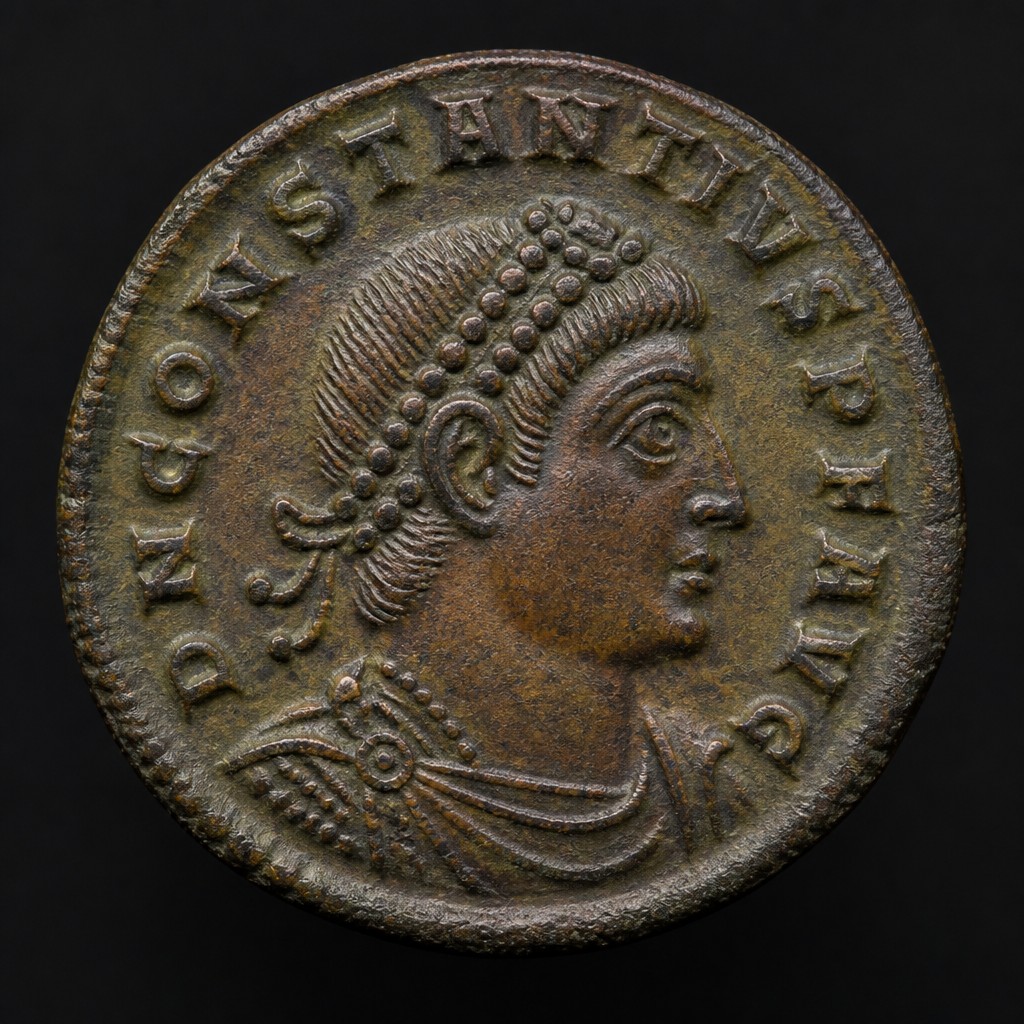
What This Coin Is
This bronze coin was struck under Constantius II, one of Constantine the Great's sons who ruled as emperor through the mid-4th century AD. It belongs to the large "centenionalis" or AE2/AE3 denomination family issued during the empire-wide FEL TEMP REPARATIO ("the restoration of happy times") coinage reform, one of the most visually striking series of the later Roman Empire.
Obverse Design & Inscriptions
The obverse shows a diademed or draped-and-cuirassed bust of Constantius II facing right, with the legend reading D N CONSTANTIVS P F AVG ("Our Lord Constantius, Pious, Fortunate, Augustus") or a close abbreviated variant.
Reverse Design & Inscriptions
The most common and recognizable reverse for this ruler shows a Roman soldier spearing a fallen horseman, often identified as a barbarian falling from his horse, sometimes reaching a hand backward. The legend reads FEL TEMP REPARATIO around the scene. Other contemporary reverse types issued in his name include a phoenix on a pyre or globe, or two soldiers flanking a standard.
Size, Weight, Metal, and Edge
Made of bronze, sizes range roughly from 20-23mm on earlier, larger issues down to smaller 15-18mm examples as the coinage was progressively reduced in weight through his long reign. Weight varies correspondingly, generally between 2 and 5 grams. The edge is plain.
Mint Marks and Where to Find Them
The exergue holds the mint signature and officina letter, with abbreviations such as SMKΓ (Cyzicus), ANT (Antioch), CONS (Constantinople), or TES (Thessalonica) commonly seen, the exact form depending on the striking mint.
Telling It Apart From Similar Coins
The "fallen horseman" reverse was also struck in the names of Constans and later emperors, so the identification hinges on the obverse portrait and legend naming CONSTANTIVS rather than CONSTANS or another ruler. Later, smaller versions of the fallen-horseman type show a simplified horse position (seated rather than falling), which helps date a piece to the later phase of the series.
Judging Condition at a Glance
Assess wear by the crispness of the soldier's helmet, spear, and shield, along with the fallen horseman's outstretched arm. Full, clear legends and a well-centered strike with all four edges of the design present indicate a nicer example; heavy wear typically smooths the horse and rider into indistinct shapes.
Authenticity Red Flags
Be alert for coins with an unnaturally glossy or waxy surface, a soldier's spear or the horseman's arm that looks retouched or engraved rather than struck, and any raised casting seam around the rim. Genuine specimens show natural die wear and the same metal flow lines across both sides consistent with striking under pressure, not casting.
Frequently asked questions
What does FEL TEMP REPARATIO mean?
It translates roughly to "the restoration of happy times," the name of a major bronze coinage reform and reverse series used across the empire in the mid-4th century.
How do I know this coin belongs to Constantius II and not another emperor?
Check the obverse legend for CONSTANTIVS; the fallen-horseman reverse was shared across several rulers of the period, so the name on the obverse is the deciding factor.
Why do sizes vary so much among these coins?
The centenionalis denomination was progressively reduced in weight and diameter over the course of Constantius II's long reign, so earlier and later strikes differ noticeably in size.
What other reverse types exist for this ruler?
Besides the fallen horseman, contemporary issues include a phoenix standing on a pyre or globe and a two-soldiers-with-standard type.