
How to Identify the Constantius I Chlorus Follis
A guide to identifying Constantius I's follis as Caesar and Augustus (293-306 AD), plus the posthumous 'Divo Constantio' memorial issues struck by his son Constantine.
Read the full Constantius I Chlorus Follis encyclopedia entry →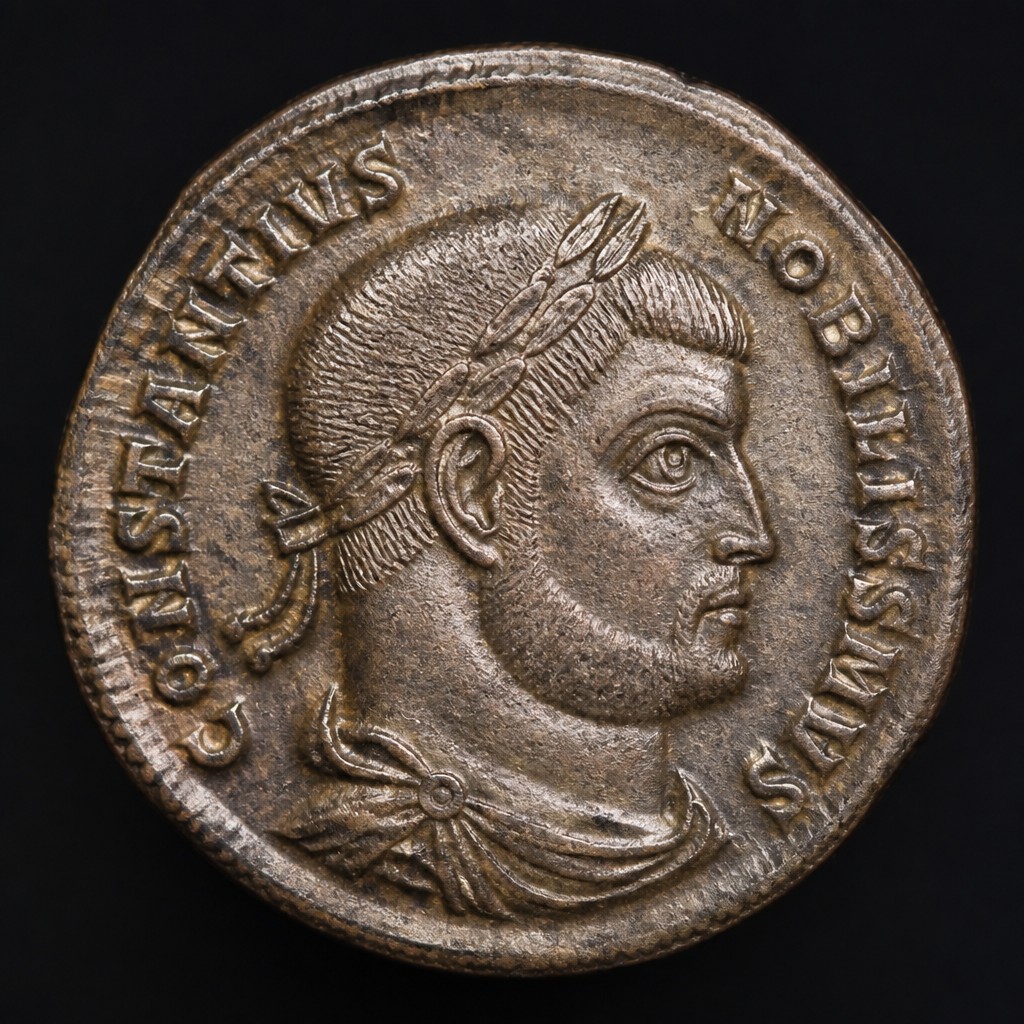
What Is the Constantius I Chlorus Follis?
Constantius I, later nicknamed "Chlorus" (the Pale) by historians, served as junior Caesar from 293 and then as Augustus of the western Tetrarchy from 305 until his death in 306 at York in Britain. He was the father of Constantine the Great, and his follis coinage as both Caesar and briefly as Augustus follows the standard Tetrarchic pattern.
Obverse Design and Inscriptions
As Caesar, the legend reads CONSTANTIVS NOB CAES or FL VAL CONSTANTIVS NOB C, with a laureate head right. After his elevation to Augustus in 305, the legend changes to CONSTANTIVS AVG or IMP CONSTANTIVS PF AVG.
Reverse Design and Inscriptions
The standard GENIO POPVLI ROMANI Genius type dominates, as with the other Tetrarchs. A distinct posthumous series with the legend DIVO CONSTANTIO or MEMORIAE DIVI CONSTANTI, showing an eagle or altar, was struck under Constantine after his father's death and deification.
Size, Weight, and Metal
Standard Tetrarchic follis dimensions apply, roughly 26-28mm with weight gradually declining through the ongoing reform period, struck in bronze with a thin silver wash.
Mint Marks and Where to Find Them
Western mints predominate given his responsibility for Britain and Gaul; look for LON (London), TR (Trier), and Lugdunum marks in the exergue, followed by an officina letter.
Telling It Apart from Similar Coins
The Caesar-period legend (NOB CAES or NOB C) versus the later Augustus-period legend helps date a given coin to before or after 305. Distinguish from the posthumous "Divo" memorial issues by checking whether the legend commemorates him as deceased, using DIVO or MEMORIAE, rather than naming him as a living ruler.
Judging Condition at a Glance
Judge condition as with other Tetrarchic folles, weighing portrait and Genius-figure detail against the amount of surviving silvering.
Authenticity Red Flags
The standard cautions against re-silvered or mint-mark-altered examples apply here as elsewhere in the Tetrarchic series. The posthumous "Divo" issues are of particular collector interest, so it is worth double-checking that the legend matches the correct memorial wording rather than a living-ruler legend that might be mistaken for it.
Frequently asked questions
How do I know if a Constantius I coin was struck while he was still Caesar or after he became Augustus?
Check the legend: NOB CAES or NOB C indicates the Caesar period before 305, while AVG indicates the Augustus period from 305 until his death in 306.
What is the 'Divo Constantio' issue?
A posthumous memorial coin struck by his son Constantine after Constantius I's death and deification in 306, showing a legend commemorating him as deceased (DIVO or MEMORIAE) rather than a living-ruler title.
Which mints are most associated with his coinage?
Western mints tied to his territory, especially London and Trier, along with Lugdunum, identifiable by their exergue abbreviations.
How is this coin different from Diocletian's or Maximian's follis?
The design and denomination are the same across the Tetrarchy; only the obverse legend naming the specific ruler, and in this case the later posthumous memorial legend, sets it apart.