How to Identify the Constantine the Great Follis
A guide to spotting Constantine I's bronze follis, from his solar and military reverse types to the mintmarks stamped in the exergue that reveal which imperial mint struck the coin.
Read the full Constantine the Great Follis encyclopedia entry →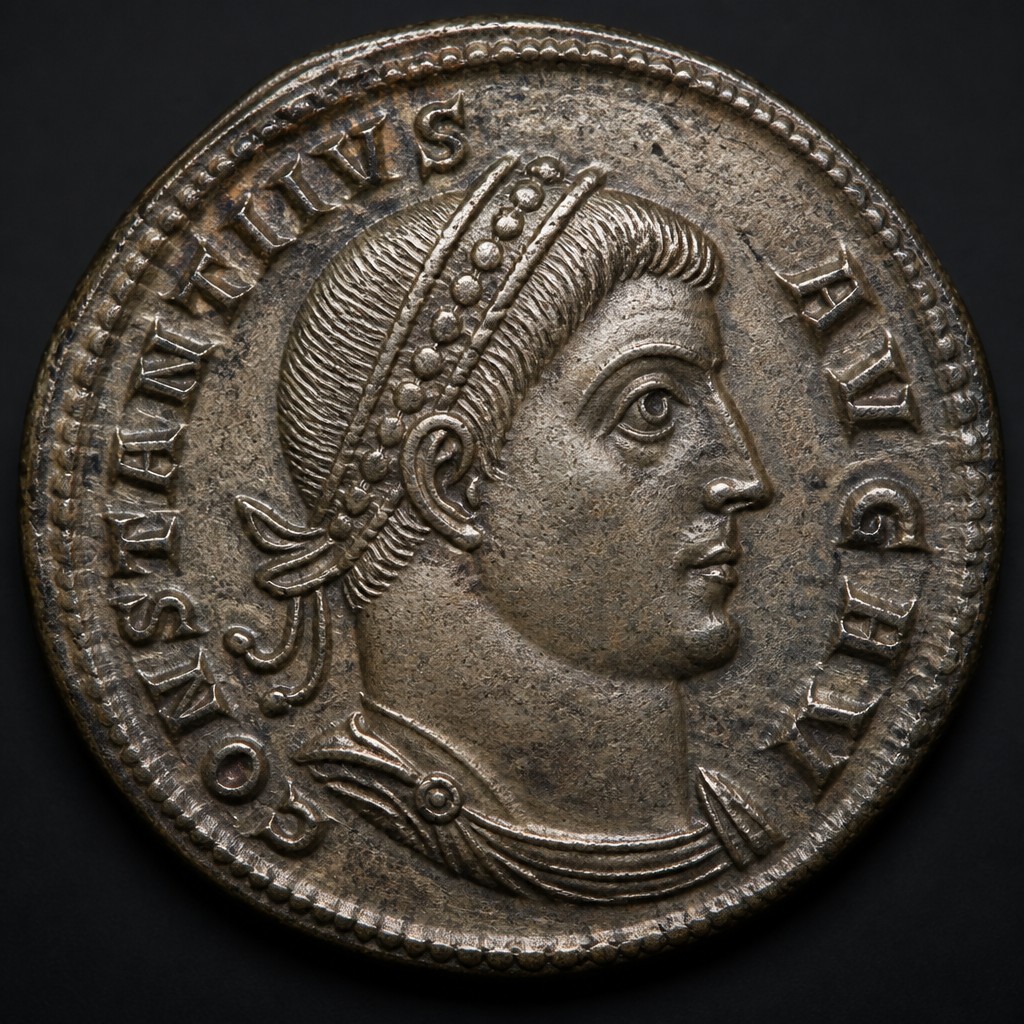
What This Coin Is
This bronze follis, also called a nummus in later, reduced-size forms, was struck under Constantine the Great, who reigned from AD 306 to 337, spanning the late Tetrarchic system through his sole rule and the founding of Constantinople.
Obverse Design
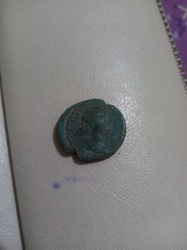
The obverse shows a laureate, helmeted, or diademed bust of Constantine facing right, typically in cuirass or paludamentum. The legend usually reads IMP CONSTANTINVS AVG or a similar variant tracking his changing titles from Caesar to Augustus.
Reverse Design
Early folles often carry the legend SOLI INVICTO COMITI, depicting the sun god Sol standing radiate and holding a globe. Later in the reign, the common GLORIA EXERCITVS type shows two soldiers flanking one or two military standards. Other types include vota wreaths marking anniversary vows and commemorative city issues such as Urbs Roma with the wolf and twins, or Constantinopolis with Victory on a ship's prow.
Size, Weight, Metal, and Edge
The follis shrank considerably over Constantine's long reign, from a larger module early on, around 20-24mm, down to smaller pieces later, often under 18mm. It was struck in a bronze or copper alloy, with a thin silver wash on some earlier issues that mostly wore off in circulation, and has a plain edge.
Mint Marks and Where to Look
The exergue at the bottom of the reverse carries a mint mark abbreviation, such as PLG for Lugdunum, SMANT or SMANTA for Antioch, and TRP or PTR for Trier, along with similar codes for Rome, Ticinum, Siscia, Thessalonica, and other imperial mints, often followed by an officina (workshop) letter or numeral.
Telling It Apart From Similar Coins
Compare against the earlier, larger folles of the Tetrarchy under Diocletian and Maximian, which are heavier with a GENIO POPVLI ROMANI reverse, and against Constantine's sons' later coinage, which continues the shrinking module and introduces new reverse types after his death. The specific combination of bust style and reverse legend narrows the issue.
Grading at a Glance
Assess centering and legend completeness first, since later, smaller folles were often struck off-center on tight flans. Check the soldiers' or Sol's facial and drapery detail for strike sharpness, and note that a mostly worn-off silver wash is normal on earlier examples rather than a defect.
Authenticity Red Flags
Verify the mintmark makes sense for the claimed type and period, since mismatched or garbled mintmark letters can indicate a modern fake. Watch for overly smooth, low-relief surfaces suggesting a cast copy rather than a struck coin, and compare weight and diameter to genuine examples from the same approximate date in the reign.
Frequently asked questions
What does the mintmark in the exergue tell me?
It identifies which imperial mint city struck the coin, for example PLG for Lugdunum or TRP for Trier, often along with an officina letter indicating the specific workshop within that mint.
Why did the follis get smaller during Constantine's reign?
Rome's bronze coinage underwent repeated weight reductions through the early 4th century as part of ongoing monetary reforms, so folles issued later in his reign are noticeably smaller than those from his early years.
What does SOLI INVICTO COMITI mean?
It translates to 'to the unconquered Sun, companion of the emperor,' reflecting Constantine's early association with the sun god Sol before his later embrace of Christianity.
Is a silvery coating normal on these coins?
Yes, many earlier folles were given a thin silver wash at the mint, which typically wore away with circulation, so a coin showing only patches of silvering or none at all is common and not necessarily a sign of a fake.
Constantine the Great Follis identified by the community
Recent Constantine the Great Follis coins identified with Coin Identifier.