
How to Identify the Constantine Sol Invictus Follis
A bronze follis of Constantine the Great honoring the sun god Sol, minted widely in the early 4th century before Constantine's later embrace of Christianity.
Read the full Constantine Sol Invictus Follis encyclopedia entry →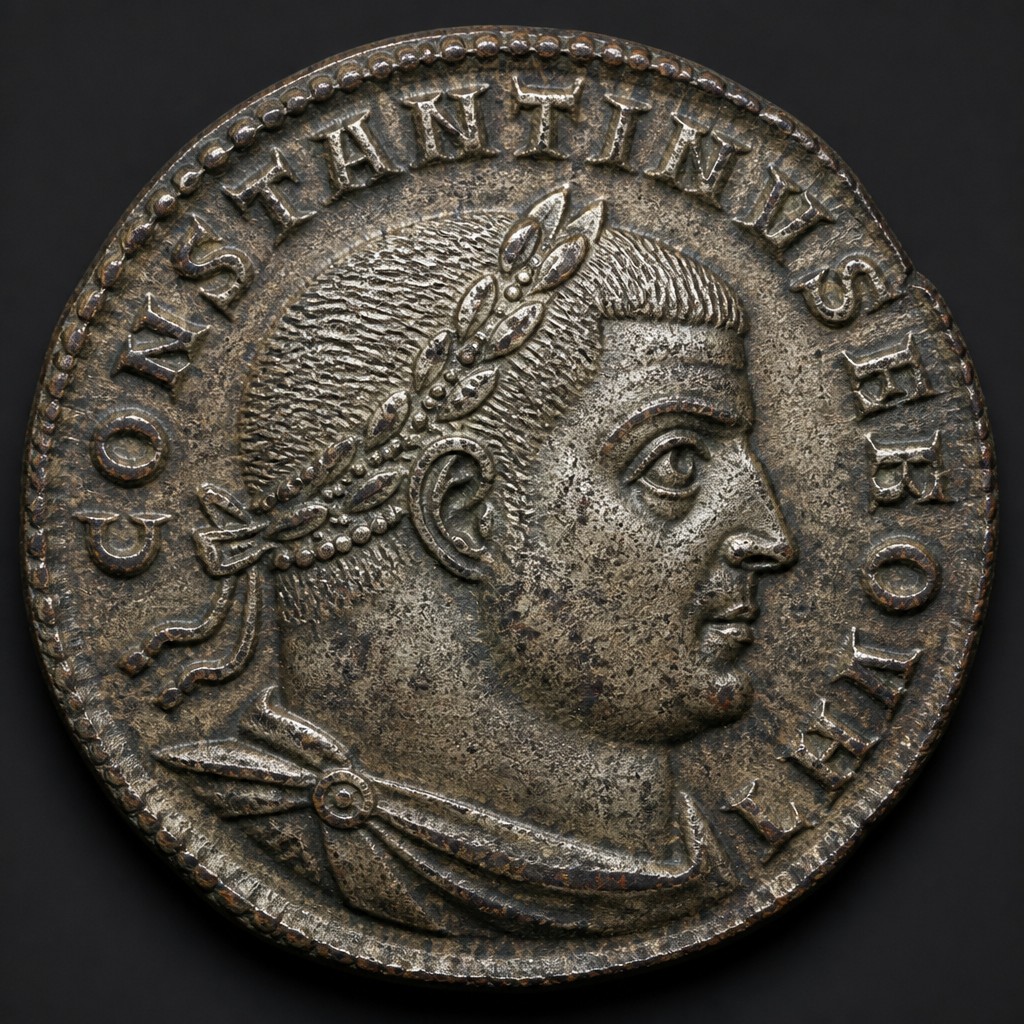
What This Coin Is
This is a bronze follis (sometimes called an AE3 by later, smaller-module standards) struck under the emperor Constantine I, "the Great," in the years before and around his rise to sole rule of the Roman Empire. The reverse celebrates Sol Invictus, the "Unconquered Sun," a favored deity of the tetrarchic and early Constantinian period. Because it was struck in huge quantities across many mints, it remains one of the most affordable and commonly found ancient Roman coins today.
Obverse Design & Inscriptions
The obverse shows a laureate, cuirassed, or helmeted bust of Constantine facing right (occasionally left on some issues). The surrounding legend typically reads IMP CONSTANTINVS P F AVG or a close variant, sometimes abbreviated further depending on the mint and period. Portrait style is youthful and idealized rather than a precise likeness.
Reverse Design & Inscriptions
The reverse depicts Sol Invictus standing facing, head turned left, raising his right hand and holding a globe in his left. He is nude or lightly draped, often with a radiate crown. The legend reads SOLI INVICTO COMITI ("to Sol, invincible companion [of the emperor]"). A mint mark and officina letter appear in the exergue below the ground line.
Size, Weight, Metal, and Edge
These are bronze coins with a thin silver wash that has usually worn away on surviving examples, leaving a brown or grayish-brown surface. Diameter runs roughly 19-22mm and weight around 3-4 grams, though exact figures vary by mint and issue date since the follis was progressively reduced in weight during this period. The edge is plain, as struck rather than reeded.
Mint Marks and Where to Find Them
Look in the exergue, the small horizontal space beneath the reverse figure. Common mint abbreviations include PLN (London), PTR (Trier), PLG (Lyon), TS or SIS (Siscia), and others, often followed by an officina letter (A, B, Γ, etc.) indicating the workshop within that mint.
Telling It Apart From Similar Coins
Many Constantinian bronzes share a similar module and portrait style. The SOLI INVICTO COMITI reverse is distinctive to this Sol series and should not be confused with the later "two soldiers" (GLORIA EXERCITVS) or "camp gate" reverses that replaced it after Constantine turned away from solar imagery in official coinage. Compare the standing figure carefully: Sol holds a globe and has a radiate head, while soldier types show two standing figures with spears and shields.
Judging Condition at a Glance
Grade by how much of the design and legend remains legible. High-grade examples retain sharp detail on Sol's drapery and Constantine's facial features, with little flat wear. Most survivors show moderate to heavy wear, porous or corroded surfaces, and only partial legends, which is normal and expected for a coin buried and excavated after 1,700 years.
Authenticity Red Flags
Genuine examples show natural, uneven porosity and a patina that varies subtly across the surface. Be cautious of coins with suspiciously uniform, glossy "bronze disease" green that looks painted on, overly sharp modern-looking lettering on a heavily worn field, or cast coins with a seam line around the edge and soft, mushy detail instead of crisp die-struck lines.
Frequently asked questions
What does SOLI INVICTO COMITI mean?
It translates to "to the Unconquered Sun, companion [of the emperor]," reflecting Sol's status as a protector deity of Constantine before his later Christian coinage reforms.
Why is the silver wash usually gone?
Folles were bronze coins dipped in a thin silvery wash at the mint. This wash was soft and wore off quickly in circulation, so most surviving pieces show plain bronze surfaces today.
How can I tell which mint struck my coin?
Check the exergue for a short mint abbreviation such as PLN, PTR, or PLG, usually followed by a single letter marking the specific workshop.
Is this coin rare?
No, it was struck in very large numbers across the empire and is one of the more commonly available ancient Roman bronzes for collectors today.