
How to Identify the Commodus Denarius
A silver denarius of Commodus, ranging from standard imperial portraits early in his reign to the striking lion-skin Hercules bust of his later, self-deifying issues.
Read the full Commodus Denarius encyclopedia entry →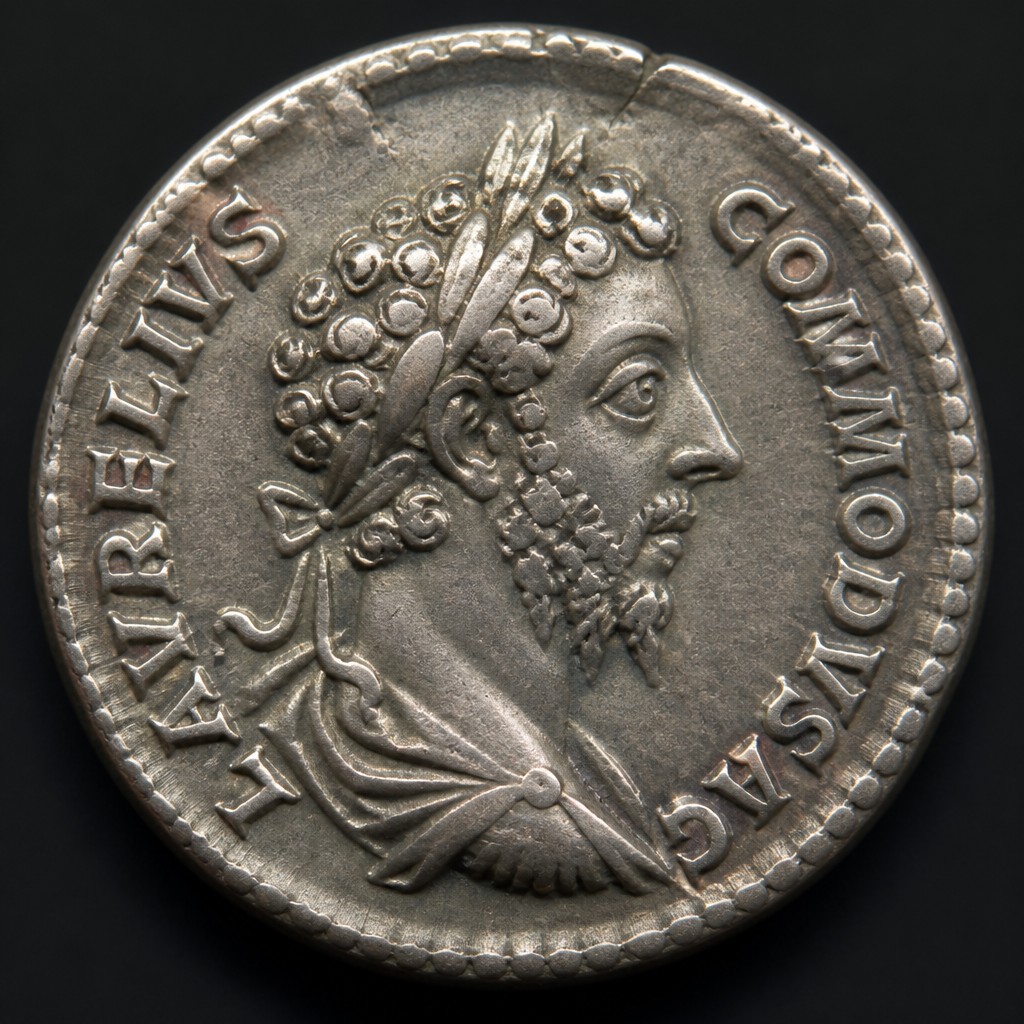
What the Coin Is
Commodus, son of Marcus Aurelius, ruled jointly with his father from AD 177 and then alone from 180 until his assassination in 192. His denarius coinage spans a conventional early period and a bizarre, self-aggrandizing later phase in which he identified himself with the demigod Hercules.
Obverse Design & Inscriptions
Early coins show a laureate, youthful, beardless portrait as Caesar with a legend such as COMMODVS CAESAR AVG FIL, while his sole-reign coins as Augustus show a fuller beard and read M COMMODVS ANTONINVS AVG or similar titulature. In the last part of his reign, around AD 192, a distinctive series shows his bust wearing a lion-skin headdress, styling him as "Hercules Romanus," accompanied by unusual titles reflecting his adopted divine persona.
Reverse Design & Inscriptions
Most reverses show standard imperial personifications such as Pax, Providentia, Salus, Fortuna, and Victoria, along with military largess types marked LIBERALITAS and a count numeral. The special Herculean issues instead show Hercules's club and lion skin, or Commodus's own bust rendered with the lion-skin headdress, making them visually distinct from the rest of his coinage.
Size, Weight, Metal & Edge
The denarius measures roughly 17-18mm across and weighs about 2.9-3.3 grams, with silver fineness further reduced from earlier in the century, generally in the 70s percent range. The edge is plain.
Mint Marks & Where to Find Them
Coins were struck at Rome; there is no mint-letter system for this reign.
Telling It Apart from Similar Coins
Coins struck while Commodus was still Caesar under his father Marcus Aurelius show a beardless youth with the CAESAR title and no AVG, while his sole-reign coins show a bearded adult with full imperial titles. The Herculean bust type, with its unmistakable lion-skin knot beneath the chin, is unique to Commodus among second-century emperors and cannot be confused with any other ruler's portrait.
Judging Condition & Grade at a Glance
On standard portraits, check the beard and hair curl detail for wear. On the rarer Herculean type, look specifically at the clarity of the lion-skin knot and the texture of the mane, since these finely engraved details are what make the type recognizable and valuable, and they wear down quickly with circulation.
Authenticity Red Flags
The Hercules-bust types are especially prized by collectors and correspondingly targeted by forgers; watch for incorrect proportions of the club or lion skin, a modern casting seam, an incorrect weight for the denomination, and legend abbreviations or letter forms that look anachronistic or inconsistent with genuine Commodus dies. As with other silver issues of this era, silver-plated fourrées with a copper core are also a persistent risk.
Frequently asked questions
Why does Commodus sometimes appear wearing a lion skin?
Late in his reign he began identifying himself with the demigod Hercules, and a special series of coins shows his portrait wearing Hercules's traditional lion-skin headdress to reflect this self-styled divine image.
How do I tell his Caesar-period coins from his sole-reign coins?
Early coins as Caesar show a beardless youth with the CAESAR title and no AVG, while coins from his sole reign as Augustus show a bearded adult with full imperial titulature.
Are the Hercules-bust coins rare?
They form a smaller, more specialized part of his coinage compared to his standard portraits, and their unusual, desirable design makes them a frequent forgery target.
What silver purity should I expect?
Commodus's denarii were struck at a lower fineness than earlier in the century, generally in the 70s percent range, reflecting the empire's ongoing gradual debasement of silver coinage.
What are the main red flags for a fake Hercules-type denarius?
Look for oddly proportioned club or lion-skin details, a visible casting seam, incorrect weight, and letter forms in the legend that look inconsistent with genuine period engraving.