
How to Identify the Commemorative Follis of Constantinople
A collector's guide to recognizing the CONSTANTINOPOLIS commemorative by its helmeted city bust, ship's-prow Victory, small bronze fabric, and mint marks.
Read the full Commemorative Follis of Constantinople encyclopedia entry →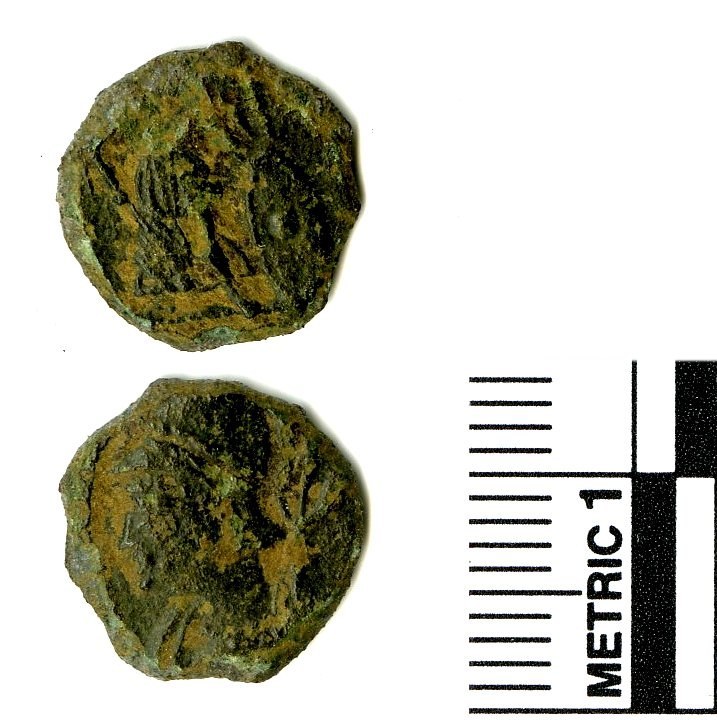
Start with the obverse legend and bust, because together they name the type. A genuine Constantinople commemorative shows a left-facing helmeted female bust wearing an imperial mantle, with the Latin legend CONSTANTINOPOLIS running around the edge. There is no emperor's portrait or name; if you see a diademed male bust with a ruler's titles, you are looking at a standard imperial bronze of Constantine or his sons, not a city commemorative. The helmet is often crested and the figure may carry a scepter or reed over the shoulder.
Confirm the type on the reverse. The defining Constantinople reverse is a winged Victory standing on the prow of a ship, holding a long scepter or transverse spear and steadying a shield. This ship's-prow figure is the single most diagnostic feature. Its paired Rome commemorative (legend VRBS ROMA) instead shows the she-wolf with Romulus and Remus, so the galley-prow Victory reliably separates the Constantinople issue from its twin. Some Constantinople reverses are anepigraphic, carrying no reverse legend at all, which is normal for the series.
Check size, weight, and fabric. These are small bronzes, generally about 16-19 mm across and roughly 1.5-2.5 grams, usually with a brown or green patina and sometimes traces of original silvering. Hand-struck flans, slight off-centering that clips part of the legend, and a somewhat irregular edge are all typical of the period and not signs of a problem.
Read the exergue for the mint mark. The small letters and symbols beneath the reverse ground line identify the mint and workshop, from Trier, Lyon, and Arles in the west to Siscia, Thessalonica, Constantinople, Nicomedia, and Antioch in the east. Matching the mark against published references is how a specific issue is attributed and is often where scarcer varieties are found.
Be cautious about authentication. Cast counterfeits and tourist reproductions of popular Constantinian types exist; warning signs include a seam around the edge, a soft or bubbly surface, a chalky uniform "patina," and weight far outside the normal range. Modern struck fakes can be harder to spot, so for a coin bought as an investment seek attribution from a specialist in late Roman bronze or a piece with reputable provenance.
Frequently asked questions
What is the fastest way to confirm the Constantinople type?
Read the obverse legend and check the reverse. CONSTANTINOPOLIS with a Victory standing on a ship's prow is the Constantinople issue; VRBS ROMA with the she-wolf and twins is its companion Rome type.
There is no emperor's name on the coin. Is that right?
Yes. The city commemoratives deliberately carry the city name and personification instead of a ruler's portrait or titles. An imperial name and diademed bust would indicate a different, standard bronze of the same era.
How big should a genuine example be?
Most run about 16-19 mm in diameter and roughly 1.5-2.5 grams. A coin far outside that range, or one with a casting seam or bubbly surface, warrants caution as a possible reproduction.
Where do I find the mint that struck my coin?
Look in the exergue, the space beneath the ground line on the reverse. The letters and symbols there record the mint and workshop and are matched against reference catalogs to attribute the issue.