
How to Identify the Coat of Arms Fifty Cents (Elizabeth II)
Canada's standard 50-cent coin under Queen Elizabeth II, featuring the full Canadian Coat of Arms on the reverse, produced in silver, nickel, and later plated steel.
Read the full Coat of Arms Fifty Cents (Elizabeth II) encyclopedia entry →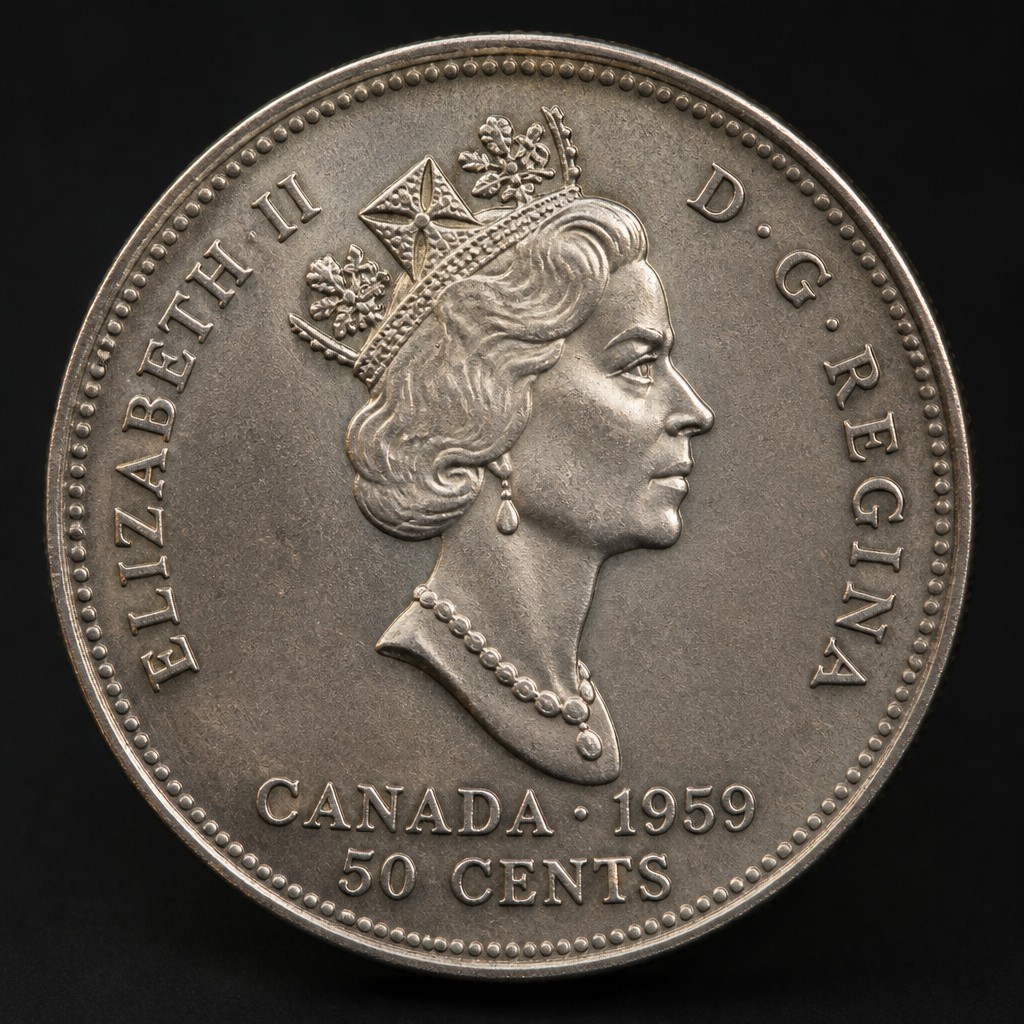
What Is This Coin?
This is Canada's regular-issue 50-cent piece minted throughout Elizabeth II's reign, continuing a coat-of-arms reverse design first introduced in 1937. It has been struck across several different compositions as Canadian coinage moved away from silver over the decades. Because it sees less everyday use than the smaller denominations, worn examples are somewhat less common in pocket change, and many people encounter it mainly through mint sets or as a curiosity found in a jar of old coins.
Obverse Design
The obverse shows one of several official portraits of Queen Elizabeth II used over her long reign, updated periodically (notably in 1965, 1990, and 2003) to reflect her aging appearance. Comparing the hairstyle and facial rendering can help narrow down roughly which era a worn coin comes from.
Reverse Design
The reverse displays the full Canadian Coat of Arms: a shield supported by a lion and unicorn, topped with a crowned helm, and a ribbon bearing the national motto below. "50 CENTS" and the date frame the design. This detailed, formal composition makes the coin easy to distinguish from Canada's simpler quarter or dime reverses, and the sheer number of small heraldic elements packed into the shield gives it a noticeably busier, more intricate look than any other circulating denomination.
Size, Weight & Metal
Composition has changed over time: .800 fine silver through 1967, pure nickel from 1968 through 1999, and nickel-plated steel from 2000 onward (identifiable by a small "P" mark near the date). Diameter has remained close to 27 mm throughout, though weight varies noticeably by composition, with silver examples feeling distinctly heavier.
Mint Marks & Where to Find Them
Canadian 50-cent pieces don't carry traditional mint marks. The small "P" seen on modern plated-steel coins indicates the plated composition rather than a specific mint facility, and its presence or absence is a quick way to distinguish late-1990s nickel coins from 2000-and-later plated steel.
Telling It Apart From Similar Coins
The detailed coat of arms with its animal supporters is unique to the 50-cent denomination, so it won't be confused with any other circulating Canadian coin. The main identification task instead involves narrowing down which composition and portrait era a given coin belongs to, using the clues above.
Judging Condition at a Glance
Look at the fine detail within the shield and the lion and unicorn figures — these intricate areas wear down and blur first. A coin with crisp, well-defined heraldic elements and legible small lettering in the motto ribbon indicates better preservation than one with a flattened, indistinct crest.
Authenticity Red Flags
Because this denomination sees relatively low circulation and collector interest is modest, outright counterfeits are less common than with rarer coins, but be wary of any example with blurry, doubled, or poorly centered designs, or a composition that doesn't match expectations for its date (for example, a coin dated after 2000 that isn't magnetic, when it should be plated steel). A simple magnet test combined with checking the date range against the composition timeline above will catch most mismatched or altered pieces.
Frequently asked questions
What does the reverse design show?
It shows the full Canadian Coat of Arms, including a shield, a lion and unicorn as supporters, a crowned helm, and a ribbon with the national motto.
How can I tell if my Elizabeth II 50-cent coin is silver?
Coins dated 1967 and earlier are .800 fine silver; 1968 through 1999 are nickel; 2000 onward are nickel-plated steel and will be magnetic.
Why does the queen's portrait look different on some coins?
Canada updated the official portrait of Elizabeth II several times over her reign, notably in 1965, 1990, and 2003, so the appearance changes depending on the coin's date.
What is the small 'P' near the date on some coins?
It indicates the coin is made of plated steel, a composition used from 2000 onward, distinguishing it from the earlier solid nickel coins.