How to Identify the Classic Head Large Cent
A collector's checklist for the 1808–1814 Classic Head cent: portrait style, wreath reverse, size and copper, and look-alikes to rule out.
Read the full Classic Head Large Cent encyclopedia entry →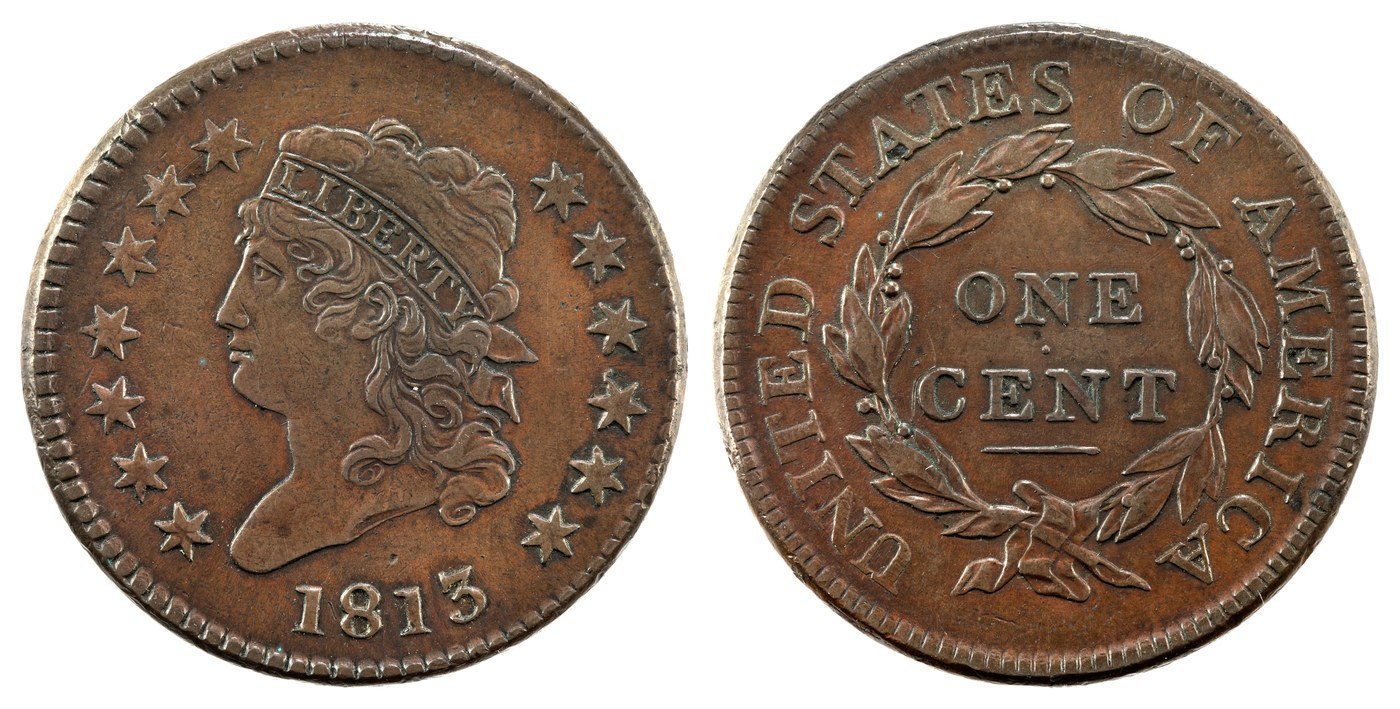
Start with the obverse portrait, the defining diagnostic of the type. Look for Liberty facing left with full, rounded curls and a band across the hair inscribed "LIBERTY." Thirteen stars should ring the border and the date sits below the bust. This soft, classical head is what separates the type from the sharper, ribbon-tied Draped Bust cents before it and the coronet-wearing Liberty on cents from 1816 onward. Confirm the date reads between 1808 and 1814; the coin shown here is dated 1813.
Check the reverse next. A genuine Classic Head cent has a continuous wreath enclosing the words "ONE CENT," with "UNITED STATES OF AMERICA" around the rim and a plain (smooth) edge. The wording "ONE CENT" is important, because the smaller Classic Head half cent uses the same Liberty portrait but reads "HALF CENT" inside its wreath.
Use size and metal to confirm. This is a large, pure-copper coin roughly 29 mm in diameter and near 10.9 grams, noticeably bigger and heavier than a modern cent and larger than the half cent look-alike. There are no mint marks on any coin of this type, so do not expect to find one; all were struck at Philadelphia.
Be cautious about condition and authenticity. The era's copper was often poor, so worn, dark, or porous surfaces are normal and do not by themselves indicate a fake. However, because scarcer dates carry real value, watch for tooled dates, added or altered digits, and cast counterfeits with mushy detail or seams on the edge. Soft, honest wear looks different from artificial smoothing. For any coin you believe is scarce or high grade, seek in-hand review or professional authentication rather than relying on photos.
Finally, read the date and stars carefully. Strikes are frequently weak on this type, and a partially visible date can still be attributed by star placement and other die features, but a confident identification depends on matching the classical portrait, the "ONE CENT" wreath reverse, the large copper format, and a date within the 1808–1814 window.
Frequently asked questions
What is the single fastest way to recognize this type?
The rounded, classical Liberty head with a "LIBERTY" band across the curls, surrounded by thirteen stars, on a large copper coin dated 1808–1814. That portrait plus the "ONE CENT" wreath reverse confirms the type.
The date is worn off. Can it still be identified?
Often yes. The portrait style, star arrangement, and reverse wording confirm the type even when the date is weak. Specialists can also attribute many coins by die characteristics, though a readable date is best for pinning the exact year.
Could a dark, rough coin still be genuine?
Yes. Porous or dark surfaces are common on genuine Classic Head cents because of the low-quality copper used at the time. Surface problems affect value but are not proof of a counterfeit.
Should I clean it to see the details better?
No. Cleaning early copper almost always reduces its value and can leave permanent marks. Leave the surfaces original and have a promising coin evaluated professionally instead.
Classic Head Large Cent identified by the community
Recent Classic Head Large Cent coins identified with Coin Identifier.