
How to Identify the Chinese Yunnan Province Dragon Dollar
A late Qing and early Republic-era silver dollar struck at the Yunnan provincial mint, identified by Chinese and English 'YUNNAN PROVINCE' inscriptions on the obverse and a coiled dragon on the reverse.
Read the full Chinese Yunnan Province Dragon Dollar encyclopedia entry →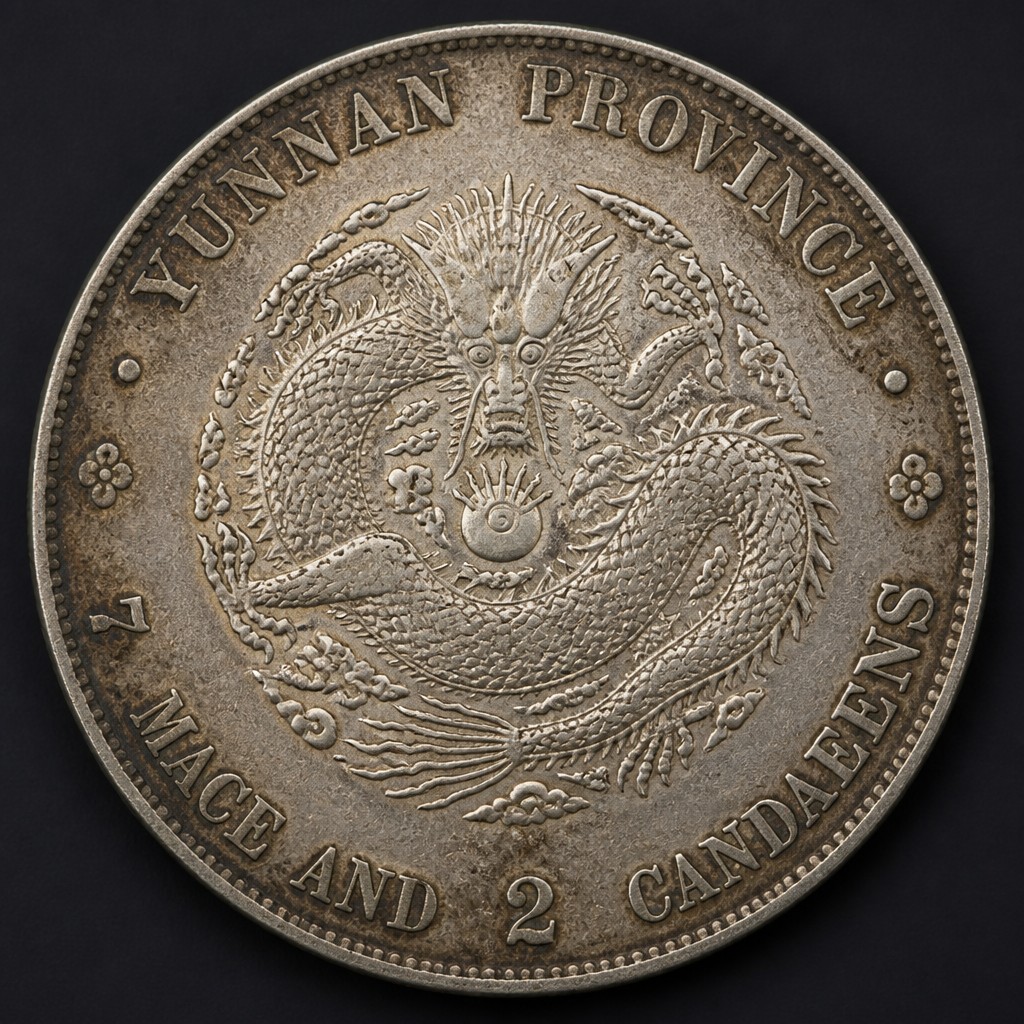
What It Is
The Yunnan Province dragon dollar was struck at the provincial mint in Yunnan during the late Qing dynasty and continuing, with design changes, into the early Republic of China period. Yunnan's remote, mountainous location and periods of semi-autonomous administration led it to maintain its own distinctive dollar coinage even as other provinces standardized around Beijing-directed designs.
Obverse Design & Inscriptions
The obverse typically carries Chinese characters identifying the Yunnan provincial mint along with the denomination, often accompanied by English lettering reading "YUNNAN PROVINCE" and a value designation, reflecting the bilingual convention used on many Chinese provincial trade dollars intended for wider commercial circulation.
Reverse Design & Inscriptions
The reverse is dominated by a coiled or facing dragon design, rendered in a style somewhat distinct from other provincial dragon dollars — Yunnan dragons are often noted for a tighter coil or slightly different scale and whisker rendering compared to dragons on coins from provinces like Guangdong or Zhili.
Size, Weight & Metal
As a silver dollar-denomination coin, it follows the general size and weight conventions of Chinese dragon dollars of the period — a large silver coin in the high-30mm diameter range with a weight in the high-20-gram range, reeded edge, and silver fineness broadly consistent with contemporaneous Chinese provincial dollars, though Yunnan issues in particular are noted for sometimes using a weight standard based on the Kuping tael system distinct from some other provinces.
Mint Marks & Where to Find Them
Provincial identification on this coin comes directly from the "YUNNAN" lettering itself rather than a separate small mint-mark symbol, making the mint origin generally straightforward to read directly from the coin's legend once the inscription is legible.
Telling It Apart from Similar Coins
Because many Chinese provinces issued their own dragon dollars in the late Qing and early Republic periods, the key to identification is reading the province name in the Chinese and English legends carefully; Yunnan coins should not be confused with similarly designed dollars from Guangdong, Sichuan, Fengtien, or other provinces, each of which carries its own province name and often subtly different dragon artwork.
Judging Condition at a Glance
On well-struck, lightly circulated examples, the dragon's scales, whiskers, and central pearl or flaming pearl motif remain crisp and well-defined, and the surrounding Chinese and English lettering is fully legible. Heavily circulated coins show smoothing across the dragon's raised coils and body, along with softened, less distinct lettering.
Authenticity Red Flags
Chinese dragon dollars are among the most heavily counterfeited historic coins on the collector market, so weight, diameter, strike sharpness, and the fine details of the dragon's scale pattern should all be checked carefully against verified genuine examples. Cast counterfeits often show a slightly grainy surface, softer overall detail, and telltale casting seams along the edge that a genuine struck coin will not have.
Frequently asked questions
How do I know a dragon dollar is from Yunnan specifically?
Look for Chinese characters and the English wording "YUNNAN PROVINCE" directly in the coin's legend, which identifies the specific provincial mint of origin.
What makes the Yunnan dragon design distinctive?
Yunnan dragon dollars are often noted for a tighter coiled dragon body and somewhat different scale and whisker rendering compared to dragon dollars from other Chinese provinces.
Why are Chinese dragon dollars frequently counterfeited?
Their historic popularity and silver value made them common counterfeiting targets both during their circulation period and in the modern collector market, so careful checks of weight, strike quality, and edge details are important.
What should I check for signs of a cast fake?
Look for a slightly grainy or pitted surface texture, softer overall detail than genuine struck coins, and any visible casting seams along the edge.