
How to Identify the Chinese Wu Zhu Cash
The Wu Zhu is a long-running Chinese bronze cash coin identified by its raised-rim round-and-square-hole shape and the two-character 'five zhu' inscription.
Read the full Chinese Wu Zhu Cash encyclopedia entry →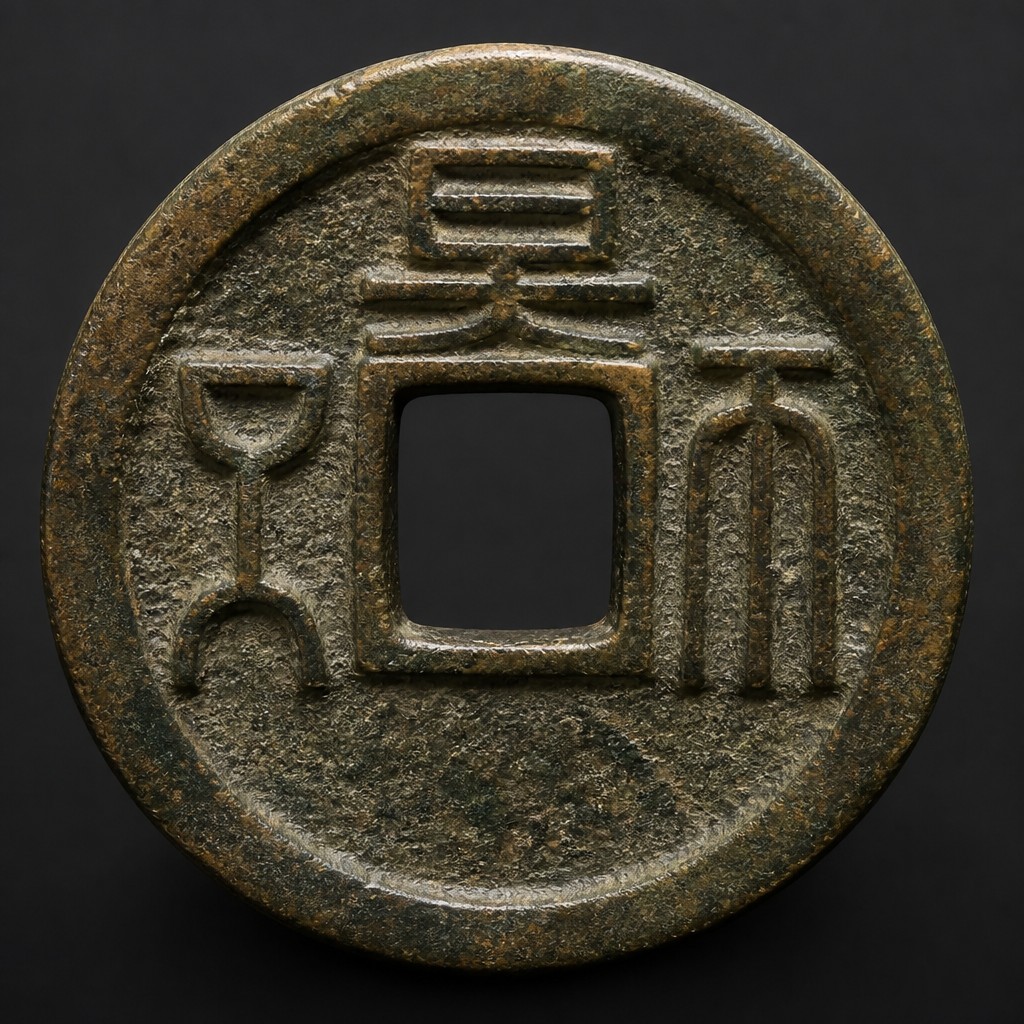
What It Is
The Wu Zhu (五銖, "five zhu," referring to a small unit of weight) was introduced in 118 BC under the Han dynasty and, remarkably, remained in production in various forms by multiple dynasties for more than 700 years, making it one of the longest-running coin types in world history until it was finally replaced in the early Tang dynasty.
Obverse Design
The obverse shows the two characters "五銖" placed to the right and left of the central square hole, in a rounder, more developed script style than the earlier Ban Liang. A raised rim typically borders both the outer edge and the square hole, a key visual upgrade over the plainer Qin-period coinage.
Reverse Design
Unlike the blank-backed Ban Liang, Wu Zhu cash generally show a plain field on the reverse but still carry the same raised rims around the edge and central hole; some later regional or dynastic variants add small marks, dots, or crescents near the hole that can help narrow down date and mint origin.
Size, Weight, and Metal
Cast in bronze, a standard Wu Zhu measures roughly 25mm in diameter with a weight designed to approximate five zhu (a traditional Chinese weight unit, a fraction of a tael), though exact weight varies across the many centuries and dynasties that issued coins of this type. As a cast coin, it has no true "edge" in the struck-coin sense; look instead at how cleanly the casting sprue (a small nub where metal entered the mold) was filed off.
Mint Marks
True mint names are not typically present on early Wu Zhu cash; instead, subtle differences in character style, rim thickness, and small symbols near the hole are used by specialists to sort issues by dynasty and rough period (Western Han, Xin dynasty, Eastern Han, and various Six Dynasties-period reissues).
Telling It Apart From Similar Coins
The clearest distinction from the earlier Ban Liang is the inscription itself (五銖 versus 半兩) and the presence of raised rims. Compared to the later Kai Yuan Tong Bao and other four-character Tang-dynasty cash, the Wu Zhu is easy to separate because it carries only two characters rather than four.
Judging Condition at a Glance
Look at how well the rim and inscription have survived; because these coins circulated for centuries and were sometimes cast in soft, low-quality bronze during periods of currency debasement, character clarity varies enormously between well-made official issues and crude, thin, "sample-style" private or wartime imitations from the same broad period.
Authenticity Red Flags
Because Wu Zhu cash is common and inexpensive, outright fakes are less common than with rarer coins, but reproductions do exist for tourist sale. Signs of a modern reproduction include unnaturally uniform casting with no mold seams or sprue marks, a bright uncorroded surface, or characters that are too crisp and regular compared to the somewhat variable hand-finished look of genuine ancient cast coins.
Frequently asked questions
What does the Wu Zhu inscription mean?
The two characters mean 'five zhu,' a small traditional Chinese unit of weight the coin was originally designed to approximate, not a mint mark or date.
How long was this coin type produced?
Roughly from 118 BC to the early 7th century AD, spanning the Han dynasty and several successor states, making it one of history's longest-running coin designs.
How is a Wu Zhu different from a Ban Liang coin?
The inscriptions differ (五銖 versus 半兩), and Wu Zhu coins have raised rims around both the outer edge and central hole, while early Ban Liang coins are typically rimless and flatter.
Do Wu Zhu coins have mint names?
No, standard Wu Zhu cash lack explicit mint names; period and origin are instead inferred from character style, rim details, and small symbols near the hole.
Why do some Wu Zhu coins look crude or thin?
During periods of political instability or currency debasement, some issuers (including private minters) produced lighter, cruder versions of the coin, so quality varies significantly across the type's long history.