
How to Identify the Chinese Tang Dynasty Cash
The 'Kaiyuan Tong Bao' cash coin introduced in 621 AD, which established the round coin with a square hole and nominal-value inscription that became the standard template for Chinese coinage for well over a thousand years.
Read the full Chinese Tang Dynasty Cash encyclopedia entry →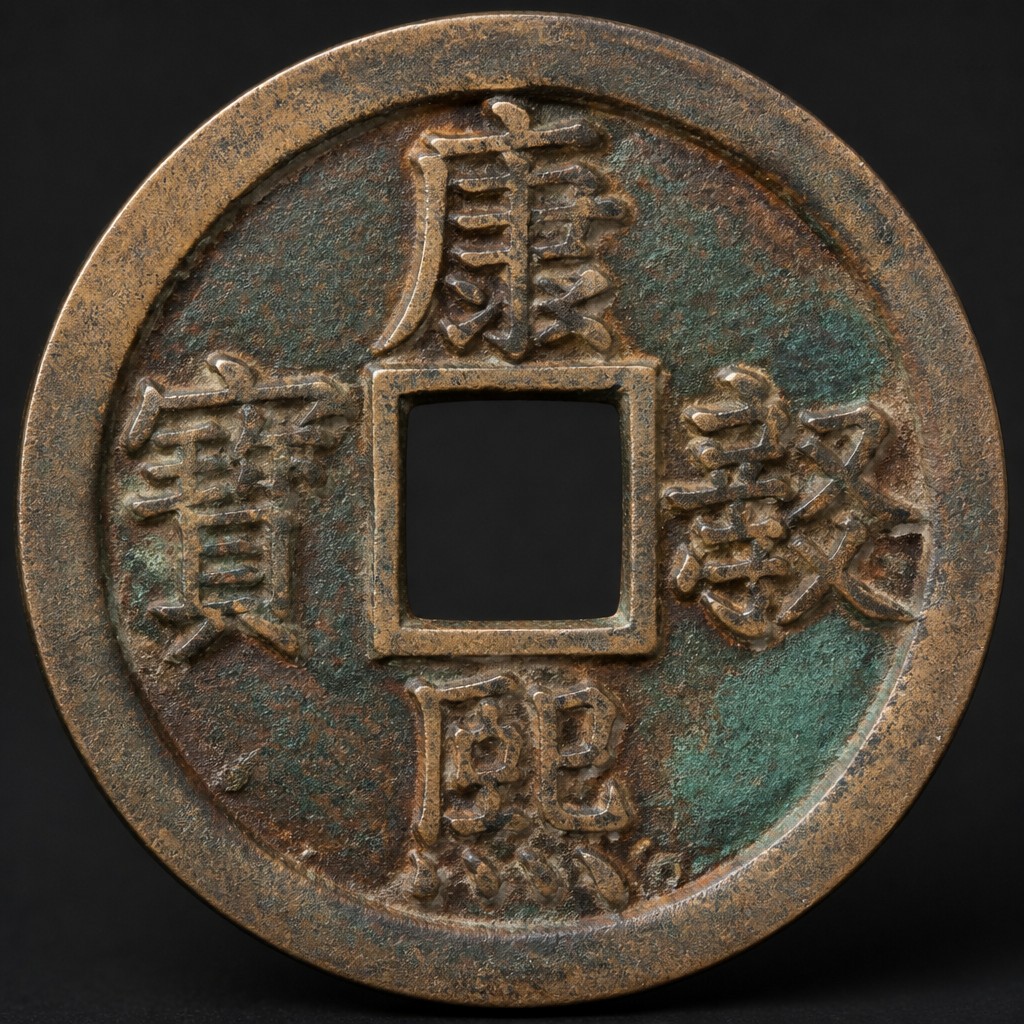
What It Is
In 621 AD, early in the Tang Dynasty (618-907 AD), the "Kaiyuan Tong Bao" coin replaced the older system of coins denominated by their actual metal weight (like the earlier banliang and wuzhu types) with a coin of nominal, government-assigned value. This shift proved so influential that the same basic round, square-holed format with a four-character inscription was copied by nearly every later Chinese dynasty, as well as by Japan, Korea, and Vietnam.
Obverse Design
The obverse bears four characters, "Kai Yuan Tong Bao," arranged top, bottom, right, left, in a clerical or standard script traditionally credited to the calligrapher Ouyang Xun. This design remained essentially unchanged for the coin's roughly 290-year production run, which makes fine dating within the Tang period difficult without other clues.
Reverse Design
Most early Kaiyuan cash have a plain, blank reverse. Later in the dynasty's production, some coins show a small crescent moon or star mark near the rim, traditions hold this crescent originated from an empress's fingernail accidentally impressed in the wax coin model, though the story is more legend than documented fact. A small number of rarer pieces carry a single mint character.
Size, Weight, Metal, and Edge
Kaiyuan cash typically measure about 24-25mm in diameter with a square hole around 7mm across, cast in bronze and weighing roughly 3.5-4.5 grams. Both faces usually have a raised rim border framing the design.
Mint Marks and Attribution
Beyond the occasional crescent or star mark and rare single-character mint indicators, most Kaiyuan cash carry no explicit mint identification, so detailed mint or regional attribution generally depends on specialist reference works rather than an obvious mark on the coin itself.
Telling It Apart from Similar Coins
Because the Kaiyuan design stayed constant throughout the Tang Dynasty, it is easily told apart from later dynasties' cash coins simply by its unique four-character inscription, distinct from the different reign-title texts used by Song, Ming, or Qing coins. Modern souvenir reproductions of the Kaiyuan type are also common and worth checking against known genuine examples.
Judging Condition at a Glance
Assess casting quality and how crisply the four main characters read, along with the clarity of any reverse crescent mark if present. A well-preserved example will show an even, naturally aged patina without excessive corrosion pitting.
Authenticity Red Flags
Genuine Kaiyuan cash display correct, well-proportioned calligraphy matching the historically documented Tang style, along with age-appropriate patina and correct weight and diameter. Overly crude or blobby lettering, an unusual metal color, or a suspiciously glossy and perfectly even patina suggest a modern cast reproduction rather than an authentic period coin.
Frequently asked questions
What does 'Kaiyuan Tong Bao' mean?
Kaiyuan refers to the new coinage system inaugurated in 621 AD (roughly meaning 'inaugurating a new era'), and Tong Bao is the standard value term meaning 'circulating treasure,' together identifying the coin's issuing purpose rather than a specific emperor's reign name.
Why is it hard to date a Kaiyuan cash coin precisely within the Tang Dynasty?
The design remained essentially unchanged across nearly 290 years of Tang rule, so without additional details like a rare mint character or specific style variation, most Kaiyuan cash cannot be pinned to an exact year within the dynasty.
What is the small crescent mark on some coins?
A crescent or star mark appears on the reverse of some later Kaiyuan cash issues, traditionally linked to a legend about an empress's fingernail mark in the wax model, and its presence can help with variety attribution among specialists.
How do I tell Tang cash apart from Song Dynasty cash?
Tang cash uniformly read Kaiyuan Tong Bao regardless of when they were cast, while Song cash use a variety of different reign-title characters specific to each emperor, so the obverse inscription itself is the clearest distinguishing feature.
Are Kaiyuan cash commonly reproduced today?
Yes, because of their historical significance and popularity, modern reproductions of the Kaiyuan Tong Bao are common in the souvenir market, so checking calligraphy quality, weight, and patina against known genuine examples is worthwhile.