
How to Identify the Chinese Szechuan Rupee (Tibet-related)
A silver rupee-format coin produced in China's Szechuan province for trade with Tibet, identified by its rupee-like size and shape combined with Chinese characters rather than Indian imagery.
Read the full Chinese Szechuan Rupee (Tibet-related) encyclopedia entry →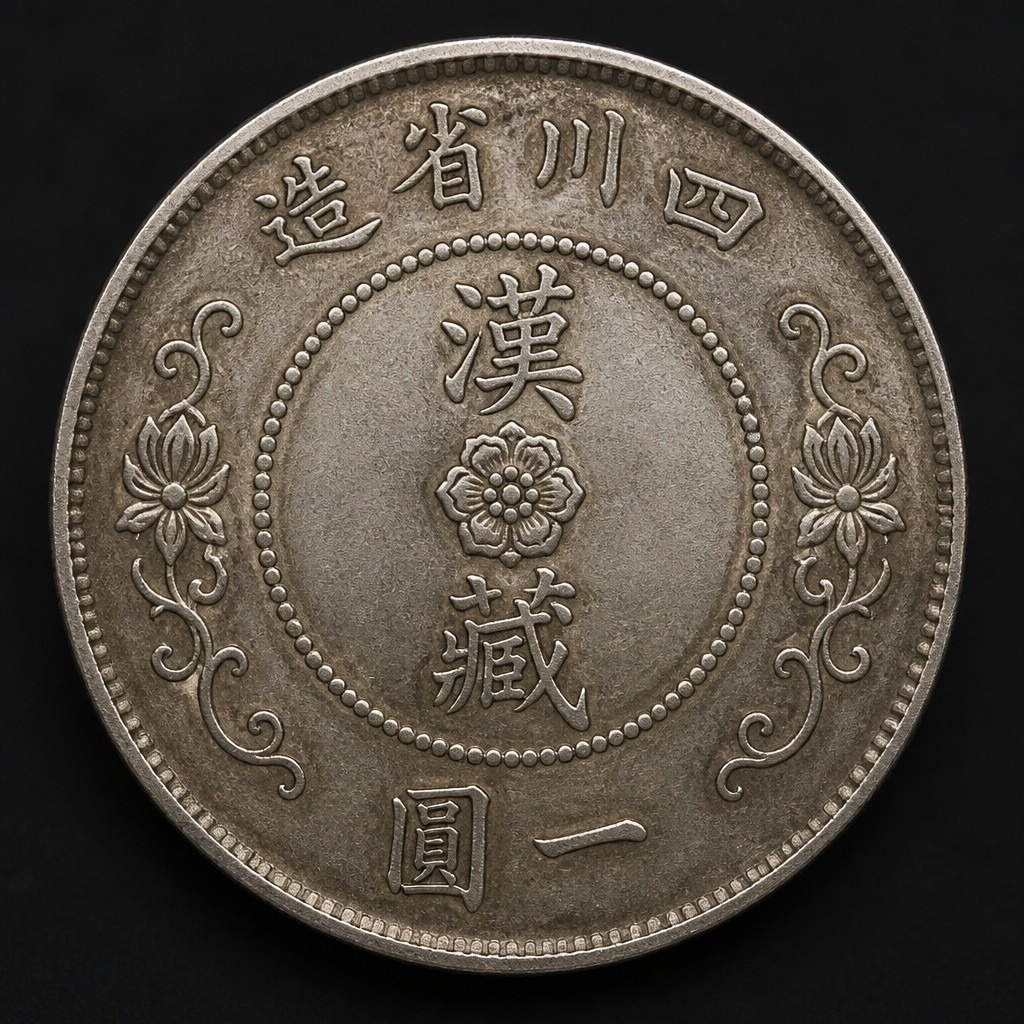
What This Coin Is
The Szechuan (Sichuan) rupee was produced by a Chinese provincial mint specifically to compete with Indian and Nepalese rupees that had become dominant in trade with Tibet, where Indian-style rupees were widely trusted and used. By minting a similar rupee-format coin locally, Chinese authorities aimed to keep silver currency and trade influence in Tibet under Chinese rather than foreign (British Indian or Nepalese) control.
Obverse Design
The obverse typically features Chinese characters identifying the issuing province (Szechuan) and the coin's silver content or denomination, laid out in a rounded design broadly similar in size and general layout to the Indian rupees it was designed to resemble and replace.
Reverse Design
The reverse commonly displays a floral or decorative design, sometimes incorporating a stylized plum blossom or similar Chinese decorative motif, differing from the portrait-based reverse or obverse designs found on the Indian rupees these coins were meant to compete with in circulation.
Size, Weight, Metal, and Edge
The coin closely matches standard Indian rupee dimensions and silver weight, since matching these specifications closely was essential to the coin's intended purpose of directly substituting for Indian rupees in Tibetan trade; it has a reeded or milled edge typical of machine-struck coinage of the period.
Mint Marks and Where to Find Them
As a provincial issue, the coin's Chinese characters themselves effectively serve as the identifying mark, specifying the Szechuan provincial mint rather than requiring a separate small mintmark symbol as seen on some other coinages.
Telling It Apart from Similar Coins
The most important distinction is versus the genuine British India rupees these coins were designed to imitate in form: the Szechuan rupee uses Chinese characters and a floral reverse rather than a portrait of a British monarch, making the two easy to tell apart once the design elements (not just the size) are examined. It can also be confused with other Chinese provincial silver coinage of the era, distinguished by the specific provincial name in the characters.
Grading at a Glance
On higher-grade examples, the Chinese characters remain crisp and fully formed, and the floral reverse design shows clear, well-defined petal and stem detail. Circulated coins show wear first on the raised character strokes and the highest points of the floral design.
Authenticity Red Flags
Because this coin was already created to closely imitate another currency's specifications, extra care is warranted; red flags include blurred or incorrectly formed Chinese characters, a weight or diameter that doesn't match the standard rupee-equivalent specification, and surfaces that appear cast rather than cleanly struck.
Frequently asked questions
Why was this coin made to look like an Indian rupee?
Indian and Nepalese rupees were already trusted and widely circulating in Tibet, so Chinese authorities minted a similar rupee-format coin to compete for that same trade role.
How do I tell it apart from a real Indian rupee?
Look at the design elements: the Szechuan rupee shows Chinese characters and a floral reverse rather than a British monarch's portrait, even though the size and weight are similar.
What province issued this coin?
It was issued by a provincial mint in Szechuan (Sichuan) province in China.
Was this coin used within China generally, or in a specific region?
It was produced specifically for circulation in trade with Tibet, rather than for general use throughout China.