
How to Identify the Chinese Song Dynasty Cash Coin
A round bronze or iron coin with a square center hole, cast during the Song Dynasty (960-1279 AD) and inscribed with a four-character reign title in one of several distinct calligraphic scripts.
Read the full Chinese Song Dynasty Cash Coin encyclopedia entry →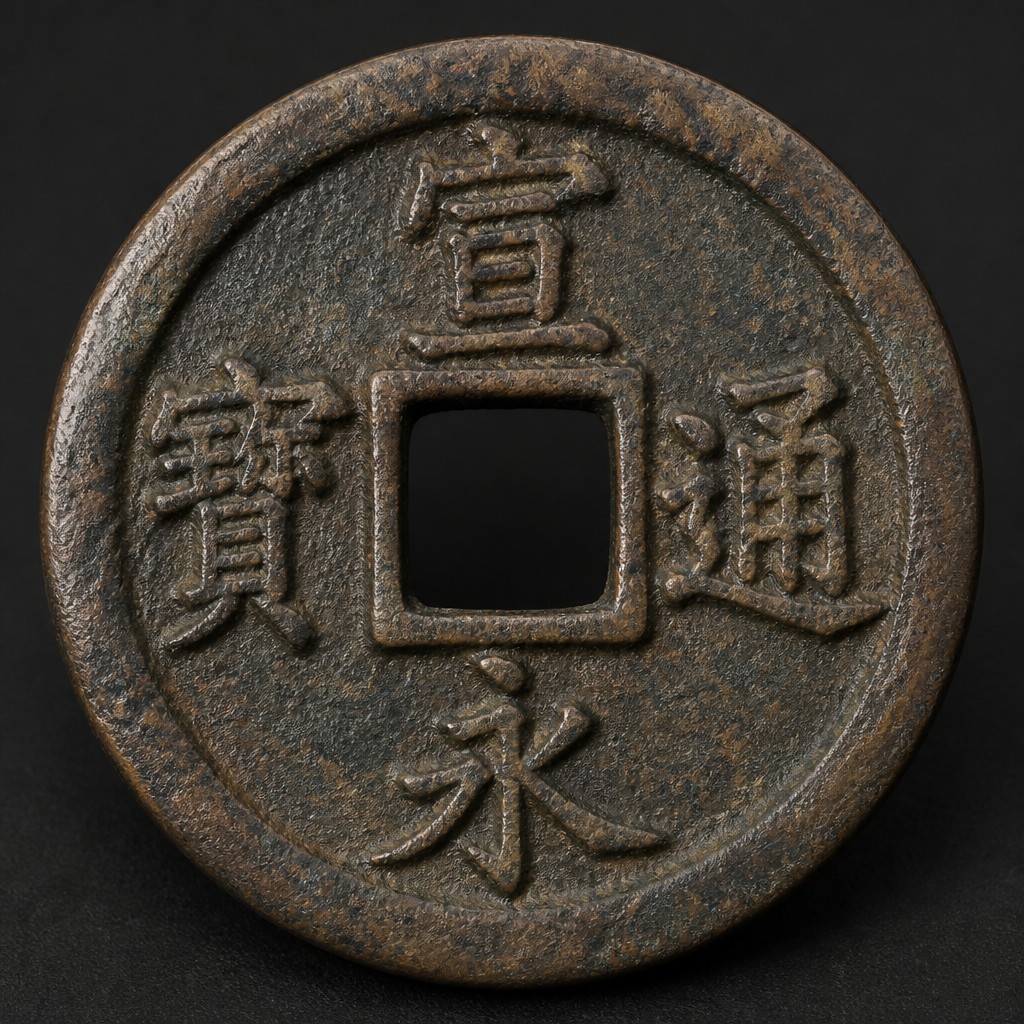
What It Is
The Song Dynasty continued China's traditional round coin with a square center hole, a format symbolizing heaven (round) and earth (square) that dates back over a thousand years earlier. The Song produced cash coins in enormous quantities across many reign periods (nianhao), and the dynasty is especially notable for issuing the same reign-title coin in multiple calligraphic scripts, a practice most famous under Emperor Huizong's elegant personal "slender gold" style.
Obverse Design
The obverse shows four Chinese characters, generally read in the order top, bottom, right, left, giving the reign title followed by a value term such as "tong bao" (circulating treasure), "yuan bao" (first treasure), or "zhong bao" (heavy treasure) — for example, "Xining Tong Bao" or "Yuanfeng Tong Bao." Song coins were cast in a wide range of script styles, including seal script, clerical script, standard script, and running or cursive script, sometimes with several script variants issued for the very same reign title.
Reverse Design
Most ordinary Song cash have a plain, blank reverse. Some issues, particularly larger-value "big cash" coins made to represent multiple standard cash units, carry a single character or numeral on the reverse indicating denomination or an abbreviated mint reference.
Size, Weight, Metal, and Edge
Standard Song cash run roughly 23-26mm in diameter with a square hole about 5-7mm across, and typically weigh around 3-4 grams, though larger denomination pieces are bigger and heavier. Both bronze and iron were used, with iron cash especially common in certain regions and periods due to periodic copper shortages. A raised rim border on both faces is typical, helping protect the inscription from wear when coins were strung together on a cord.
Mint Marks and Attribution
Many ordinary Song cash carry no explicit mint mark at all. Where regional or mint attribution is possible, it generally relies on subtle differences in character style and any reverse marks found on specific later Southern Song issues, cross-referenced against specialist catalogs rather than an obvious inscribed mint name.
Telling It Apart from Similar Coins
The reign-title text is the fastest way to separate Song cash from other dynasties' cash coins: Tang coins read "Kaiyuan Tong Bao" regardless of when during that dynasty they were struck, while Song and later Ming and Qing coins each use their own distinct reign-title characters. Modern souvenir "feng shui" cash coins sold widely today often carry incorrect or fantasy inscriptions that do not match any genuine historical reign title, which is a useful check against a real Song catalog listing.
Judging Condition at a Glance
Because Song cash were cast in molds rather than struck, look for crisp, well-formed raised characters, a cleanly centered square hole, and minimal casting flash or burrs around the edge. Even, natural-looking patina built up over centuries adds to a coin's presentability.
Authenticity Red Flags
Genuine cash coins display natural, uneven oxidation in shades of green, brown, or black built up gradually over centuries, along with correct, recognizable calligraphy matching documented reign-title coins. Modern fakes often show an unnaturally uniform, sandy-cast surface texture, incorrect or garbled stroke forms, the wrong metal color or weight, or a chemically applied "aged" look that appears too even and artificial.
Frequently asked questions
How do I read the four characters on the coin?
Song cash inscriptions are typically read in the order top, bottom, right, then left, giving the reign title followed by a value term like tong bao, yuan bao, or zhong bao.
Why do some Song coins with the same reign title look different from each other?
The Song dynasty frequently issued the same reign-title coin in multiple calligraphic script styles, such as seal, clerical, standard, and running script, so genuinely different-looking coins can still share the identical reign title and date range.
Is a blank reverse a sign of a fake?
No, a plain blank reverse is completely normal and expected on most standard Song cash coins; a marked reverse is more the exception, typically limited to certain larger-denomination issues.
How can I tell a Song cash coin from a Tang or Ming cash coin?
Read the reign-title characters on the obverse: Tang coins uniformly read Kaiyuan Tong Bao, while Song, Ming, and Qing coins each use their own distinct reign-title characters specific to that emperor's era.
What's the biggest giveaway of a modern reproduction?
Modern fakes often have an unnaturally uniform sandy or shiny surface and incorrect character forms, whereas genuine antique cash show natural, uneven patina built up gradually and crisp, correctly formed calligraphy.