
How to Identify the Chinese Silver Dragon Dollar (Kwangtung Province)
The Kwangtung Province Dragon Dollar is a late Qing-dynasty Chinese silver coin bearing a coiled dragon on the reverse and provincial inscriptions in Chinese and English, prized by collectors of Chinese regional coinage.
Read the full Chinese Silver Dragon Dollar (Kwangtung Province) encyclopedia entry →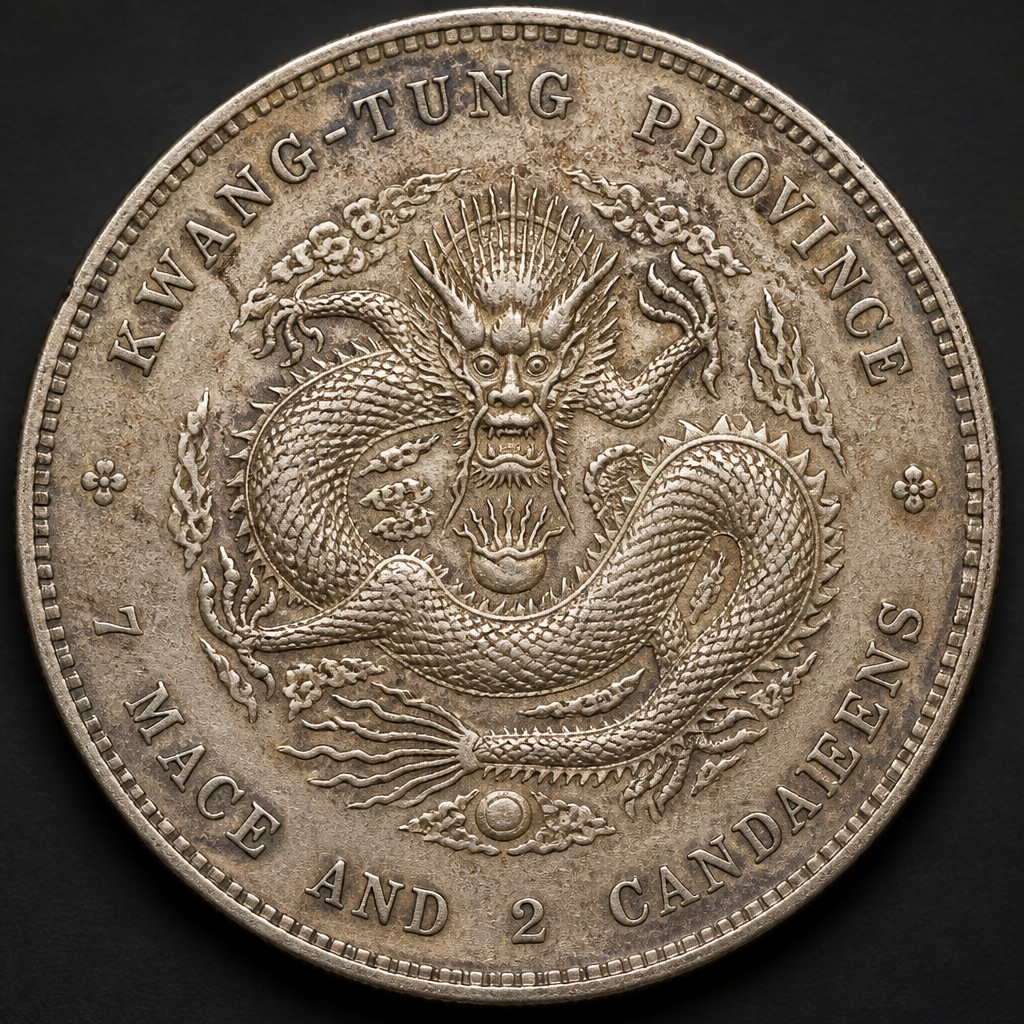
What It Is
This silver dollar was issued by the Kwangtung (Guangdong) provincial mint during the late Qing dynasty, part of a broader wave of provincial "dragon dollar" coinage produced across China in the late 19th and early 20th centuries as regional mints modernized their coinage along Western lines. Kwangtung was among the earliest and most prolific of the provincial mints to adopt this Western-style silver dollar format, making its dragon dollars some of the more commonly encountered examples from this period.
Obverse Design
The obverse carries Chinese characters identifying the issuing province and denomination, arranged around a central inscription, along with the English-language legend "KWANG-TUNG PROVINCE" curving around the upper rim and the silver weight standard, commonly expressed as "7 MACE AND 2 CANDAREENS," referencing the traditional Chinese weight system.
Reverse Design
The reverse is dominated by a coiled or sinuous dragon design, a common motif across Qing-era provincial dollars, encircled by additional Chinese text and sometimes a beaded or linear border. The dragon's pose, scale detail, and surrounding clouds or pearls vary slightly between minting years and die varieties.
Size, Weight & Metal
The coin follows the traditional Chinese dollar weight standard, roughly 39mm in diameter and about 26.7 grams, struck in silver at a fineness typically cited around .900, consistent with the broader family of Qing-dynasty silver dollars produced by various provincial mints.
Mint Marks and Where to Find Them
Because the province name is spelled out prominently in both Chinese and English on the obverse, there is no need to search for a hidden mint mark — the "KWANG-TUNG PROVINCE" inscription itself functions as the primary mint identifier, distinguishing it from dollars issued by other provinces like Kiangnan or Fengtien.
Telling It Apart from Similar Coins
Provincial dragon dollars from different regions share the general format (dragon reverse, Chinese/English obverse) but differ in the specific province name, dragon style, and border details. Carefully read the English province name and compare the dragon's scale pattern and central design elements to distinguish Kwangtung issues from other provincial dollars such as those of Chihli or Hupeh.
Judging Condition at a Glance
Examine the dragon's scales and whiskers for sharpness, along with the fine Chinese characters on the obverse, since both wear down relatively quickly with circulation. A well-preserved example retains crisp beaded borders and clear separation between individual scales on the dragon.
Authenticity Red Flags
Chinese dragon dollars are among the more frequently counterfeited historical coin types due to sustained collector demand. Watch for coins with soft or mushy dragon details, incorrect weight or diameter, a dull or unnaturally bright surface texture, or Chinese characters that appear crudely formed compared to known genuine examples; having a piece checked against reliable reference images or by an experienced grader is advisable given the prevalence of reproductions.
Frequently asked questions
What does 'Kwang-Tung Province' refer to on this coin?
It refers to Guangdong province in southern China, the issuing authority for this particular dragon dollar under the late Qing dynasty's provincial minting system.
What does '7 Mace and 2 Candareens' mean?
This phrase describes the coin's silver weight using the traditional Chinese weight system, roughly equivalent to the standard silver dollar weight used across most Qing provincial issues.
Why are Chinese dragon dollars often counterfeited?
Strong and sustained collector demand for these historically significant coins has made them frequent targets for reproduction, so careful comparison of weight, detail sharpness, and design accuracy is important.
How can I tell this coin apart from other provincial dragon dollars?
Read the English province name in the obverse legend and compare the dragon's specific style and border details, since each province used its own distinct dragon design and inscription.