
How to Identify the Chinese Qing Dynasty Cash (Qian Long Tong Bao)
A cast bronze cash coin issued under the long-reigning Qianlong Emperor, identified by its four-character Chinese reign title on the obverse and paired Manchu mint characters on the reverse.
Read the full Chinese Qing Dynasty Cash (Qian Long Tong Bao) encyclopedia entry →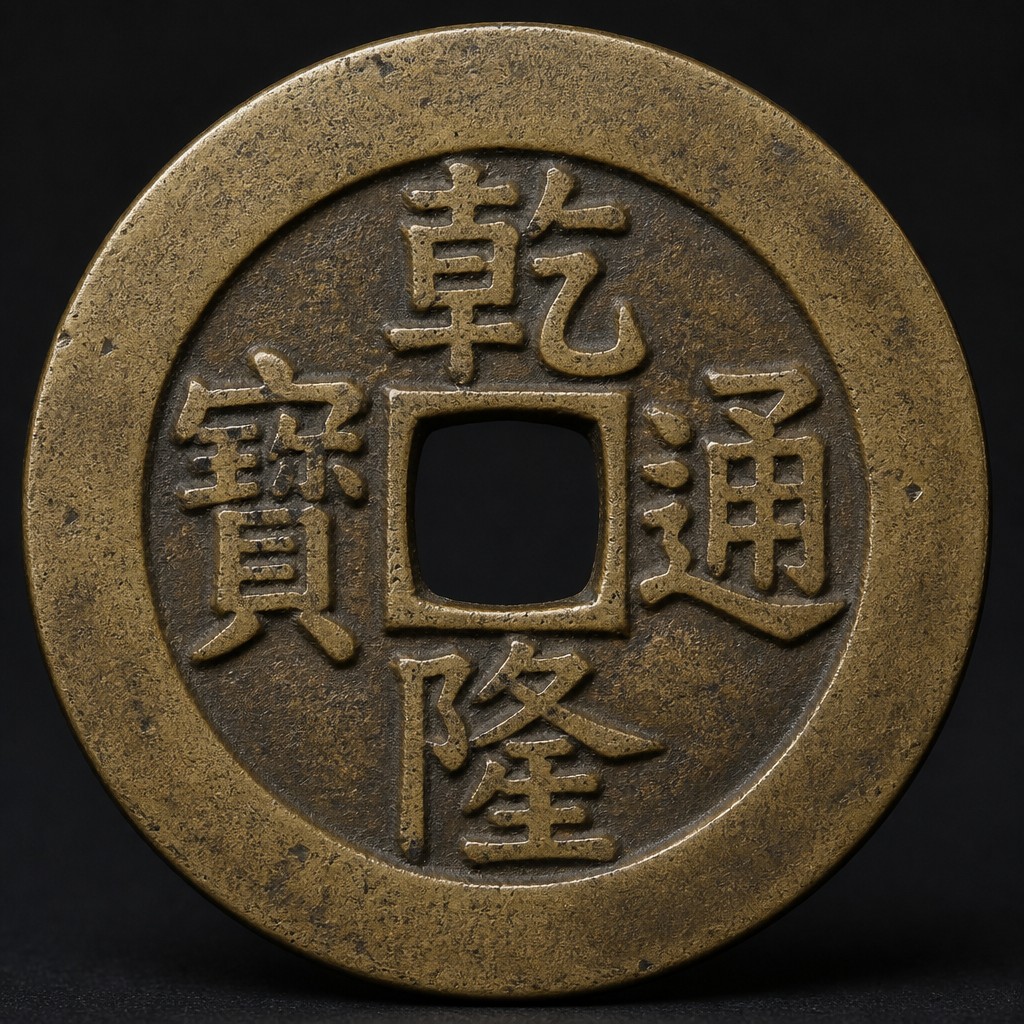
What It Is
The Qianlong Emperor reigned from 1735/36 to 1795/96, one of the longest reigns in Chinese history, and cash coins bearing his reign title are among the most commonly surviving old Chinese coins today thanks to the sheer volume struck across dozens of mints throughout his rule.
Obverse Design
The obverse displays four Chinese characters, "Qian Long Tong Bao," arranged top, bottom, right, left, in standard script.
Reverse Design
The reverse carries two Manchu script characters flanking the square center hole, since the Qing Dynasty was established by the Manchu people. These Manchu characters identify the specific mint that cast the coin, such as "Boo Ciowan" for the Ministry of Revenue mint in Beijing, with different character pairs corresponding to various provincial mint bureaus operating during the reign.
Size, Weight, Metal, and Edge
Typical Qianlong cash measure about 23-25mm in diameter, though size and alloy color shifted somewhat over the long reign and varied by mint, with some later or regional issues appearing smaller or more brass-toned compared to an earlier reddish bronze tone. Weight generally runs about 3-4.5 grams, with a raised rim border on both faces framing the square hole.
Mint Marks and Attribution
The paired Manchu characters on the reverse are the standard way to identify the specific mint bureau responsible for a given coin, since dozens of mints across the empire's provinces struck Qianlong-era cash simultaneously.
Telling It Apart from Similar Coins
Coins of other Qing emperors, such as Kangxi Tong Bao, Jiaqing Tong Bao, or Daoguang Tong Bao, use the identical general format but a different reign-title text on the obverse, so simply reading those four characters distinguishes them from a Qianlong coin. This coin type is also extremely popular as a modern "lucky coin" or feng shui charm, and such decorative reproductions frequently use the Qianlong inscription regardless of any claim to genuine age.
Judging Condition at a Glance
Check the sharpness of both the Chinese obverse characters and the Manchu reverse characters, along with overall surface patina. Because the original mintage was so enormous and many examples circulated for a long time, heavily worn or corroded surfaces are common, so a coin retaining crisp detail on both sides stands out as comparatively well preserved.
Authenticity Red Flags
Genuine antique examples show real oxidized patina, minor casting irregularities consistent with hand production, and correctly paired Manchu script matching a legitimate mint designation. Mass-produced modern replicas, extremely common as souvenirs and charms, tend to be uniformly bright brass in color, noticeably lightweight, and show mushy, blurred, or simply incorrect Manchu characters, plus a general lack of genuine circulation wear.
Frequently asked questions
What do the two characters on the back of the coin mean?
Those are Manchu script characters, not Chinese, and they identify the specific mint bureau that cast the coin, since the Qing Dynasty was ruled by the Manchu people and used Manchu script for mint designations on cash coins.
Why are Qianlong cash coins so common compared to other Chinese cash?
The Qianlong Emperor's exceptionally long reign, from 1735/36 to 1795/96, combined with production at numerous mints across the empire resulted in an especially large surviving population of these coins today.
How do I tell a Qianlong cash coin from a Kangxi or Daoguang cash coin?
The obverse reign-title characters differ between each emperor's coinage, so reading those four characters directly identifies which reign the coin belongs to, even though the overall layout and format look very similar across different Qing emperors.
Is my shiny brass 'Qianlong' coin likely genuine?
A uniformly bright, lightweight brass coin with blurry or incorrect Manchu characters is more likely a modern reproduction sold as a lucky charm than a genuine antique, since real circulated examples typically show oxidized patina and casting irregularities.
Why does my coin look corroded or pitted?
Because Qianlong-era cash were minted in enormous numbers and often circulated or were stored for centuries, heavy corrosion and surface pitting are common on surviving examples and don't necessarily indicate a problem with authenticity.