
How to Identify the Chinese Ming Dynasty Cash (Hong Wu Tong Bao)
A cast bronze cash coin issued under the founding Hongwu Emperor of the Ming Dynasty, notable for being cast in several sizes representing different denominations rather than a single standard value.
Read the full Chinese Ming Dynasty Cash (Hong Wu Tong Bao) encyclopedia entry →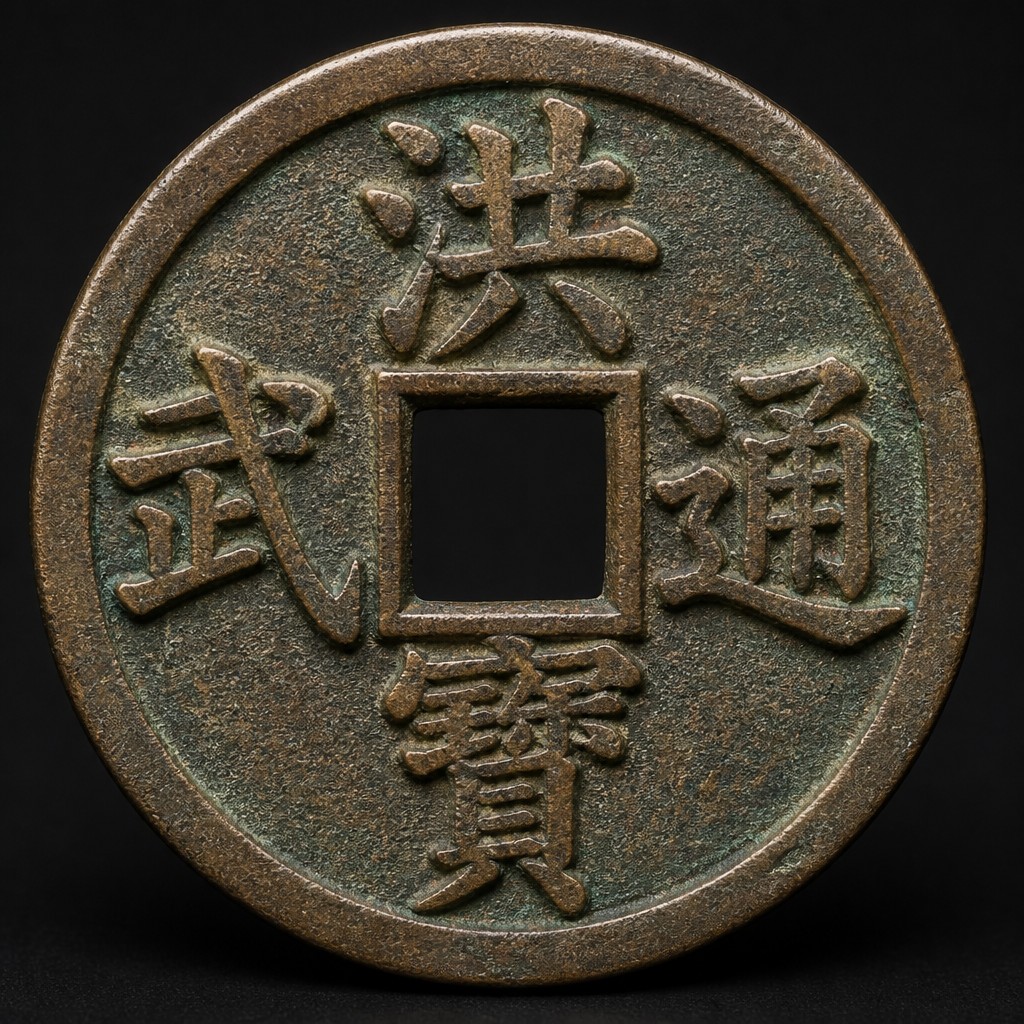
What It Is
The Hongwu Emperor founded the Ming Dynasty and reigned from 1368 to 1398, and cash coins issued in his reign title are distinctive for an unusual multi-denomination system: rather than casting a single standard-size coin, the Hongwu mint produced cash in several sizes representing different values, from a basic 1-cash coin up to larger pieces worth multiples of that base unit. This approach reflected early Ming efforts to rebuild a stable currency system after the disruption of the preceding Yuan Dynasty, and later Ming emperors largely returned to issuing cash in a single standard size.
Obverse Design
The obverse shows four characters, "Hong Wu Tong Bao," arranged top, bottom, right, left, in standard script, consistent across all the different size denominations.
Reverse Design
The reverse varies by denomination. Smaller, basic 1-cash coins are typically plain and blank on the reverse, while larger-value pieces (representing 2, 3, 5, or 10 cash) display a Chinese character or numeral near the square hole indicating the mint province or bureau, and sometimes the coin's specific denomination value.
Size, Weight, Metal, and Edge
Size scales directly with denomination: the smallest 1-cash coins run about 24-25mm in diameter, while the largest 10-cash pieces can exceed 40-44mm and are correspondingly much heavier. All are cast bronze or brass with a square center hole and a raised rim border framing each face.
Mint Marks and Attribution
On the higher-denomination pieces, Chinese characters (not Manchu script, since the Ming was a native Han Chinese dynasty) near the reverse hole name the provincial mint responsible, such as characters representing provinces like Fujian or Guangdong.
Telling It Apart from Similar Coins
The clearest distinguishing feature versus later Qing Dynasty cash is the script used for mint marks: Ming reverse mint marks use Chinese characters or are simply blank, while Qing coins use paired Manchu characters, a quick and reliable visual test. Other Ming emperors issued cash under their own reign titles, such as the later "Yongle Tong Bao" or "Chongzhen Tong Bao," so reading the obverse four characters identifies the specific reign.
Judging Condition at a Glance
Look at how sharply the cast characters read on both faces, whether the coin's size is proportionate to its apparent denomination, and the general surface patina and wear consistent with genuine age.
Authenticity Red Flags
Modern decorative reproductions, often sold as feng shui charms, commonly bear the Hongwu inscription but show unnaturally clean, bright brass surfaces, an incorrect weight-to-size ratio for the claimed denomination, or blurred and inaccurate reverse mint marks. Genuine pieces display real aged patina and the casting characteristics typical of pre-modern hand production.
Frequently asked questions
Why do Hong Wu Tong Bao coins come in such different sizes?
The Hongwu Emperor's mint produced cash in several distinct sizes to represent different denominations, from a basic 1-cash coin up to larger pieces worth multiples of that value, which is unusual compared to most other reigns that struck largely one standard size.
How can I tell a Ming cash coin from a Qing cash coin?
Check the reverse: Ming coins use Chinese characters or are blank for mint identification, while Qing coins use paired Manchu script characters, making the reverse script style a fast way to distinguish the two dynasties.
What do the characters near the hole on a larger Hongwu coin mean?
On higher-denomination Hongwu cash, a Chinese character or numeral near the square hole typically indicates the provincial mint that produced the coin and sometimes the specific denomination value.
How do I know if my coin is really from Hongwu's reign and not another Ming emperor?
Read the four obverse characters directly, since other Ming emperors used their own distinct reign titles, such as Yongle Tong Bao or Chongzhen Tong Bao, rather than Hong Wu Tong Bao.
What's a warning sign that a Hongwu coin might be a modern souvenir?
Watch for unnaturally bright, clean brass surfaces, a weight that doesn't match the expected proportion for its apparent denomination size, or blurry and inaccurate reverse mint characters, all common in modern decorative reproductions.