
How to Identify the Chinese Kirin Province Dragon Dollar
A late Qing dynasty silver dollar struck at the Kirin (Jilin) provincial mint in Manchuria, identified by Chinese and Manchu inscriptions on the obverse and a dragon design on the reverse.
Read the full Chinese Kirin Province Dragon Dollar encyclopedia entry →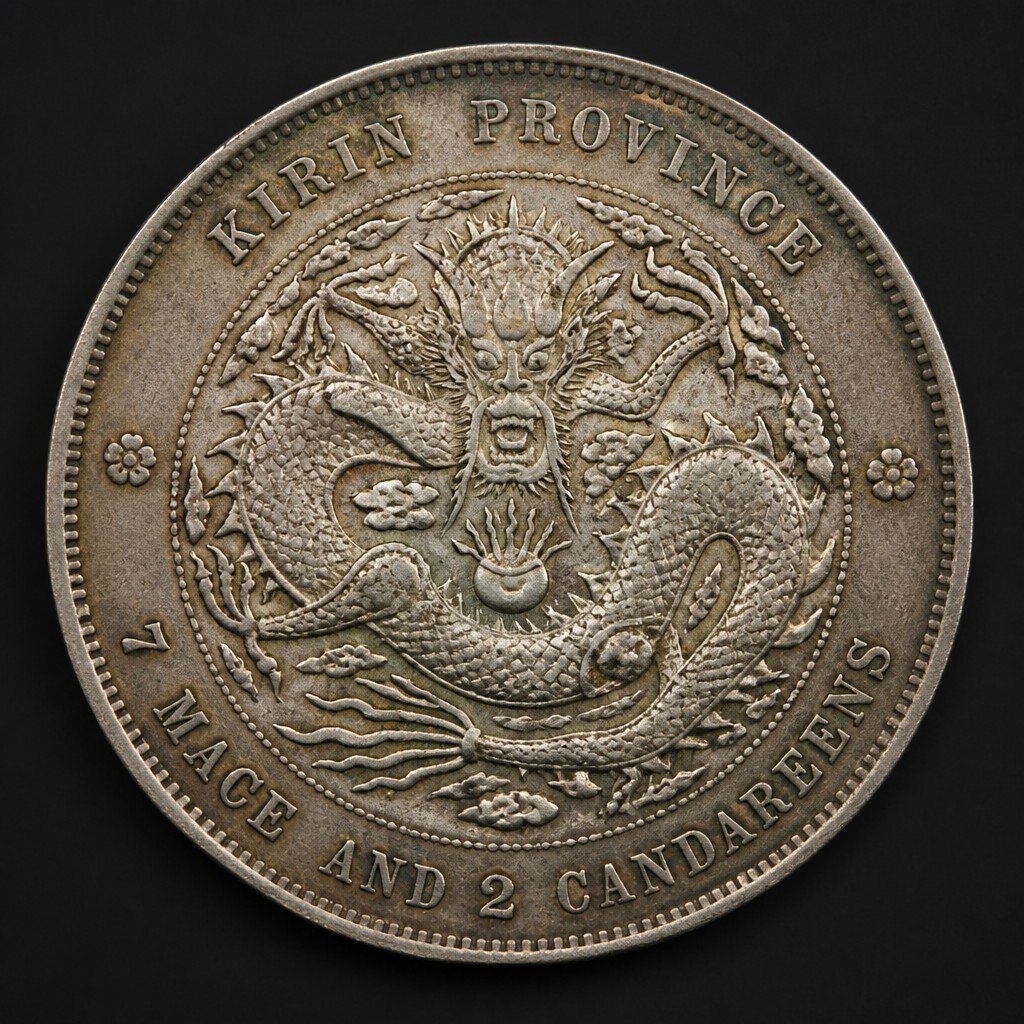
What It Is
The Kirin (Jilin) dragon dollar was struck at the provincial mint in Kirin, a province in Manchuria in China's northeast, during the late Qing dynasty. As a Manchu homeland region, Kirin's coinage sometimes carries Manchu-script elements in addition to standard Chinese characters, reflecting the province's distinct administrative and cultural position within the Qing empire.
Obverse Design & Inscriptions
The obverse typically features Chinese characters naming the Kirin provincial mint and denomination, and on certain issues, accompanying Manchu script — the traditional script of the Manchu ruling dynasty — alongside the Chinese text, a feature less commonly seen on dollars from more southern or central Chinese provinces.
Reverse Design & Inscriptions
The reverse carries a dragon design, rendered according to the specific die variety in use for a given issue year; different Kirin dragon dollar varieties are known among specialists for variations in the dragon's pose, scale pattern, and surrounding cloud or flame motifs.
Size, Weight & Metal
The coin follows general Chinese dragon dollar conventions for size and weight — a large silver coin with a diameter in the high-30mm range and weight in the high-20-gram range, with a reeded edge and silver fineness broadly consistent with other Qing provincial dollar issues of the period.
Mint Marks & Where to Find Them
Mint identification comes primarily from the Chinese characters naming Kirin province directly within the coin's legend, with the presence of accompanying Manchu script serving as an additional identifying feature for certain issue varieties from this mint specifically.
Telling It Apart from Similar Coins
Careful reading of the province name in the Chinese legend is essential, since Kirin dollars share the general dragon-dollar format used by many Qing provincial mints. The presence of Manchu script on certain Kirin varieties is a useful additional clue, since most other provincial dragon dollars use Chinese text alone without a Manchu-script component.
Judging Condition at a Glance
On sharply struck, lightly worn examples, the dragon's scales and facial features remain crisp, and both the Chinese and any accompanying Manchu lettering are fully legible. More heavily circulated pieces show smoothing across the dragon's body and blurred, less distinct script in both languages.
Authenticity Red Flags
As with other Chinese dragon dollars, Kirin issues are targeted by counterfeiters given their collector demand, so weight, diameter, and fine engraving details in both the dragon and any Manchu script should be checked closely against verified genuine examples. Look out for soft, mushy detail, a grainy cast texture, or inconsistent script rendering that does not match known genuine die varieties.
Frequently asked questions
What is unusual about some Kirin dragon dollars compared to other provinces?
Certain Kirin issues include Manchu script alongside the standard Chinese characters, reflecting the province's status within Manchuria, a feature not commonly found on dragon dollars from other Chinese provinces.
How do I confirm a coin is specifically from the Kirin mint?
Look for the Chinese characters naming Kirin province directly within the coin's obverse legend.
Are there different varieties of Kirin dragon dollars?
Yes, specialists recognize multiple die varieties for Kirin dragon dollars distinguished by differences in the dragon's pose, scale pattern, and surrounding motifs.
What should I watch for to avoid a counterfeit?
Check weight and diameter against genuine examples, and examine the dragon and any Manchu script closely for soft, mushy, or inconsistent detail that can indicate a cast counterfeit.