
How to Identify the Chinese Hupeh Province Dragon Dollar
A late Qing dynasty provincial silver dollar from Hupeh (Hubei) province, identified by Chinese and Manchu inscriptions on the obverse and a coiled dragon design on the reverse.
Read the full Chinese Hupeh Province Dragon Dollar encyclopedia entry →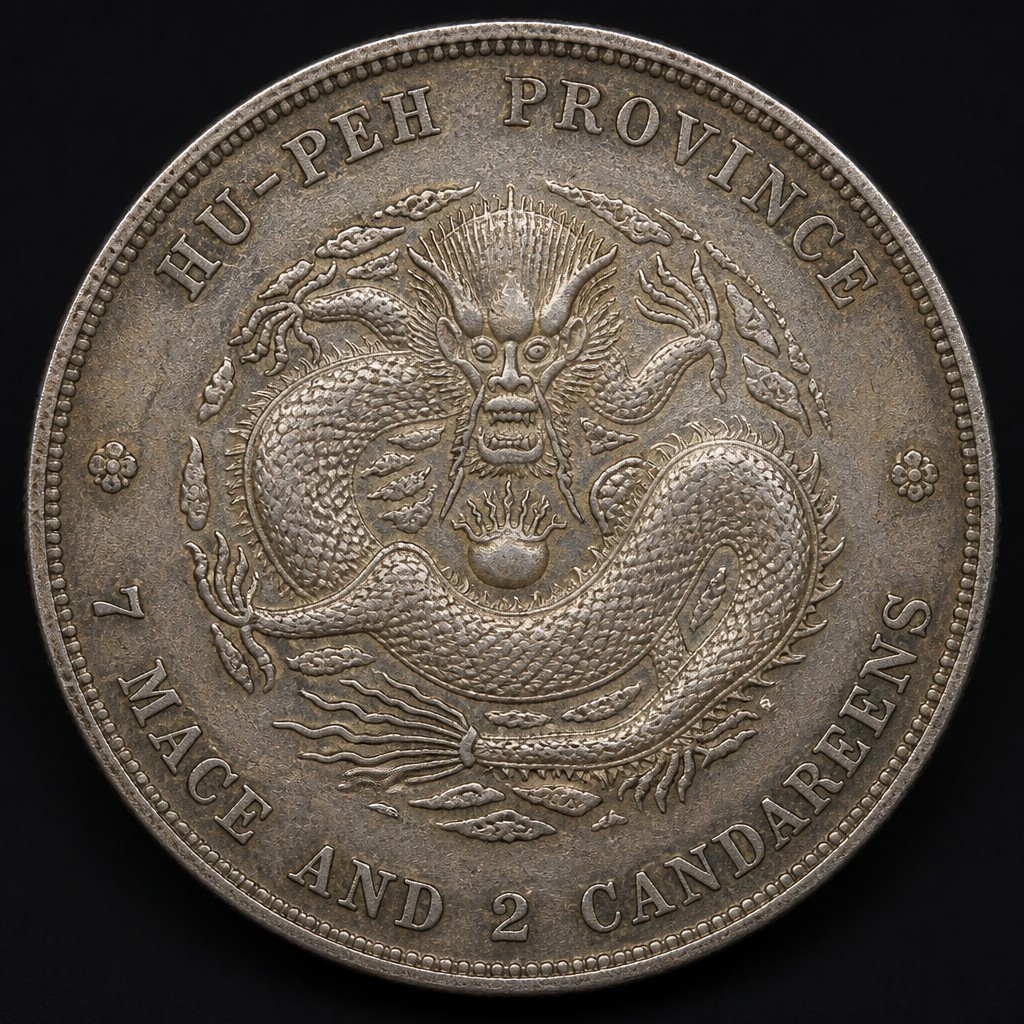
What This Coin Is
The Hupeh (Hubei) province dragon dollar was one of many provincial silver dollar coinages issued by regional mints during the late Qing dynasty, as various Chinese provinces began striking Western-style machine-made silver coins in the late nineteenth and early twentieth centuries. Hupeh's mint, located in Wuchang, was one of the more prolific and long-running of these provincial operations.
Obverse Design
The obverse displays a central inscription in Chinese characters identifying the province and denomination, surrounded by an outer ring of text that includes the province name in English ("HU-PEH PROVINCE") along with the denomination, reflecting the increasing practice of adding English legends to Chinese coinage intended partly for international trade recognition.
Reverse Design
The reverse features a detailed coiled dragon design, a motif shared across most Chinese provincial dollar coinages of the period and drawn from imperial symbolism, encircled by an outer band of text. Different dies produced over the mint's operating years show variations in the dragon's pose and scale detail, which collectors use to identify specific varieties.
Size, Weight, Metal, and Edge
As a dollar-sized silver coin, it is comparable in size and silver weight to other contemporary Chinese provincial dollars and international trade dollars of the period, with a reeded edge typical of machine-struck coinage of the era.
Mint Marks and Where to Find Them
Because this is itself a named provincial issue, the province name appearing directly in both the Chinese and English inscriptions functions as the primary identifying mark, rather than a small separate mintmark symbol; some varieties also show subtle differences in the placement of small identifying characters near the dragon.
Telling It Apart from Similar Coins
Hupeh dragon dollars are easily confused with dragon dollars from other Chinese provinces (such as Kwangtung, Fengtien, or Chihli), which share the same general dragon-and-inscription design language; the reliable way to distinguish them is by reading the specific province name printed in English around the rim. Collectors should also watch for the numerous die varieties within the Hupeh series itself, which affect both identification and desirability.
Grading at a Glance
On well-preserved examples, the dragon's scales, whiskers, and claws remain sharply defined, and the English and Chinese lettering around the rim is crisp and fully legible. Circulated coins show wear first on the dragon's raised central body, with rim lettering softening as handling increases.
Authenticity Red Flags
Because Chinese provincial dragon dollars are popular and valuable to collectors, this category includes both older circulating counterfeits made at the time and modern reproductions; warning signs include a dragon design that looks flat, blurred, or stylistically off compared to genuine documented dies, incorrect weight or diameter, and surfaces that appear cast rather than crisply struck, sometimes revealed by tiny pitting or a seam line.
Frequently asked questions
What does 'Hupeh' refer to?
Hupeh (now romanized as Hubei) is the Chinese province whose provincial mint, located in Wuchang, issued this dragon dollar coinage.
How do I tell this apart from other Chinese provincial dragon dollars?
Read the province name printed in English around the rim; each province's dragon dollar names itself directly, distinguishing it from similar issues by Kwangtung, Chihli, and others.
Why is there English text on a Chinese coin?
Provincial mints added English legends alongside Chinese characters to make the coin's origin and denomination more recognizable in international and regional trade.
Are there different varieties within the Hupeh series?
Yes, subtle differences in the dragon's pose and die details exist across the mint's production years, and collectors use these to identify specific varieties.