
How to Identify the Chinese Gold Panda
A guide to identifying the Chinese Gold Panda by its Temple of Heaven obverse, yearly-changing panda reverse, gram-based sizes, and purity markings.
Read the full Chinese Gold Panda encyclopedia entry →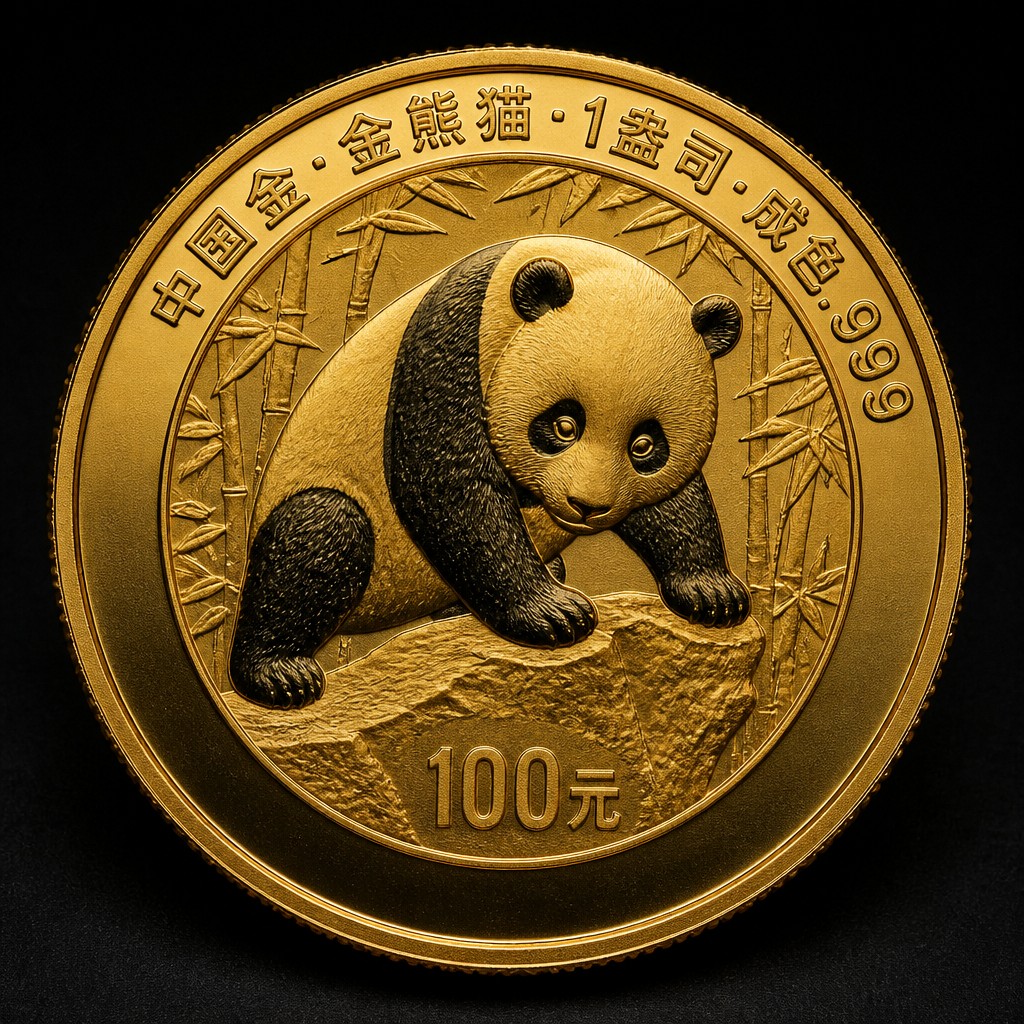
What It Is
The Gold Panda is a bullion and collector coin struck by the People's Republic of China since 1982. It is unusual among world bullion coins because the panda artwork on the reverse changes almost every year rather than staying fixed, so the specific panda pose and scene is itself a clue to the coin's date.
Obverse Design
The obverse always shows the Hall of Prayer for Good Harvests, the circular triple-roofed building at Beijing's Temple of Heaven. Arched above it is "中华人民共和国" (People's Republic of China), and the date appears below in Chinese or Arabic numerals depending on the year.
Reverse Design
The reverse carries a new panda image nearly every year - sitting, climbing bamboo, with cubs, or in other poses. The word "熊猫" (Panda) and the coin's weight and fineness are also present, sometimes in both Chinese and English.
Size, Weight, and Metal
Panda coins are struck in .999 fine gold (some later dates .9999). Through 2015 they were sold in troy-ounce fractions (1/20, 1/10, 1/4, 1/2, and 1 oz). Starting with the 2016 issue, China switched to metric gram weights - 1g, 3g, 8g, 15g, and 30g - with face values in yuan, such as 500 Yuan for the 30g coin.
Mint Marks and Where to Find Them
Panda coins carry no individual mint mark identifying which of China's several state mints produced them. Because there is no mintmark to check, verifying authenticity relies on matching the coin's diameter, weight, and design to the officially published specifications for that year.
Telling It Apart From Similar Coins
Since the panda artwork changes annually, the most useful check is comparing the pose and scene against the known design for that year - a mismatched combination of date and panda image is a warning sign. Also note whether the coin is denominated in ounces (pre-2016) or grams (2016 onward), since the two eras used different sizes and face-value wording.
Judging Condition at a Glance
Gold does not tone, so grading focuses on the sharpness of the strike and the presence of bag marks or hairlines. Look closely at the fine relief on the Temple of Heaven's roof tiles and the texture of the panda's fur; a soft, mushy strike suggests a lower-quality copy rather than wear. Well-preserved coins retain a smooth, unbroken luster across the panda's body and the temple's roof lines, while a coin that has changed hands frequently often shows small nicks along the rim and flattened texture on the highest points of the design.
Authenticity Red Flags
Watch for a diameter or weight that does not match the stated denomination, a magnetic response (genuine gold is not magnetic), dull or grainy surfaces instead of a crisp, slightly reflective finish, and Chinese characters with an unusual font or spacing. A panda design that does not match the year stamped on the coin is one of the clearest signs of a mismatched or fabricated piece. It also helps to weigh the coin on an accurate scale and measure its diameter and thickness with calipers, since gold-plated tungsten or brass fakes are typically close in overall size but slightly off in exact weight once compared against official published specifications.
Frequently asked questions
Why does the panda design change every year?
China has used a new panda image on the reverse almost every year since 1982, making each year's coin visually distinct rather than reusing one fixed design.
How do I know the year of a Gold Panda?
The date appears on the obverse below the Temple of Heaven, and the panda artwork itself should match the design used that year.
Are Gold Pandas sized in ounces or grams?
Coins through 2015 were sold in troy-ounce fractions; from 2016 onward China switched to gram weights such as 1g, 3g, 8g, 15g, and 30g.
Is there a mint mark on a Gold Panda?
No, Panda coins do not carry an individual mint mark, so authenticity checks rely on matching weight, diameter, and design to official specifications.